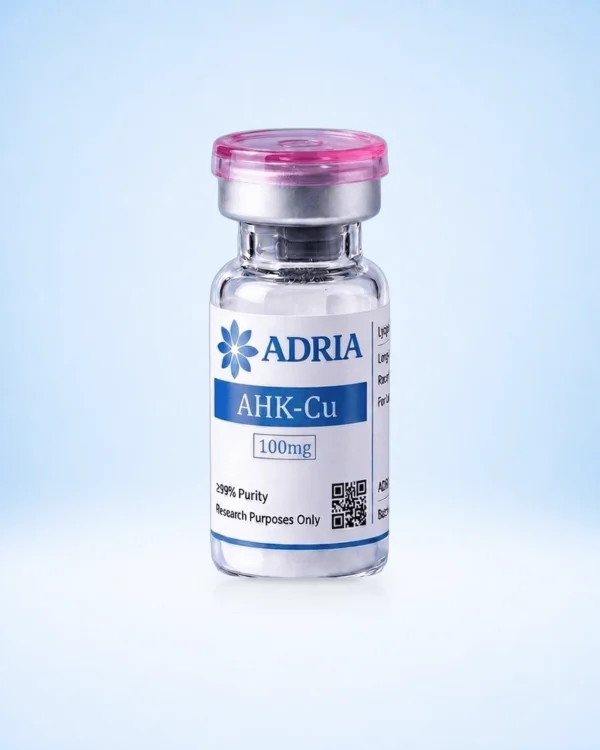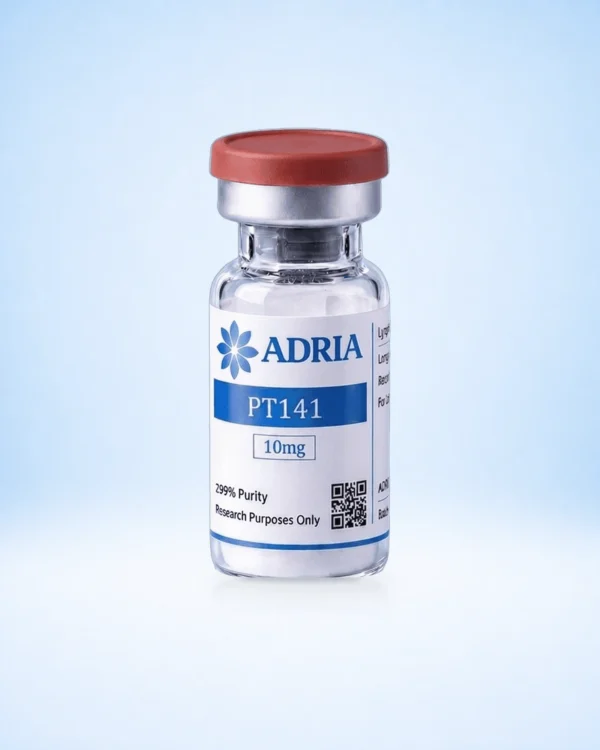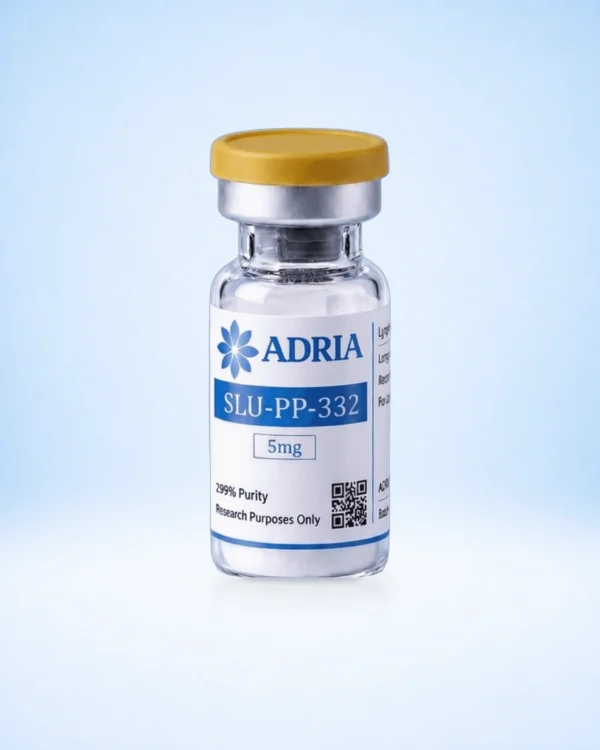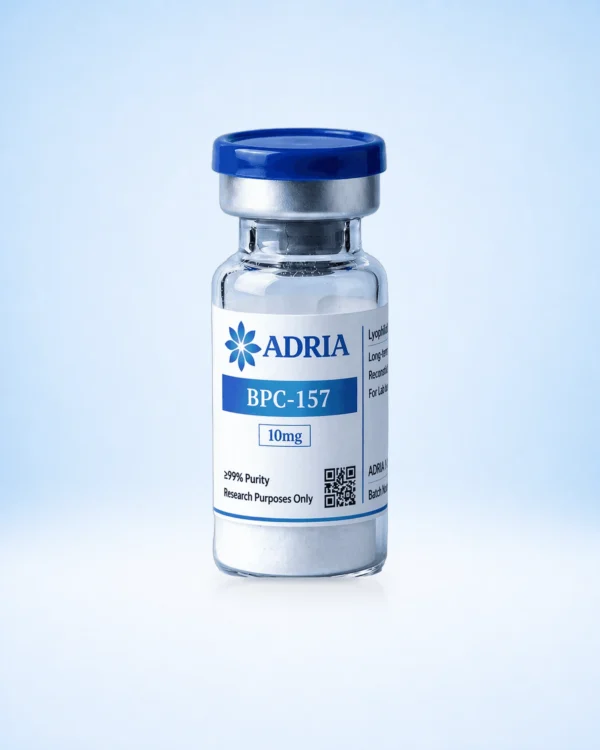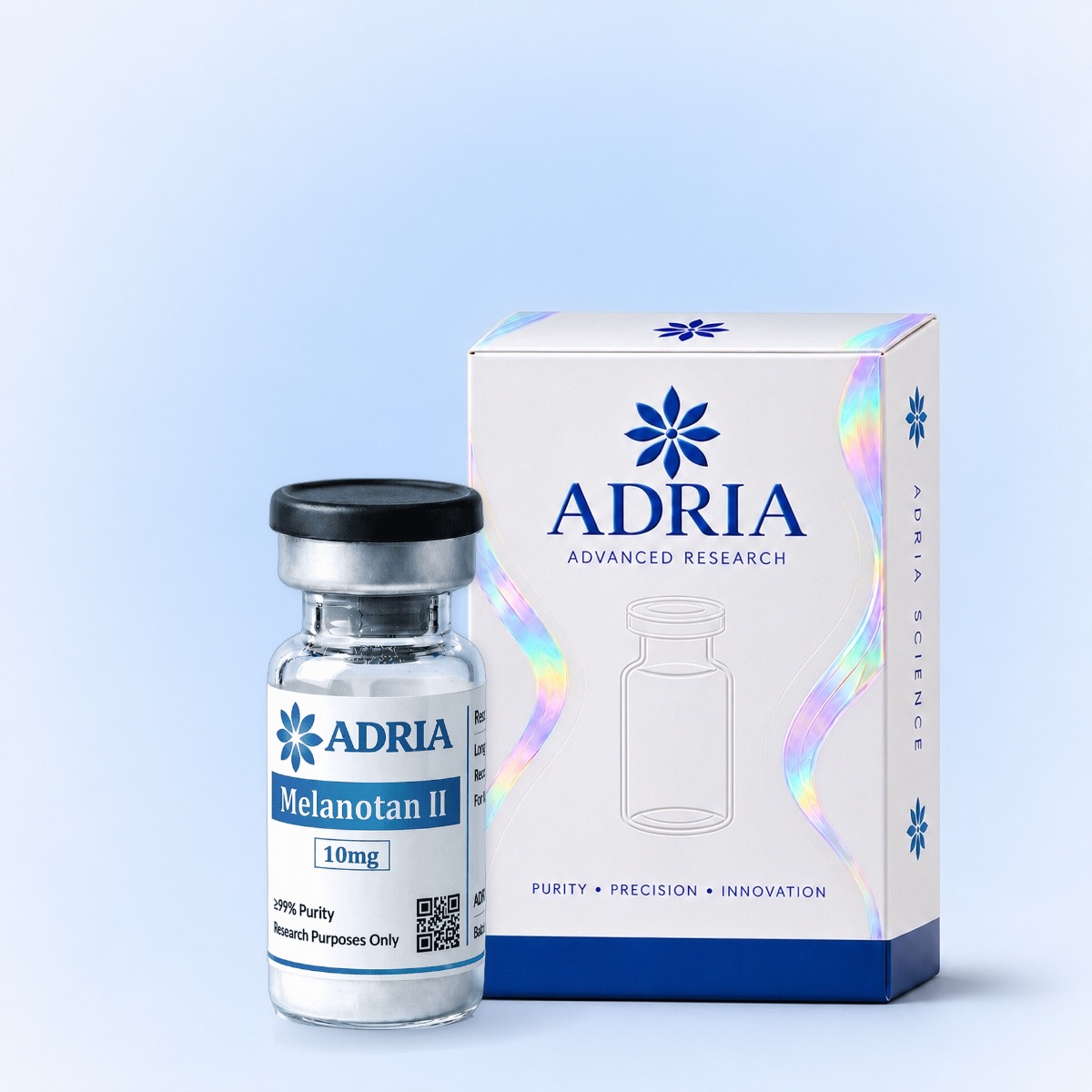
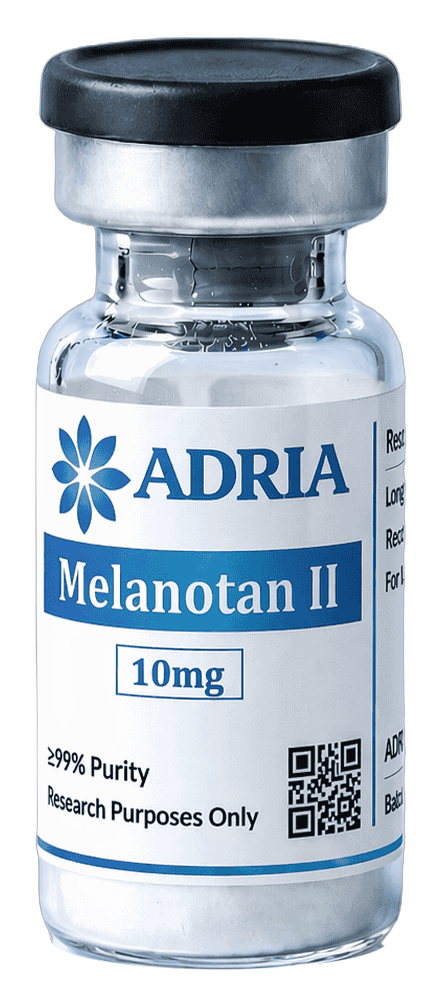
Peptide appearance
Lyophilized form helps protect peptide quality. Peptides are supplied as a dry powder, which may look like a compact "puck" or a lighter powder inside the vial.
Because the peptide is dry, it does not require refrigerated shipping during normal transit, including warm seasonal conditions. For longer storage, follow the storage guidance in the product description.
Appearance can vary. The stated peptide content is checked through third-party analysis.
Read more in the product description.
Solution not bundled
Peptides are delivered as lyophilized powder. This dry form helps preserve peptide quality during storage and transport and does not require refrigerated shipping during normal transit.
To prepare a solution, use a solvent such as Bacteriostatic water. It is sold separately, so add it only when you need it for peptide preparation.
Read more in the product description.
Dermal
Melanotan II
In stock
Order within — to ship today
Arrives 26 – 30 November to Europe


 Shown at checkout
Melanotan II
39,00 €
Cyclic melanocortin analogue for receptor selectivity and pigmentation-pathway studies.
Compound information
Specifications
Molecular profile
- Sequence
- Ac-Nle-cyclo[Asp-His-D-Phe-Arg-Trp-Lys]-NH2
- Molecular mass
- 1024.18 g/mol
- CAS number
- 121062-08-6
- Molecular formula
- C50H69N15O9
Material record
- Physical appearance
- White to off-white lyophilized powder
- Solubility
- Soluble in bacteriostatic water and suitable aqueous laboratory solvents.
- Product note
- Synthetic cyclic melanocortin analogue; supplied strictly for research use only.
Research overview
Melanotan II
Description of Melatonan 2
A synthetically produced peptide Melatonan 2, a variant of Melatonan 1, mimics non-selectively the action of melanocortin peptides by binding their receptors, which are involved in various functions in human body as pigmentation, immune response or even in sexual functions. Melatonan 2 was researched in many fields including addiction behavior, hunger, and features of autism. It also stimulates production of melatonin and eumelanin responsible for skin or hair pigmentation and tanning. Now, let us demonstrate particular results of various studies, which has revealed mechanisms how this peptide can work.
Overview of Published Research
Melatonan 2 operates through the activation of certain melanocortin receptors, specifically MC-1R receptors responsible for signaling the production of melanin, and so darkening the skin and hair color. Additionally, studies report that MT2 binds also MC-4R receptors and has been observed to influence glucose and cholesterol metabolism and sexual behavior, and to induce thermogenic and anorexic responses. It also slightly binds to MC-3R receptors responsible mostly for appetite control and energy regulation. The melanocortin system, a network of hormonal and neuropeptidergic pathways, plays a crucial role in various physiological processes.
Melanotan 2, a melanocortin receptor 4 (MC-4R) agonist, has shown potential to influence certain autistic features in a mouse model of autism spectrum disorder (ASD). In a study involving a maternal immune activation (MIA) model, adult male mice with autism-like features were treated with Melanotan 2 over seven days. The results demonstrated that MT2 administration improved social behavioral metrics, which had been impaired in the MIA mice. These mice typically exhibit decreased social interaction, diminished vocal communication, and increased repetitive behaviors—common traits of ASD. Following treatment with Melanotan 2, these autism-like behaviors were notably reduced, suggesting a potential role for the peptide in research into oxytocin-related pathways.
Melanotonan 2 has been observed to reduce fat accumulation and hunger-related behavior in animal models, as it was found that the MC-4R receptor plays an important role in food intake. Research into the role of melanocortin signaling in human dietary preferences has revealed that mutations in MC-4R can affect the intake and preference for fats and sugars. A study that compared 24 obese patients with MC-4R deficiency to 80 healthy controls (40 obese and 40 lean) found that those with MC-4R mutations consumed significantly more high-fat meals. In an ad-libitum meal experiment with varying fat content, patients with MC-4R mutations consumed 95% more of the high-fat meal compared to lean controls, and 65% more compared to obese controls. This indicates that the melanocortin pathway plays a significant role in fat preference.
Further research into the leptin-melanocortin system has illuminated its critical role in human weight regulation and the pathogenesis of obesity. Genetic mutations leading to obesity in both humans and murine models reveal that defects in the leptin-melanocortin pathway can cause severe obesity as a dominant phenotypic feature. Conditions such as leptin deficiency, leptin receptor deficiency, proopiomelanocortin (POMC) deficiency, and MC-4R deficiency can lead to substantial weight gain.
GCG, a hormone involved in glucose homeostasis, has a key role in the development of diabetes. Research indicates that GCG excess, rather than insulin deficiency, is crucial for diabetes pathogenesis. Hyperglucagonaemia, or high GCG levels, is a common feature in all forms of diabetes. GCG stimulates hepatic glucose production, leading to hyperglycemia. GCG receptor null mice do not develop diabetes even with beta cell destruction, indicating that GCG receptor activation is necessary for diabetes development. Studies also show that insulin alone cannot effectively manage diabetes because it doesn't address GCG's catabolic effects, whereas treatments targeting GCG suppression, such as leptin or GCG receptor antibodies, could lead to better glucose regulation.
Leptin and melanocortin receptors (MCRs) have been linked to glucose regulation in peripheral tissues through the medial hypothalamus. Research suggests that the ventromedial hypothalamus (VMH) plays a central role in leptin-induced glucose uptake in skeletal muscle, brown adipose tissue (BAT), and heart tissue. Injection of the melanocortin receptor agonist Melanotan 2 (MT2) into the VMH also increased glucose uptake in these tissues, indicating that both leptin and MT2 operate through MCRs to modulate glucose metabolism. However, the arcuate nucleus (ARC) of the hypothalamus showed increased glucose uptake only in BAT after leptin injection, while other nuclei like the dorsomedial hypothalamus (DMH) or the paraventricular hypothalamus (PVH) had no effect on glucose uptake when injected with leptin or Melatonan 2. These findings demonstrate that different regions of the hypothalamus have distinct roles in mediating glucose uptake, which may inform further research into the modulation of specific hypothalamic nuclei in the context of diabetes.
Melanotan 2 (MT-2), known for its effects on the melanocortin-4 receptor (MC-4R), has been found to play a role in reducing alcohol intake in research models. Studies involving rats demonstrated that MT-2 reduced alcohol consumption while increasing water intake, indicating its potential influence on impulse control and beverage preference. Interestingly, an antagonist of MC-4R had an opposite effect, suggesting that MC-4R activation by MT-2 influences preference for alcohol. The amygdala, a brain region involved in emotion and behavior regulation, appears to be the site of this action, highlighting the complexity of neural pathways involved in regulating alcohol consumption.
Further studies showed that combining MT-2 with naltrexone, a commonly used drug for treating alcohol abuse, can increase the observed activity of naltrexone in reducing binge-like alcohol drinking. This synergistic effect, with MT-2 augmenting naltrexone's activity more than seven-fold, suggests a promising area of research in the context of alcohol-related disorders. The findings point towards a broader role of MC-4R in impulse control and behavioral regulation, opening potential new directions for research into impulsivity, cravings, and other forms of addictive behavior. These insights into MT-2 and MC-4R could inform novel research strategies in the context of alcohol-related disorders and other conditions involving impaired impulse control and craving.
Melanotan 2 has been studied in relation to psychogenic erectile dysfunction in men. In a double-blind, placebo-controlled crossover study involving men with erectile dysfunction (ED) of non-organic origin, MT2 induced clinically apparent erections in 8 out of 10 participants, with a mean duration of tip rigidity greater than 80% lasting 38 minutes, compared to only 3 minutes with a placebo. The study showed that MT2 is a potent initiator of erections in men with psychogenic ED, with manageable side effects such as nausea, stretching, yawning, and decreased appetite. These results suggest that Melatonan 2 may be of research interest in the context of psychogenic ED and sexual desire disorders, and could inform further study beyond traditional medications like sildenafil (Viagra). Further research into the mechanism of action for MT-II revealed that the peptide induces penile erection through both brain and spinal pathways, mediated by melanocortin receptors.
For laboratory purposes and personal observation only. Not for human consumption.
Laboratory care
Handling
Peptides in transport
Peptides in lyophilized form are supplied in glass vials by standard shipping methods and do not require refrigeration. Short-term temperature fluctuations during transport will not reduce their quality and efficacy. Even at high summer temperatures, the peptides in lyophilized form are stable for several weeks.
Storage of lyophilized peptides
Lyophilized peptides should be stored in a dry place, protected from light and moisture. The following storage conditions are generally recommended:
- Room temperature (15–25 °C): Up to 3 months
- Refrigerated (2–8 °C): Up to 6 months
- Frozen (-20 °C or below): 3–5 years (recommended for long-term storage)
Allow the vial to reach room temperature after taking it out of the refrigerator or freezer.
Storage of reconstituted peptides
Once reconstituted, peptide solutions are generally less stable than their lyophilized form and should be stored under refrigerated conditions whenever possible.
The following storage conditions are generally recommended:
- Room temperature (15–25 °C): Avoid prolonged storage
- Refrigerated (2–8 °C): Typically 4–8 weeks
- Frozen (-20 °C or below): Up to 3–4 months
To preserve peptide integrity, avoid repeated freeze–thaw cycles, as these may accelerate peptide degradation.
Important: Most manufacturers recommend discarding reconstituted peptides within 4 weeks when stored at 2–8 °C. This recommendation is intentionally conservative and may not reflect the actual chemical stability of every peptide. In our own stability studies, many peptides reconstituted in bacteriostatic water showed no detectable degradation after 12 weeks of refrigerated storage. As peptide stability is highly sequence- and formulation-dependent, this result should not be extrapolated to all peptides without supporting stability data.
Analytical documentation
Tests
Latest published result
Liquilabs s.r.o.Signed Certificate of Analysis · 10mg
99.6%Purity by HPLC
Recorded QC panel
- AssayPeptide screening
- 12.22 mg
- PurityPeptide screening
- 99.6%
- Identity (FTIR)FTIR spectrum
- 998
- Identity (RT)Retention time
- 0.994
- Bacterial EndotoxinUSP / Eur. Ph. 2.6.14
- 0.023 EU/mg
- Molecular Ion MassMS deconvolution
- 1024 Da
These are the latest published results for this strength. The batch number is printed on each vial. Your supplied batch is confirmed against the matching published record when your order is allocated.
Source record
References
E. Minakova et al., "Melanotan-II reverses autistic features in a maternal immune activation mouse model of autism," PLoS ONE, vol. 14, no. 1, Jan. 2019.
A. van der Klaauw et al., "Role of melanocortin signalling in the preference for dietary macronutrients in human beings," Lancet Lond. Engl., vol. 385 Suppl 1, p. S12, Feb. 2015.
H. Shimizu, K. Inoue, and M. Mori, "The leptin-dependent and -independent melanocortin signaling system: regulation of feeding and energy expenditure," J. Endocrinol., vol. 193, no. 1, pp. 1–9, Apr. 2007.
C. Bjørbaek and A. N. Hollenberg, "Leptin and melanocortin signaling in the hypothalamus," Vitam. Horm., vol. 65, pp. 281–311, 2002.
F. Guo, K. Bakal, Y. Minokoshi, and A. N. Hollenberg, "Leptin Signaling Targets the Thyrotropin-Releasing Hormone Gene Promoter in Vivo," Endocrinology, vol. 145, no. 5, pp. 2221–2227, May 2004.
Y. H. Lee, M.-Y. Wang, X.-X. Yu, and R. H. Unger, "GCG is the key factor in the development of diabetes," Diabetologia, vol. 59, no. 7, pp. 1372–1375, 2016.
C. Toda et al., "Distinct effects of leptin and a melanocortin receptor agonist injected into medial hypothalamic nuclei on glucose uptake in peripheral tissues," Diabetes, vol. 58, no. 12, pp. 2757–2765, Dec. 2009.
D. A. York, S. Boghossian, and M. Park-York, "Melanocortin activity in the amygdala influences alcohol intake," Pharmacol. Biochem. Behav., vol. 98, no. 1, pp. 112–119, Mar. 2011.
M. Navarro, F. Carvajal, J. M. Lerma-Cabrera, I. Cubero, M. J. Picker, and T. E. Thiele, "Evidence that Melanocortin Receptor Agonist Melanotan-II Synergistically Augments the Ability of Naltrexone to Blunt Binge-Like Ethanol Intake in Male C57BL/6J Mice," Alcohol. Clin. Exp. Res., vol. 39, no. 8, pp. 1425–1433, Aug. 2015.
"Synthetic melanotropic peptide initiates erections in men with psychogenic erectile dysfunction: double-blind, placebo controlled crossover study. - PubMed - NCBI." [Online]. Available: [Accessed: 15-May-2019]..
WESSELLS, H. , HRUBY, V. J., HACKETT, J. , HAN, G. , BALSE‐SRINIVASAN, P. and VANDERAH, T. W. (2003), MT‐II Induces Penile Erection via Brain and Spinal Mechanisms. Annals of the New York Academy of Sciences, 994: 90-95.
Wessells, H. (1998). Synthetic melanotropic peptide initiates erections in men with psychogenic erectile dysfunction: Doubleblind placebo controlled crossover study. Nature.com. Available at:
M. T. Islam et al., "Vasopressin neurons in the paraventricular hypothalamus promote wakefulness via lateral hypothalamic orexin neurons," Curr. Biol. CB, pp. S0960-9822(22)01121–6, Jul. 2022, doi: 10.1016/j.cub.2022.07.020.
J. K. Y. Lau et al., "Melanocortin receptor activation alleviates amyloid pathology and glial reactivity in an Alzheimer's disease transgenic mouse model," Sci. Rep., vol. 11, no. 1, p. 4359, Feb. 2021, doi: 10.1038/s41598-021-83932-4.
National Center for Biotechnology Information
PubChem Compound Summary: Melanotan II
Authoritative identity record for Melanotan II.
PubChem View source ↗Chemical Abstracts Service
CAS Common Chemistry: 121062-08-6
Authoritative CAS Registry Number record for Melanotan II.
CAS Common Chemistry View source ↗Wekwejt P, Wojda U, Kiryk A, et al. · 2023
Melanotan-II reverses memory impairment induced by a short-term HF diet
Primary experimental report using Melanotan II.
Biomedicine and Pharmacotherapy · 10.1016/j.biopha.2023.115129 View source ↗Fitzgerald LM, Fryer JL, Dwyer T, Humphrey SM · 2006
Effect of MELANOTAN, [Nle(4), D-Phe(7)]-alpha-MSH, on melanin synthesis in humans with MC1R variant alleles
Peptides View source ↗Wessells H, Fuciarelli K, Hansen J, Hadley ME, Hruby VJ, Dorr R, Levine N · 1998
Synthetic melanotropic peptide initiates erections in men with psychogenic erectile dysfunction: double-blind, placebo controlled crossover study
The Journal of urology View source ↗Shida H, Ban K, Matsumoto M, Masuda K, Imanari T, Machida T, Yamamoto T, Inoue T · 1996
Asymptomatic colorectal cancer detected by screening
Diseases of the colon and rectum View source ↗Rishniw M, Barr SC, Simpson KW, Frongillo MF, Franz M, Dominguez Alpizar JL · 2006
Discrimination between six species of canine microfilariae by a single polymerase chain reaction
Veterinary parasitology View source ↗· 2004
An effect on the subjective sexual response in premenopausal women with sexual arousal disorder by bremelanotide (PT-141), a melanocortin receptor agonistDiamond LE, et al
International Journal of Impotence Research View source ↗E. Minakova et al. · 2019
Melanotan-II reverses autistic features in a maternal immune activation mouse model of autism
PLoS ONEA. van der Klaauw et al. · 2015
Role of melanocortin signalling in the preference for dietary macronutrients in human beings
Lancet Lond. EnglH. Shimizu, K. Inoue, and M. Mori · 2007
The leptin-dependent and -independent melanocortin signaling system: regulation of feeding and energy expenditure
J. EndocrinolC. Bjørbaek and A. N. Hollenberg · 2002
Leptin and melanocortin signaling in the hypothalamus
Vitam. HormF. Guo, K. Bakal, Y. Minokoshi, and A. N. Hollenberg · 2004
Leptin Signaling Targets the Thyrotropin-Releasing Hormone Gene Promoter in Vivo
EndocrinologyY. H. Lee, M.-Y. Wang, X.-X. Yu, and R. H. Unger · 2016
GCG is the key factor in the development of diabetes
DiabetologiaC. Toda et al. · 2009
Distinct effects of leptin and a melanocortin receptor agonist injected into medial hypothalamic nuclei on glucose uptake in peripheral tissues
DiabetesD. A. York, S. Boghossian, and M. Park-York · 2011
Melanocortin activity in the amygdala influences alcohol intake
Pharmacol. Biochem. BehavM. Navarro, F. Carvajal, J. M. Lerma-Cabrera, I. Cubero, M. J. Picker, and T. E. Thiele · 2015
Evidence that Melanocortin Receptor Agonist Melanotan-II Synergistically Augments the Ability of Naltrexone to Blunt Binge-Like Ethanol Intake in Male C57BL/6J Mice
Alcohol. Clin. Exp. Res· 2003
WESSELLS, H. , HRUBY, V. J., HACKETT, J. , HAN, G. , BALSE‐SRINIVASAN, P. and VANDERAH, T. W. (2003), MT‐II Induces Penile Erection via Brain and Spinal Mechanisms. Annals of the New York Academy of Sciences, 994: 90-95
· 1998
Wessells, H. (1998). Synthetic melanotropic peptide initiates erections in men with psychogenic erectile dysfunction: Doubleblind placebo controlled crossover study. Nature.com. Available at
M. T. Islam et al. · 2022
Vasopressin neurons in the paraventricular hypothalamus promote wakefulness via lateral hypothalamic orexin neurons
Curr. Biol. CB · 10.1016/j.cub.2022.07.020 View source ↗J. K. Y. Lau et al. · 2021
Melanocortin receptor activation alleviates amyloid pathology and glial reactivity in an Alzheimer's disease transgenic mouse model
Sci. Rep · 10.1038/s41598-021-83932-4 View source ↗Customer reviews

Quality products,fast shipping,great refferal plan,only downside is that products in 4 mounths since my first order got more and more expensive ,but overall verry good experience.
Read full review →More than 2 weeks for package dispatch. They promised one free peptide next time. Sent me new tracking number but package still wasn't delivered to fedex. Last package (much much cheaper) was delivered in less than week. I will update if they will send my package. ok,package sent.
Read full review →Extremely satisfied with the product quality and overall experience. The customer service is polite and quick. All recommendations!
Read full review →Great service!
Read full review →Always on time and customer care is super great
Read full review →Fast good, and quality is perfect
Read full review →ordered 3 times now and everything ok every time.
Read full review →Trustworthy site with a huge catalog of products. Been purchasing from them for some time now never got disappointed. I could only recommend them.
Read full review →Great quality product
Read full review →Everything was great, super customer support, honest, reliable
Read full review →Everything ok. With little problem with package, but after contact with Customer Service everything went right. Good quality of products
Read full review →Excellent. Buying peptides online can be nerve wracking! But Adria are very transparent about all the checks and certifications. My experience with them was excellent. Great products at good prices and efficient P&P
Read full review →Continue exploring