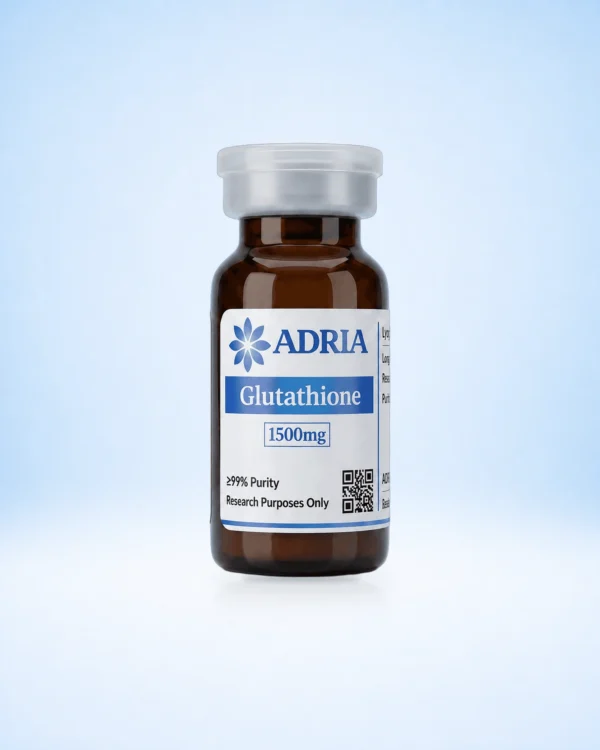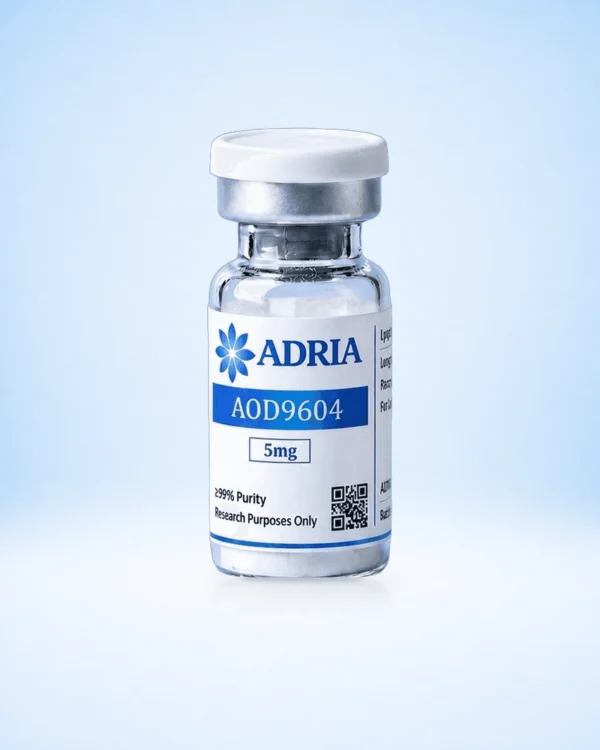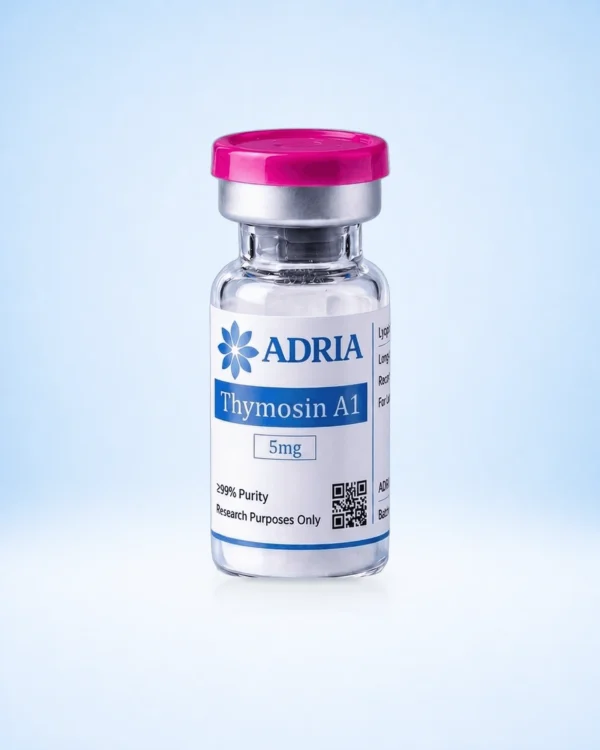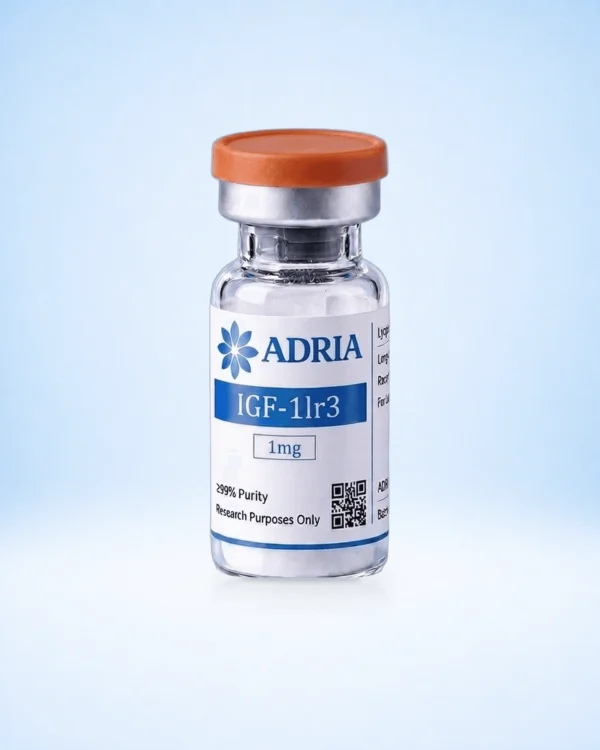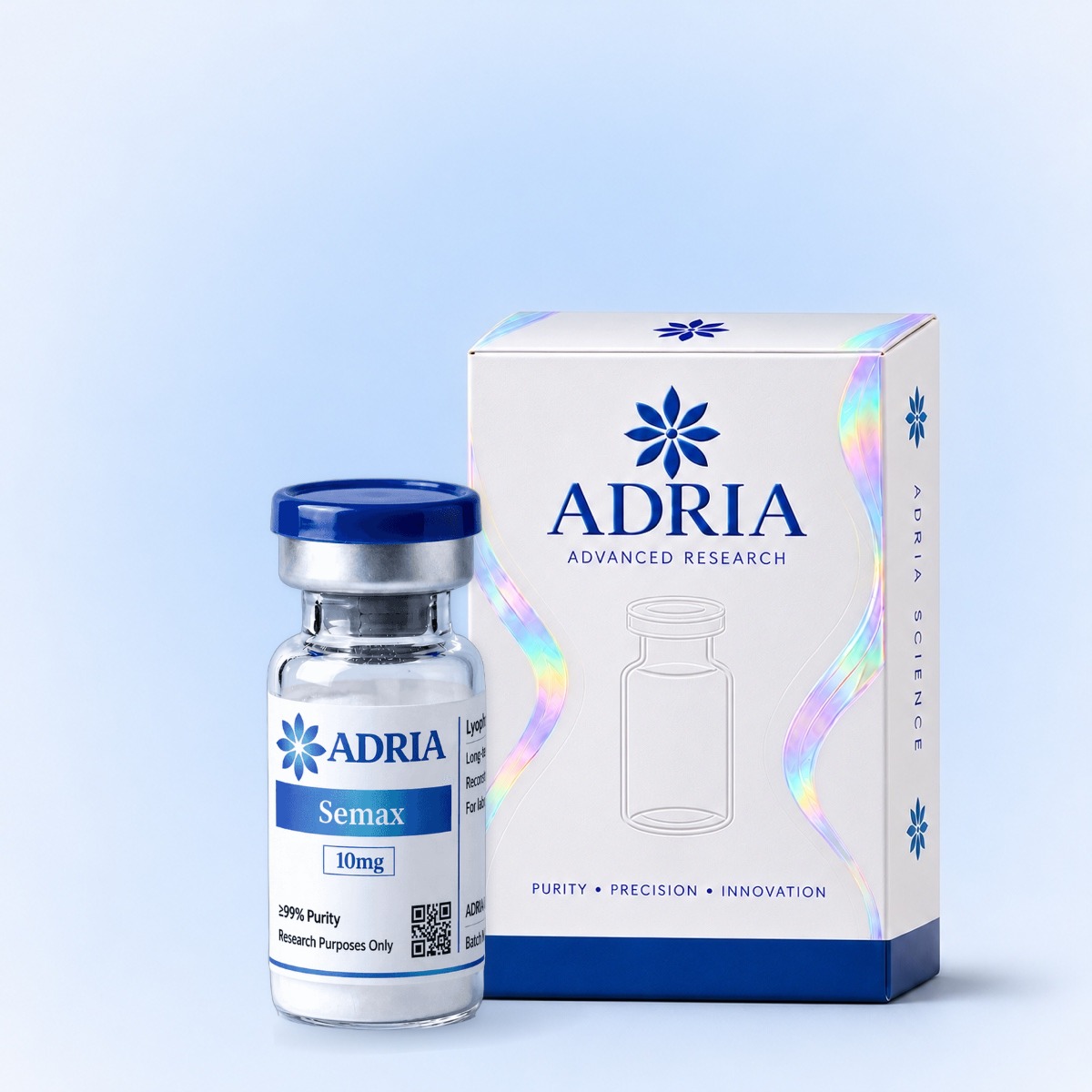
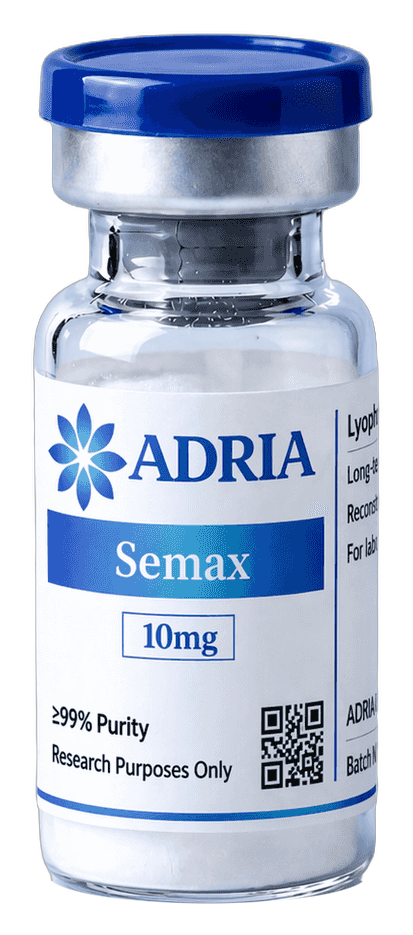
Peptide appearance
Lyophilized form helps protect peptide quality. Peptides are supplied as a dry powder, which may look like a compact "puck" or a lighter powder inside the vial.
Because the peptide is dry, it does not require refrigerated shipping during normal transit, including warm seasonal conditions. For longer storage, follow the storage guidance in the product description.
Appearance can vary. The stated peptide content is checked through third-party analysis.
Read more in the product description.
Solution not bundled
Peptides are delivered as lyophilized powder. This dry form helps preserve peptide quality during storage and transport and does not require refrigerated shipping during normal transit.
To prepare a solution, use a solvent such as Bacteriostatic water. It is sold separately, so add it only when you need it for peptide preparation.
Read more in the product description.
Cognitive Enhancement
Semax
Low stock
Order within — to ship today
Arrives 26 – 30 November to Europe


 Shown at checkout
Semax
44,50 €
ACTH-fragment analogue for neuropeptide, BDNF, and stress-pathway studies.
Compound information
Specifications
Molecular profile
- Sequence
- Met-Glu-His-Phe-Pro-Gly-Pro
- Molecular mass
- 813.92 g/mol
- CAS number
- 80714-61-0
- Molecular formula
- C37H51N9O10S
Material record
- Physical appearance
- White to off-white lyophilized powder
- Solubility
- Soluble in bacteriostatic water and suitable aqueous laboratory solvents.
- Product note
- ACTH(4-10) analogue heptapeptide; supplied strictly for research use only.
Research overview
Semax
Description of Semax
A synthetically produced research peptide, analogue of adrenocorticotropic hormone (ACTH), consists of 7 amino acids, specifically amino acids 4 to 10 of adrenocorticotropic hormone (ACTH) sequence. It rapidly elevates the levels of expression of brain-derived neurotrophic factor (BDNF), and nerve growth factor (NGF), while avoiding hormonal effects of ACTH. Research indicates it may influence overall brain function and cognitive performance, primarily through dopamine, serotonin, and enkephalin signaling. It also shows antidepressant and anxiolytic effects in animal models. Research in rats has indicated that intranasal administration of Semax can have an effect on a number of different genes in both the hippocampus and frontal cortex. Let's have a look at further numerous research studies indicating observed effects of Semax.
Overview of Published Research
The effects of Semax on the default mode network (DMN) of the brain were investigated using resting state functional magnetic resonance imaging (fMRI). Two groups of healthy volunteers participated in the study, with resting state fMRI conducted before and after intranasal administration of Semax or a placebo. The results showed that Semax led to a greater volume of the DMN's rostral subcomponent compared to the placebo group, indicating its impact on the brain's neuronal network. Additionally, the relationship between the DMN and the "social brain" was explored, revealing overlaps between brain areas activated during social cognition tasks and those associated with the DMN. This suggests that the DMN plays a role in social cognition, shedding light on the brain's functioning during both rest and social cognitive tasks.
The default mode network (DMN) is typically more active during rest but can be activated by certain tasks, including social cognition. Higher-order tasks like attributing mental states to others engage areas overlapping with the DMN. Evidence from functional MRI meta-analyses and studies on social brain connectivity supports this claim. Recent findings also suggest the presence of a DMN in non-human primates. These observations have implications for understanding brain function during rest and social cognitive tasks.
The peptide Semax, known for its neuroprotective properties in brain stroke research, was investigated for its effects on gene expression in rat brain cortex tissues during focal ischemia. Results revealed that Semax significantly influenced the expression of genes related to the immune and vascular systems. Notably, Semax predominantly influenced the expression of immune system-related genes, including those encoding immunoglobulins and chemokines. Moreover, Semax altered the expression of genes associated with vascular development and function, suggesting its potential role in research into the formation and functioning of the vascular system during ischemia. These findings suggest that Semax's neuroprotective effects may be mediated through its impact on immune and vascular processes in the brain.
In clinical research evaluating Semax's activity in ischemic stroke patients, administration of Semax was found to increase plasma brain-derived neurotrophic factor (BDNF) levels, irrespective of the timing of rehabilitation. Higher BDNF levels were positively correlated with early rehabilitation and were associated with changes in motor performance and Barthel index scores. Early rehabilitation combined with Semax administration demonstrated changes in functional outcomes and motor performance, indicating the potential research interest of Semax in the context of neurorehabilitation in patients recovering from ischemic stroke.
Semax containing ACTH4-7 and Pro-Gly-Pro, influences neuron survival in hypoxia and memory storage in research models. It induces gene expression changes, particularly in BDNF and NGF, in the rat hippocampus and frontal cortex. Hippocampus plays critical roles in memory and learning, while the frontal cortex is important in concentration, planning, and organizing information. Following a single intranasal dose (50 mg/kg), gene expression initially decreases in the hippocampus but increases in the frontal cortex. Levels return to baseline after 40 minutes, then significantly rise by 90 minutes, reaching maximum levels within 8 hours before returning to baseline. This suggests Semax rapidly and specifically activates BDNF and NGF expression in different brain regions.
A study explored the potential cognitive effects of adrenocorticotropic hormone (ACTH) in epileptic mice. While ACTH is commonly used to manage seizures in various epilepsy syndromes, its effects on cognitive function independent of seizure control are unclear. The study administered ACTH via Acthar Gel intraperitoneally to KO mice and found that it influenced long-term potentiation (LTP) in the hippocampus and was associated with changes in spatial learning and memory on the Barnes maze test. Interestingly, ACTH treatment did not significantly impact the frequency of spontaneous recurrent seizures. These findings suggest that ACTH may have direct cognitive-related effects in epileptic mice beyond seizure control, highlighting its potential as a subject of nootropic research in the epileptic brain.
Antidepressants such as Selective Serotonin Reuptake Inhibitors (SSRI) act as indirect agonists of serotonin (5-HT) receptors. Although these drugs produce a rapid blockade of serotonin transporters (SERTs) in vitro, several weeks of administration are necessary to observe the studied effects.
A study investigates the bidirectional effects of brain-derived neurotrophic factor (BDNF) on serotonin (5-HT) neurotransmission and behavior in mice. Decreasing BDNF levels in heterozygous BDNF+/- mice leads to increased basal extracellular 5-HT levels in the hippocampus and resistance to the effects of SSRIs, indicating genetic resistance to serotonergic compounds. Conversely, increasing BDNF levels in wild-type mice through intra-hippocampal injection influences the response to SSRIs, correlating with changes in antidepressant-like activity. However, BDNF also induces anxiogenic effects, which are influenced by SSRIs. Interestingly, BDNF exerts opposing effects on the functional activity of the serotonin transporter (SERT), reducing its capacity to reuptake 5-HT without increasing basal 5-HT levels in the hippocampus. This suggests a complex interplay between BDNF, serotonergic neurotransmission, and behavior, with potential implications for further research into antidepressant mechanisms.
The study investigated the impact of intraperitoneal administration of the peptide Semax on the morphofunctional state of hepatocytes in male Wistar rats experiencing chronic emotional and painful stress. Results showed a dose-dependent stress-related effect of the peptide, influencing liver protein synthesis function and serum ALT activity. The anticytolytic effect of Semax increased with higher doses, indicating observed changes in reparative processes in the liver parenchyma via elevated constitutional protein synthesis.
Additionally, the effect of Semax intraperitoneal injection on lipid peroxidation and serum transaminase activity was studied in Wistar male rats under acute and chronic immobilization stress conditions. Peptide administration across the dose range exhibited antioxidant effects in hepatocytes and significantly increased serum ALT and AST activity at the highest dose under chronic stress. However, prooxidant effects were observed at a moderate dose under acute stress, with changes in ALT and AST activity dependent on Semax dosage. These findings underscore the complex dose-dependent effects of Semax on hepatic function and stress response in rats.
For laboratory purposes and personal observation only. Not for human consumption.
Laboratory care
Handling
Peptides in transport
Peptides in lyophilized form are supplied in glass vials by standard shipping methods and do not require refrigeration. Short-term temperature fluctuations during transport will not reduce their quality and efficacy. Even at high summer temperatures, the peptides in lyophilized form are stable for several weeks.
Storage of lyophilized peptides
Lyophilized peptides should be stored in a dry place, protected from light and moisture. The following storage conditions are generally recommended:
- Room temperature (15–25 °C): Up to 3 months
- Refrigerated (2–8 °C): Up to 6 months
- Frozen (-20 °C or below): 3–5 years (recommended for long-term storage)
Allow the vial to reach room temperature after taking it out of the refrigerator or freezer.
Storage of reconstituted peptides
Once reconstituted, peptide solutions are generally less stable than their lyophilized form and should be stored under refrigerated conditions whenever possible.
The following storage conditions are generally recommended:
- Room temperature (15–25 °C): Avoid prolonged storage
- Refrigerated (2–8 °C): Typically 4–8 weeks
- Frozen (-20 °C or below): Up to 3–4 months
To preserve peptide integrity, avoid repeated freeze–thaw cycles, as these may accelerate peptide degradation.
Important: Most manufacturers recommend discarding reconstituted peptides within 4 weeks when stored at 2–8 °C. This recommendation is intentionally conservative and may not reflect the actual chemical stability of every peptide. In our own stability studies, many peptides reconstituted in bacteriostatic water showed no detectable degradation after 12 weeks of refrigerated storage. As peptide stability is highly sequence- and formulation-dependent, this result should not be extrapolated to all peptides without supporting stability data.
Analytical documentation
Tests
Latest published result
Liquilabs s.r.o.Signed Certificate of Analysis · 10mg
99.6%Purity by HPLC
Recorded QC panel
- AssayPeptide screening
- 12.46 mg
- PurityPeptide screening
- 99.6%
- Identity (FTIR)FTIR spectrum
- 998
- Identity (RT)Retention time
- 0.983
These are the latest published results for this strength. The batch number is printed on each vial. Your supplied batch is confirmed against the matching published record when your order is allocated.
Source record
References
I. S. Lebedeva et al., "Effects of Semax on the Default Mode Network of the Brain," Bull. Exp. Biol. Med., vol. 165, no. 5, pp. 653–656, Sep. 2018. [PubMed]
R. B. Mars, F.-X. Neubert, M. P. Noonan, J. Sallet, I. Toni, and M. F. S. Rushworth, "On the relationship between the 'default mode network' and the 'social brain,'" Front. Hum. Neurosci., vol. 6, 2012. [PMC]
E. V. Medvedeva et al., "The peptide semax affects the expression of genes related to the immune and vascular systems in rat brain focal ischemia: genome-wide transcriptional analysis," BMC Genomics, vol. 15, p. 228, Mar. 2014. [PubMed]
E. I. Gusev, M. Y. Martynov, E. V. Kostenko, L. V. Petrova, and S. N. Bobyreva, "[The efficacy of semax in the tretament of patients at different stages of ischemic stroke]," Zh. Nevrol. Psikhiatr. Im. S. S. Korsakova, vol. 118, no. 3. Vyp. 2, pp. 61–68, 2018. [PubMed]
T. I. Agapova et al., "[Effect of semax on the temporary dynamics of brain-derived neurotrophic factor and nerve growth factor gene expression in the rat hippocampus and frontal cortex]," Mol. Genet. Mikrobiol. Virusol., no. 3, pp. 28–32, 2008. [PubMed]
M. H. Scantlebury, K.-C. Chun, S.-C. Ma, J. M. Rho, and D. Y. Kim, "Adrenocorticotropic Hormone Protects Learning and Memory Function in Epileptic Kcna1-null mice," Neurosci. Lett., vol. 645, pp. 14–18, Apr. 2017. [PubMed]
T. Deltheil et al., "Behavioral and serotonergic consequences of decreasing or increasing hippocampus brain-derived neurotrophic factor protein levels in mice," Neuropharmacology, vol. 55, no. 6, pp. 1006–1014, Nov. 2008. [PubMed]
Ivanov, Alexander & Bobyntsev, Igor & Shepeleva, Olga & Kryukov, Alexey & Andreeva, L & Myasoedov, N. (2017). Influence of ACTG4-7-PGP (Semax) on Morphofunctional State of Hepatocytes in Chronic Emotional and Painful Stress. Bulletin of experimental biology and medicine. 163. [Research Gate]
Bobyntsev, Igor & Kryukov, Alexey & Shepeleva, Olga & Ivanov, Alexander. (2015). The effect of ACTH-4-7-PGP peptide on lipid peroxidation in liver and activity of serum transaminases in rats under acute and chronic immobilization stress conditions. 78. 18-21. [Research Gate]
National Center for Biotechnology Information
PubChem Compound Summary: Semax
Authoritative identity record for Semax.
PubChem View source ↗Panikratova YR, Lebedeva IS, Sokolov OY, et al. · 2020
Functional Connectomic Approach to Studying Selank and Semax Effects
Experimental comparison of Selank and Semax in a functional-connectomics model.
Doklady Biological Sciences · 10.1134/s001249662001007x View source ↗Chemical Abstracts Service
CAS Common Chemistry: 80714-61-0
Authoritative CAS Registry Number record for Semax.
CAS Common Chemistry View source ↗National Center for Biotechnology Information
PubChem compound record
PubChem View source ↗Dolotov OV, Karpenko EA, Inozemtseva LS, Seredenina TS, Levitskaya NG, Rozyczka J, Dubynina EV, Novosadova EV, Andreeva LA, Alfeeva LY, Kamensky AA, Grivennikov IA, Myasoedov NF, Engele J · 2006
Semax, an analog of ACTH(4-10) with cognitive effects, regulates BDNF and trkB expression in the rat hippocampus
Brain research View source ↗Medvedeva EV, Dmitrieva VG, Povarova OV, Limborska SA, Skvortsova VI, Myasoedov NF, Dergunova LV · 2014
The peptide semax affects the expression of genes related to the immune and vascular systems in rat brain focal ischemia: genome-wide transcriptional analysis
BMC genomics View source ↗Gusev EI, Martynov MY, Kostenko EV, Petrova LV, Bobyreva SN · 2018
[The efficacy of semax in the tretament of patients at different stages of ischemic stroke]
Zhurnal nevrologii i psikhiatrii imeni S.S. Korsakova View source ↗Shadrina M, Kolomin T, Agapova T, Agniullin Y, Shram S, Slominsky P, Lymborska S, Myasoedov N · 2010
Comparison of the temporary dynamics of NGF and BDNF gene expression in rat hippocampus, frontal cortex, and retina under Semax action
Journal of molecular neuroscience : MN View source ↗Filippenkov IB, Stavchansky VV, Denisova AE, Yuzhakov VV, Sevan'kaeva LE, Sudarkina OY, Dmitrieva VG, Gubsky LV, Myasoedov NF, Limborska SA, Dergunova LV · 2020
Novel Insights into the Protective Properties of ACTH((4-7))PGP (Semax) Peptide at the Transcriptome Level Following Cerebral Ischaemia-Reperfusion in Rats
Genes View source ↗I. S. Lebedeva et al. · 2018
Effects of Semax on the Default Mode Network of the Brain
Bull. Exp. Biol. MedR. B. Mars, F.-X. Neubert, M. P. Noonan, J. Sallet, I. Toni, and M. F. S. Rushworth · 2012
On the relationship between the 'default mode network' and the 'social brain,'
Front. Hum. NeurosciT. I. Agapova et al. · 2008
[Effect of semax on the temporary dynamics of brain-derived neurotrophic factor and nerve growth factor gene expression in the rat hippocampus and frontal cortex]
Mol. Genet. Mikrobiol. VirusolM. H. Scantlebury, K.-C. Chun, S.-C. Ma, J. M. Rho, and D. Y. Kim · 2017
Adrenocorticotropic Hormone Protects Learning and Memory Function in Epileptic Kcna1-null mice
Neurosci. LettT. Deltheil et al. · 2008
Behavioral and serotonergic consequences of decreasing or increasing hippocampus brain-derived neurotrophic factor protein levels in mice
Neuropharmacology· 2017
Ivanov, Alexander & Bobyntsev, Igor & Shepeleva, Olga & Kryukov, Alexey & Andreeva, L & Myasoedov, N. (2017). Influence of ACTG4-7-PGP (Semax) on Morphofunctional State of Hepatocytes in Chronic Emotional and Painful Stress. Bulletin of experimental biology and medicine. 163. [Research Gate]
· 2015
Bobyntsev, Igor & Kryukov, Alexey & Shepeleva, Olga & Ivanov, Alexander. (2015). The effect of ACTH-4-7-PGP peptide on lipid peroxidation in liver and activity of serum transaminases in rats under acute and chronic immobilization stress conditions. 78. 18-21. [Research Gate]
Customer reviews

Quality products,fast shipping,great refferal plan,only downside is that products in 4 mounths since my first order got more and more expensive ,but overall verry good experience.
Read full review →More than 2 weeks for package dispatch. They promised one free peptide next time. Sent me new tracking number but package still wasn't delivered to fedex. Last package (much much cheaper) was delivered in less than week. I will update if they will send my package. ok,package sent.
Read full review →Extremely satisfied with the product quality and overall experience. The customer service is polite and quick. All recommendations!
Read full review →Great service!
Read full review →Always on time and customer care is super great
Read full review →Fast good, and quality is perfect
Read full review →ordered 3 times now and everything ok every time.
Read full review →Trustworthy site with a huge catalog of products. Been purchasing from them for some time now never got disappointed. I could only recommend them.
Read full review →Great quality product
Read full review →Everything was great, super customer support, honest, reliable
Read full review →Everything ok. With little problem with package, but after contact with Customer Service everything went right. Good quality of products
Read full review →Excellent. Buying peptides online can be nerve wracking! But Adria are very transparent about all the checks and certifications. My experience with them was excellent. Great products at good prices and efficient P&P
Read full review →Continue exploring