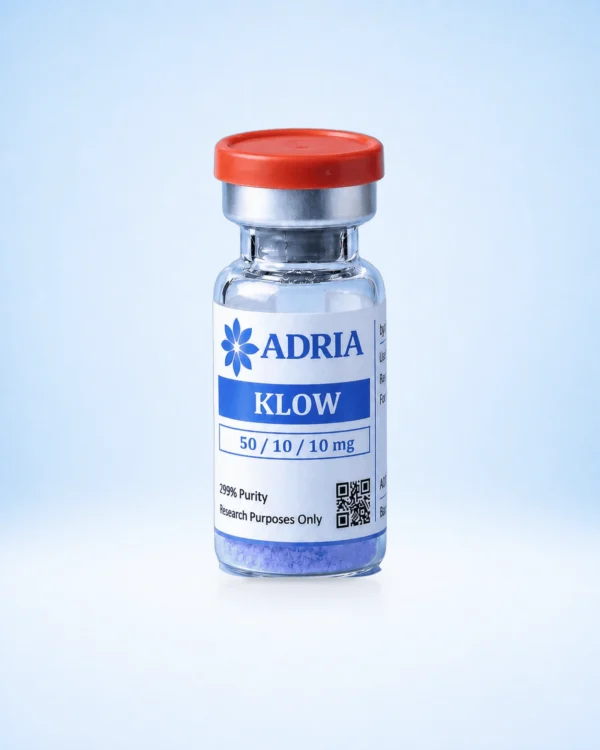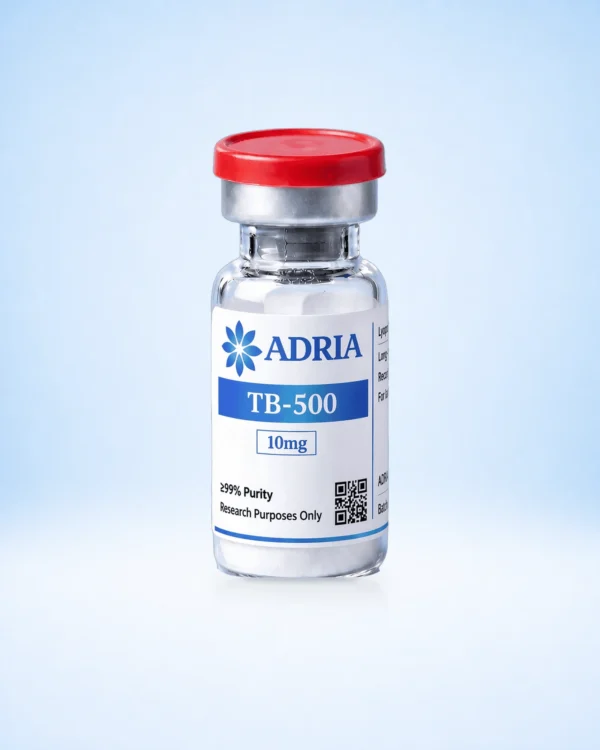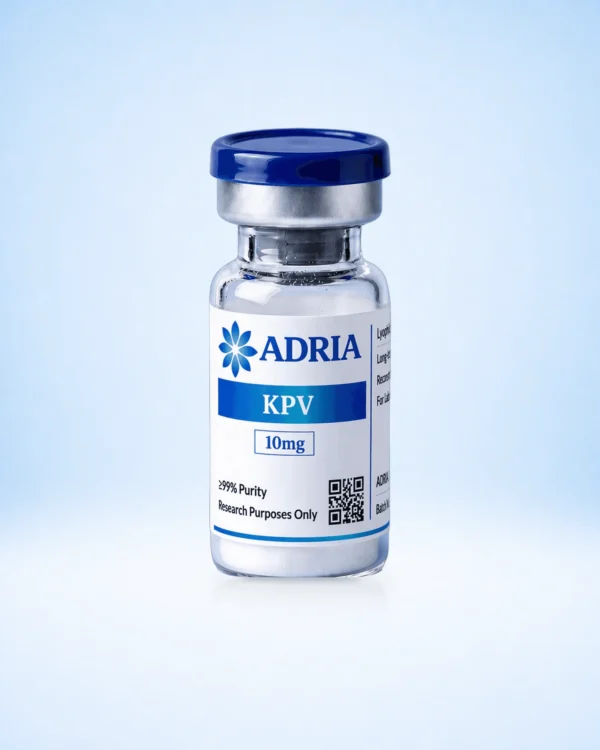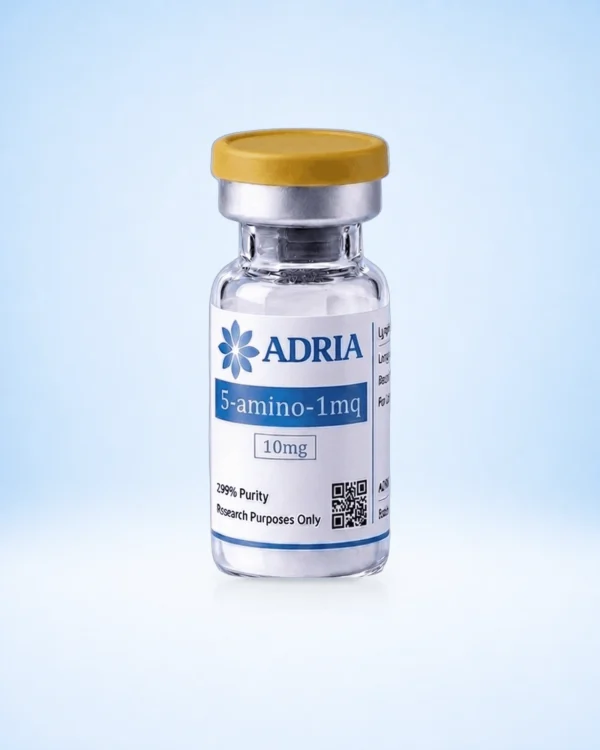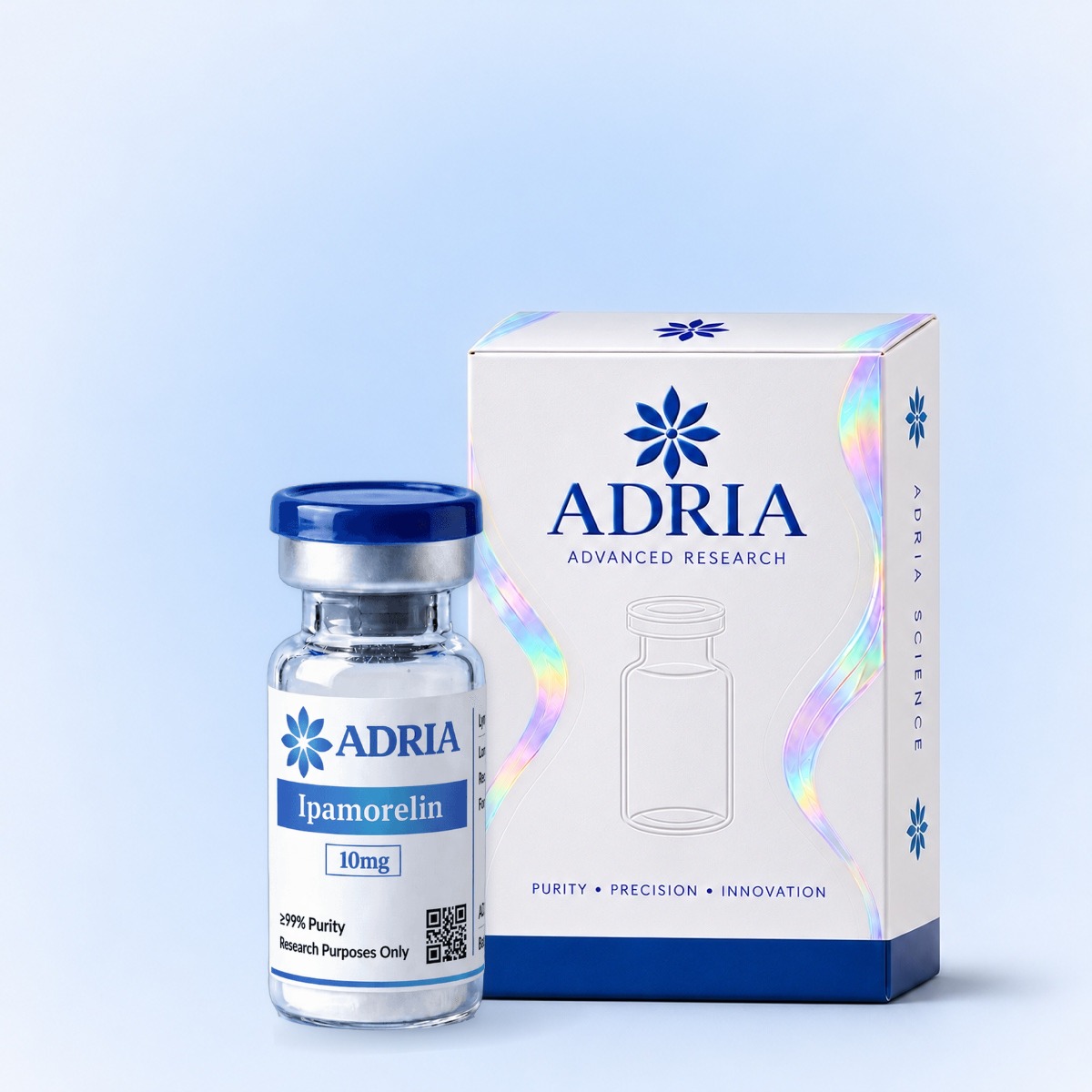
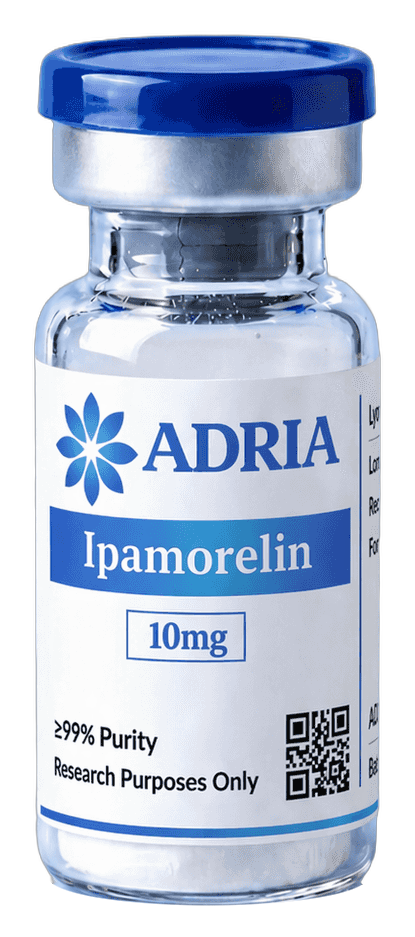
Peptide appearance
Lyophilized form helps protect peptide quality. Peptides are supplied as a dry powder, which may look like a compact "puck" or a lighter powder inside the vial.
Because the peptide is dry, it does not require refrigerated shipping during normal transit, including warm seasonal conditions. For longer storage, follow the storage guidance in the product description.
Appearance can vary. The stated peptide content is checked through third-party analysis.
Read more in the product description.
Solution not bundled
Peptides are delivered as lyophilized powder. This dry form helps preserve peptide quality during storage and transport and does not require refrigerated shipping during normal transit.
To prepare a solution, use a solvent such as Bacteriostatic water. It is sold separately, so add it only when you need it for peptide preparation.
Read more in the product description.
Muscle Growth
Ipamorelin
In stock
Order within — to ship today
Arrives 26 – 30 November to Europe


 Shown at checkout
Ipamorelin
44,50 €
Selective GHSR peptide for ghrelin receptor and endocrine marker studies.
Compound information
Specifications
Molecular profile
- Sequence
- Aib-His-D-2-Nal-D-Phe-Lys-NH2
- Molecular mass
- 711.9 g/mol
- CAS number
- 170851-70-4
- Molecular formula
- C38H49N9O5
Material record
- Physical appearance
- White to off-white lyophilized powder
- Solubility
- Soluble in bacteriostatic water and suitable aqueous laboratory solvents.
- Product note
- Selective growth hormone secretagogue peptide; supplied strictly for research use only.
Research overview
Ipamorelin
Description of Ipamorelin
In terms of efficacy, ipamorelin has similar or higher potency compared to GHRP-6 in various animal models, but it stands out due to its unique lack of effect on other hormones such as prolactin, follicle stimulating hormone (FSH), luteinizing hormone (LH), PRL, and thyroid stimulating hormone (TSH). This makes ipamorelin a promising candidate for further clinical development as it provides targeted GH release without the additional stress response typically associated with other GH secretagogues. Ipamorelin was originally developed by company Novo Nordisk, and was investigated in phase II clinical trials by Helsinn Therapeutics for treatment of postoperative ileus.
Overview of Published Research
Ipamorelin has shown promising effects in research into counteracting the catabolic impacts of glucocorticoids (GC) on muscle strength and bone formation in adult rats. In a study involving 8-month-old female rats injected with methylprednisolone (GC), the combination treatment with Ipamorelin significantly increased muscle strength and periosteal bone formation. Specifically, the maximum tetanic tension of the calf muscles was higher, and the bone formation rate was four times greater in rats treated with both GC and Ipamorelin compared to those injected with GC alone. This finding suggests that Ipamorelin may mitigate the negative effects of glucocorticoids on muscle and bone, representing an area of research interest in the context of maintaining skeletal muscle function and bone formation during GC treatment.
In a related study, Ipamorelin and GHRP-6 were evaluated for their effects on bone mineral content (BMC) in young adult female rats. The research indicated that both GHS compounds increased body weight and total tibial and vertebral BMC measured by dual X-ray absorptiometry (DXA). However, total BMC, when adjusted for body weight, remained unchanged. The increased bone formation was attributed to larger bone dimensions and increased cortical cross-sectional area, as determined by in vitro measurements with peripheral quantitative computed tomography (pQCT) and Archimedes' principle. Although cortical volumetric bone mineral density (BMD) and mineral concentration remained unchanged, the findings suggest that GHS treatments can lead to an increase in bone size without necessarily impacting bone density. These studies point to the potential research interest of Ipamorelin and other GHS compounds in the context of bone health and countering muscle and bone degradation.
Given that glucocorticoids often lead to muscle wasting, the potential of GH and its secretagogues to reduce catabolic effects is an active area of research. The ability of ipamorelin to decrease nitrogen wasting and improve organ nitrogen content in rats treated with prednisolone suggests that it may represent a subject of interest in research into preventing muscle atrophy and other catabolic effects associated with steroid treatment. By influencing muscle loss and nitrogen balance in research models, these substances could provide further avenues for investigating the adverse side effects of glucocorticoid treatment.
Growth hormone (GH) and growth hormone secretagogues like ipamorelin have been shown to mitigate the catabolic effects of glucocorticoids on nitrogen balance and urea synthesis in the liver. In a study involving rats, prednisolone, a glucocorticoid, was found to increase the hepatic capacity for urea-N synthesis (CUNS) and elevate the expression of urea cycle genes, which contributes to nitrogen loss. This treatment also led to a decrease in nitrogen balance and reduced nitrogen content in various organs. However, co-administration of GH reduced CUNS by 33%, normalized urea cycle gene expression, and improved nitrogen balance by 2.5 times. Similarly, ipamorelin decreased CUNS by 20%, reduced the expression of urea cycle enzymes, and improved nitrogen balance, albeit less efficiently than GH.
Ipamorelin has been shown to stimulate insulin release from the pancreas of both normal and diabetic rats. In a study investigating the mechanism of this effect, researchers used pancreatic tissue fragments from normal and diabetic rats. The results indicated that ipamorelin evoked significant increases in insulin secretion at varying concentrations. This insulin-stimulating effect could be inhibited by different agents such as diltiazem, yohimbine, propranolol, or a combination of atropine, propranolol, and yohimbine. Interestingly, atropine caused a significant reduction in ipamorelin-induced insulin secretion in diabetic but not in normal rats.
These results may be relevant to further research into diabetes. The observed ability of ipamorelin to influence insulin release suggests that this compound could be of research interest in the context of diabetes mellitus, particularly type 2 diabetes, where insulin secretion is impaired. Further research on ipamorelin's interaction with calcium channels and adrenergic receptors in the pancreas could lead to novel research approaches aimed at understanding insulin secretion and glucose regulation in diabetic models. This study lays the groundwork for exploring ipamorelin's potential in this field.
Postoperative ileus (POI) is a significant complication following certain types of surgery, especially after bowel resection. It is characterized by delayed gastrointestinal motility, leading to increased hospital stay and longer recovery times. This condition is marked by abdominal discomfort, bloating, and an inability to tolerate oral nutrition. Recent studies have explored the potential of ipamorelin, a ghrelin receptor agonist, in accelerating gastrointestinal recovery in subjects with POI.
Proof-of-concept clinical trials have assessed the safety and activity of ipamorelin in the context of POI symptoms. In a randomized controlled study, intravenous administration of ipamorelin was evaluated in patients undergoing abdominal surgery. Results suggested that ipamorelin reduced the time to first tolerated meal by approximately 7 hours, compared to placebo. However, the results were not statistically significant, indicating limited observed activity, and need of more specific research.
The ghrelin receptor is overexpressed in various conditions like human carcinoma and heart failure, making it a potential target for disease diagnosis and staging. Researchers have been exploring the use of positron emission tomography (PET) imaging to detect ghrelin receptor activity. Recent work has focused on the development of PET probes from peptidic and peptidomimetic derivatives of growth hormone secretagogues (GHSs). This opens up new possibilities for tracking ghrelin receptor activity in different diseases, and ipamorelin is able to bind ghrelin receptors very strongly.
For laboratory purposes and personal observation only. Not for human consumption.
Laboratory care
Handling
Peptides in transport
Peptides in lyophilized form are supplied in glass vials by standard shipping methods and do not require refrigeration. Short-term temperature fluctuations during transport will not reduce their quality and efficacy. Even at high summer temperatures, the peptides in lyophilized form are stable for several weeks.
Storage of lyophilized peptides
Lyophilized peptides should be stored in a dry place, protected from light and moisture. The following storage conditions are generally recommended:
- Room temperature (15–25 °C): Up to 3 months
- Refrigerated (2–8 °C): Up to 6 months
- Frozen (-20 °C or below): 3–5 years (recommended for long-term storage)
Allow the vial to reach room temperature after taking it out of the refrigerator or freezer.
Storage of reconstituted peptides
Once reconstituted, peptide solutions are generally less stable than their lyophilized form and should be stored under refrigerated conditions whenever possible.
The following storage conditions are generally recommended:
- Room temperature (15–25 °C): Avoid prolonged storage
- Refrigerated (2–8 °C): Typically 4–8 weeks
- Frozen (-20 °C or below): Up to 3–4 months
To preserve peptide integrity, avoid repeated freeze–thaw cycles, as these may accelerate peptide degradation.
Important: Most manufacturers recommend discarding reconstituted peptides within 4 weeks when stored at 2–8 °C. This recommendation is intentionally conservative and may not reflect the actual chemical stability of every peptide. In our own stability studies, many peptides reconstituted in bacteriostatic water showed no detectable degradation after 12 weeks of refrigerated storage. As peptide stability is highly sequence- and formulation-dependent, this result should not be extrapolated to all peptides without supporting stability data.
Analytical documentation
Tests
Latest published result
Liquilabs s.r.o.Signed Certificate of Analysis · 10mg
> 99.8%Purity by HPLC
Recorded QC panel
- AssayPeptide screening
- 9.13 mg
- PurityPeptide screening
- > 99.8%
- Identity (FTIR)FTIR spectrum
- 995
- Identity (RT)Retention time
- 0.983
These are the latest published results for this strength. The batch number is printed on each vial. Your supplied batch is confirmed against the matching published record when your order is allocated.
Source record
References
K. Raun et al., "Ipamorelin, the first selective growth hormone secretagogue," Eur. J. Endocrinol., vol. 139, no. 5, pp. 552–561, Nov. 1998. [PubMed]
N. B. Andersen, K. Malmlöf, P. B. Johansen, T. T. Andreassen, G. Ørtoft, and H. Oxlund, "The growth hormone secretagogue ipamorelin counteracts glucocorticoid-induced decrease in bone formation of adult rats," Growth Horm. IGF Res. Off. J. Growth Horm. Res. Soc. Int. IGF Res. Soc., vol. 11, no. 5, pp. 266–272, Oct. 2001. [PubMed]
J. Svensson et al., "The GH secretagogues ipamorelin and GH-releasing peptide-6 increase bone mineral content in adult female rats," J. Endocrinol., vol. 165, no. 3, pp. 569–577, Jun. 2000. [PubMed]
N. K. Aagaard et al., "Growth hormone and growth hormone secretagogue effects on nitrogen balance and urea synthesis in steroid treated rats," Growth Horm. IGF Res. Off. J. Growth Horm. Res. Soc. Int. IGF Res. Soc., vol. 19, no. 5, pp. 426–431, Oct. 2009. [PubMed]
E. Adeghate and A. S. Ponery, "Mechanism of ipamorelin-evoked insulin release from the pancreas of normal and diabetic rats," Neuro Endocrinol. Lett., vol. 25, no. 6, pp. 403–406, Dec. 2004. [PubMed]
D. E. Beck, W. B. Sweeney, M. D. McCarter, and Ipamorelin 201 Study Group, "Prospective, randomized, controlled, proof-of-concept study of the Ghrelin mimetic ipamorelin for the management of postoperative ileus in bowel resection patients," Int. J. Colorectal Dis., vol. 29, no. 12, pp. 1527–1534, Dec. 2014. [PubMed]
M. M. Fowkes, T. Lalonde, L. Yu, S. Dhanvantari, M. S. Kovacs, and L. G. Luyt, "Peptidomimetic growth hormone secretagogue derivatives for positron emission tomography imaging of the ghrelin receptor," Eur. J. Med. Chem., vol. 157, pp. 1500–1511, Sep. 2018. [PubMed]
National Center for Biotechnology Information
PubChem Compound Summary: Ipamorelin
Authoritative identity record for Ipamorelin.
PubChem View source ↗Raun K, Hansen BS, Johansen NL, et al. · 1998
Ipamorelin, the first selective growth hormone secretagogue
Primary receptor-pharmacology study of Ipamorelin.
European Journal of Endocrinology · 10.1530/eje.0.1390552 View source ↗Venkova K, Mann W, Nelson R, et al. · 2009
Efficacy of ipamorelin, a novel ghrelin mimetic, in a rodent model of postoperative ileus
Primary study using Ipamorelin in a defined rodent research model.
Journal of Pharmacology and Experimental Therapeutics · 10.1124/jpet.108.149211 View source ↗Chemical Abstracts Service
CAS Common Chemistry: 170851-70-4
Authoritative CAS Registry Number record for Ipamorelin.
CAS Common Chemistry View source ↗Gobburu JV, Agersø H, Jusko WJ, Ynddal L · 1999
Pharmacokinetic-pharmacodynamic modeling of ipamorelin, a growth hormone releasing peptide, in human volunteers
Pharmaceutical research View source ↗Johansen PB, Nowak J, Skjaerbaek C, Flyvbjerg A, Andreassen TT, Wilken M, Orskov H · 1999
Ipamorelin, a new growth-hormone-releasing peptide, induces longitudinal bone growth in rats
Growth hormone & IGF research : official journal of the Growth Hormone Research Society and the International IGF Research Society View source ↗Beck DE, Sweeney WB, McCarter MD, Ipamorelin 201 Study Group · 2014
Prospective, randomized, controlled, proof-of-concept study of the Ghrelin mimetic ipamorelin for the management of postoperative ileus in bowel resection patients
International journal of colorectal disease View source ↗Shrestha P, Sabharwal G, Ghaffari G · 2018
A Novel STAT3 Gene Mutation Related Hyper-IgE Syndrome Misdiagnosed as Hidradenitis Suppurativa
Case reports in immunology View source ↗N. B. Andersen, K. Malmlöf, P. B. Johansen, T. T. Andreassen, G. Ørtoft, and H. Oxlund · 2001
The growth hormone secretagogue ipamorelin counteracts glucocorticoid-induced decrease in bone formation of adult rats
Growth Horm. IGF Res. Off. J. Growth Horm. Res. Soc. Int. IGF Res. SocJ. Svensson et al. · 2000
The GH secretagogues ipamorelin and GH-releasing peptide-6 increase bone mineral content in adult female rats
J. EndocrinolN. K. Aagaard et al. · 2009
Growth hormone and growth hormone secretagogue effects on nitrogen balance and urea synthesis in steroid treated rats
Growth Horm. IGF Res. Off. J. Growth Horm. Res. Soc. Int. IGF Res. SocE. Adeghate and A. S. Ponery · 2004
Mechanism of ipamorelin-evoked insulin release from the pancreas of normal and diabetic rats
Neuro Endocrinol. LettCustomer reviews

Quality products,fast shipping,great refferal plan,only downside is that products in 4 mounths since my first order got more and more expensive ,but overall verry good experience.
Read full review →More than 2 weeks for package dispatch. They promised one free peptide next time. Sent me new tracking number but package still wasn't delivered to fedex. Last package (much much cheaper) was delivered in less than week. I will update if they will send my package. ok,package sent.
Read full review →Extremely satisfied with the product quality and overall experience. The customer service is polite and quick. All recommendations!
Read full review →Great service!
Read full review →Always on time and customer care is super great
Read full review →Fast good, and quality is perfect
Read full review →ordered 3 times now and everything ok every time.
Read full review →Trustworthy site with a huge catalog of products. Been purchasing from them for some time now never got disappointed. I could only recommend them.
Read full review →Great quality product
Read full review →Everything was great, super customer support, honest, reliable
Read full review →Everything ok. With little problem with package, but after contact with Customer Service everything went right. Good quality of products
Read full review →Excellent. Buying peptides online can be nerve wracking! But Adria are very transparent about all the checks and certifications. My experience with them was excellent. Great products at good prices and efficient P&P
Read full review →Continue exploring