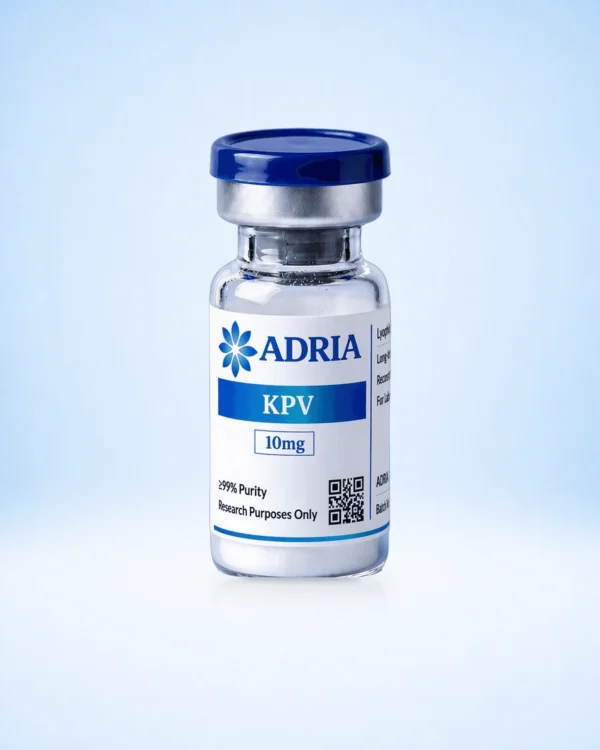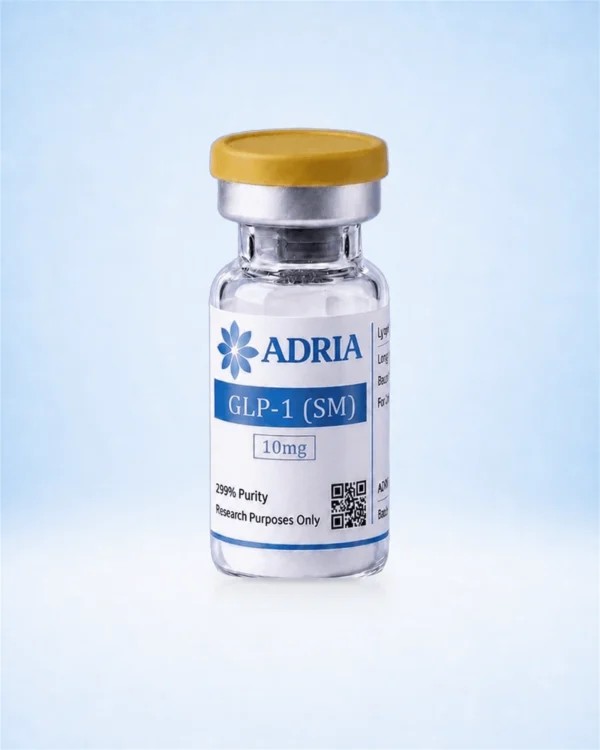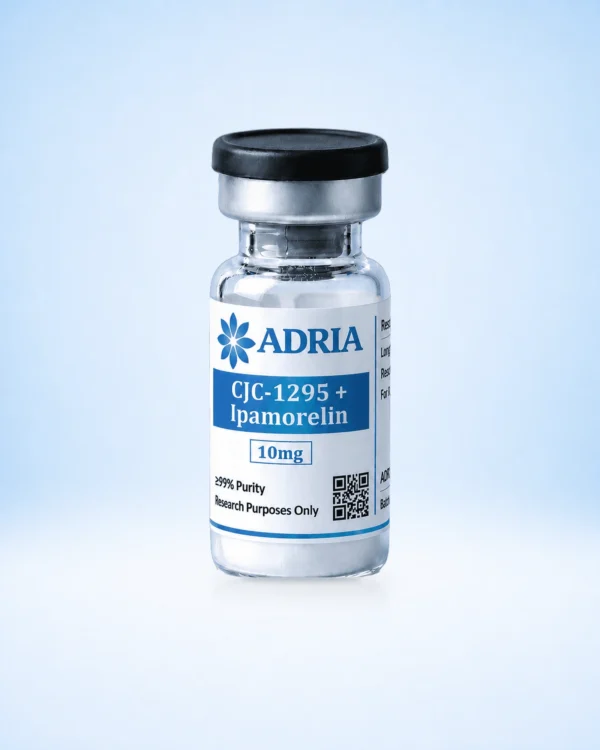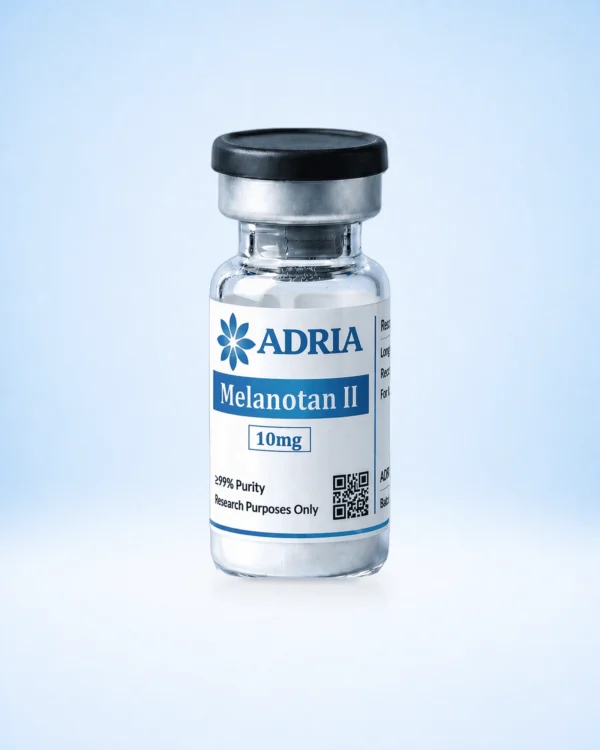
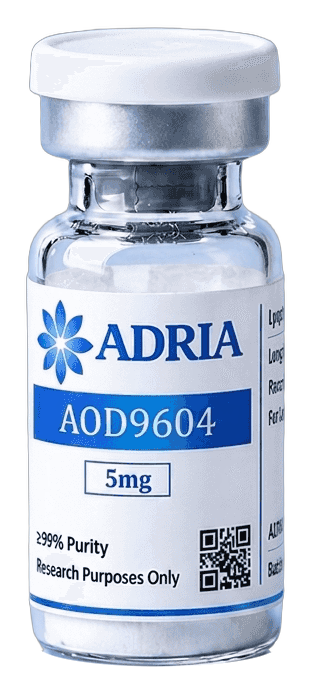
Peptide appearance
Lyophilized form helps protect peptide quality. Peptides are supplied as a dry powder, which may look like a compact "puck" or a lighter powder inside the vial.
Because the peptide is dry, it does not require refrigerated shipping during normal transit, including warm seasonal conditions. For longer storage, follow the storage guidance in the product description.
Appearance can vary. The stated peptide content is checked through third-party analysis.
Read more in the product description.
Solution not bundled
Peptides are delivered as lyophilized powder. This dry form helps preserve peptide quality during storage and transport and does not require refrigerated shipping during normal transit.
To prepare a solution, use a solvent such as Bacteriostatic water. It is sold separately, so add it only when you need it for peptide preparation.
Read more in the product description.
Metabolic Research
AOD9604
In stock
AOD-9604 is a synthetic 15-amino-acid fragment from the 176–191 region of growth hormone. Published studies look at fat-cell signalling, cartilage cells, and cardiovascular laboratory models.
Order within — to ship today Until 10:00 Slovenia time (UTC+2)
Arrives 12 – 14 October to Europe







 Shown at checkout
AOD9604
60,00 €
AOD9604 hGH fragment analogue for structure-function and metabolic pathway studies.
Research overview
AOD9604
AOD-9604 is a defined peptide fragment, not full-length growth hormone. Its exact sequence and the study method are important when comparing published findings.
Studies cover fat-tissue signalling, cartilage-cell models, and cardiovascular observations. Each finding applies only to the model and method used in that study.
Lipid-signalling models
Studies measure fat-tissue metabolism, beta-3 adrenergic receptors, and fat-breakdown signals in laboratory models. The meaning of each result depends on the model, comparison group, and test method.
Other studies compare this fragment with related growth-hormone materials. They help researchers study how changes in structure affect laboratory measurements.
Cartilage and cardiovascular observations
Published work also covers cartilage cells and cardiovascular models. These findings should be read only within the original study conditions.
Compound information
Specifications
Molecular profile
- Sequence
- Tyr-Leu-Arg-Ile-Val-Gln-Cys-Arg-Ser-Val-Glu-Gly-Ser-Cys-Gly-Phe (disulfide Cys7-Cys14)
- Molecular mass
- 1815.1 g/mol
- CAS number
- 221231-10-3
- Molecular formula
- C78H123N23O23S2
Material record
- Physical appearance
- White to off-white lyophilized powder
- Solubility
- Soluble in bacteriostatic water and suitable aqueous laboratory solvents.
- Product note
- Synthetic hGH fragment analogue; supplied strictly for research use only.
Laboratory care
Handling
Peptides in transport
Peptides in lyophilized form are supplied in glass vials by standard shipping methods and do not require refrigeration. Short-term temperature fluctuations during transport will not reduce their quality and efficacy. Even at high summer temperatures, the peptides in lyophilized form are stable for several weeks.
Storage of lyophilized peptides
Lyophilized peptides should be stored in a dry place, protected from light and moisture. The following storage conditions are generally recommended:
- Room temperature (15–25 °C): Up to 3 months
- Refrigerated (2–8 °C): Up to 6 months
- Frozen (-20 °C or below): 3–5 years (recommended for long-term storage)
Allow the vial to reach room temperature after taking it out of the refrigerator or freezer.
Storage of reconstituted peptides
Once reconstituted, peptide solutions are generally less stable than their lyophilized form and should be stored under refrigerated conditions whenever possible.
The following storage conditions are generally recommended:
- Room temperature (15–25 °C): Avoid prolonged storage
- Refrigerated (2–8 °C): Typically 4–8 weeks
- Frozen (-20 °C or below): Up to 3–4 months
To preserve peptide integrity, avoid repeated freeze–thaw cycles, as these may accelerate peptide degradation.
Important: Most manufacturers recommend discarding reconstituted peptides within 4 weeks when stored at 2–8 °C. This recommendation is intentionally conservative and may not reflect the actual chemical stability of every peptide. In our own stability studies, many peptides reconstituted in bacteriostatic water showed no detectable degradation after 12 weeks of refrigerated storage. As peptide stability is highly sequence- and formulation-dependent, this result should not be extrapolated to all peptides without supporting stability data.
Analytical documentation
Tests
Latest published result
Liquilabs s.r.o.Signed Certificate of Analysis · 5mg
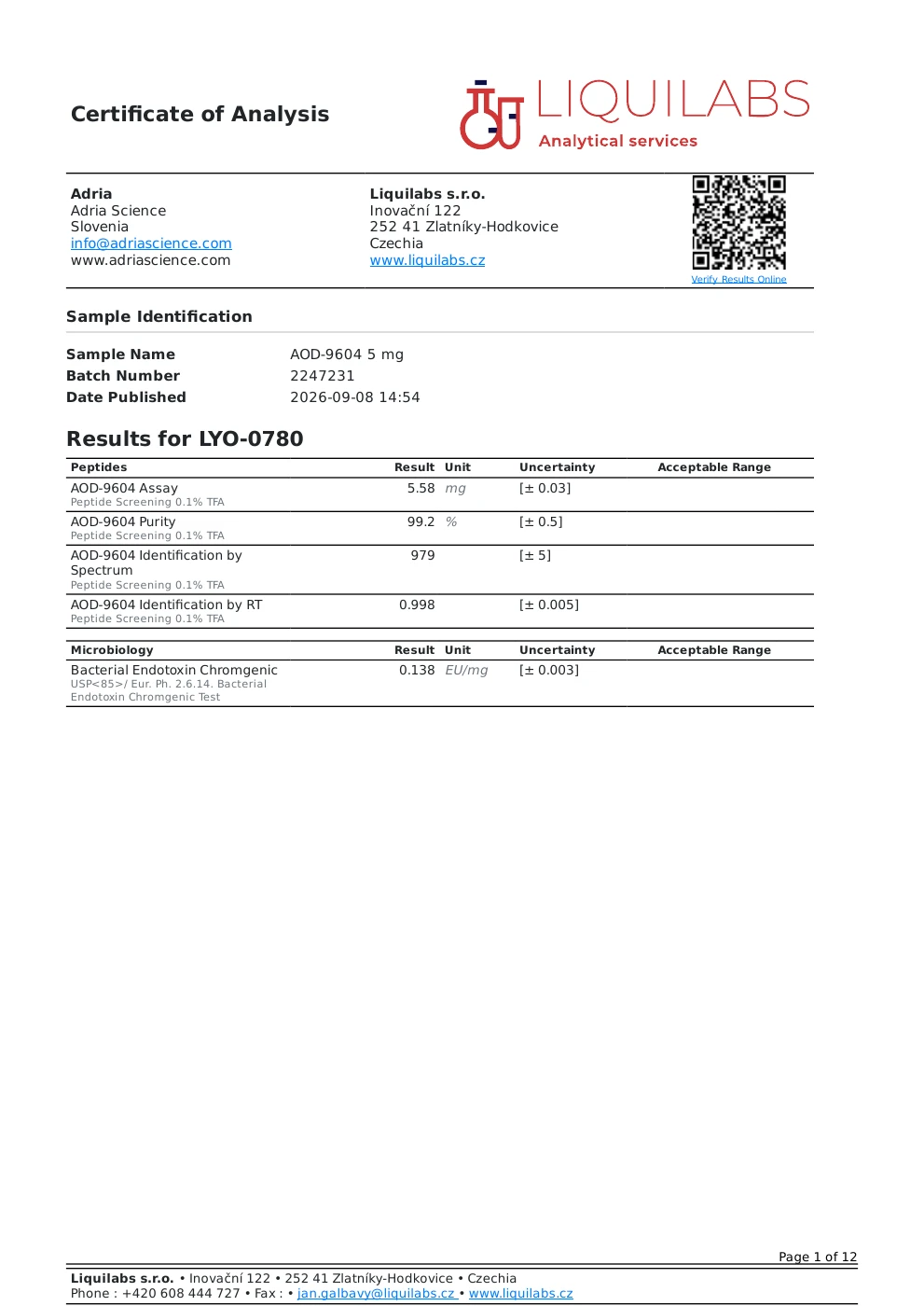
99.2%Purity by HPLC
Recorded QC panel
- AssayPeptide Screening 0.1% TFA
- 5.58 mg (± 0.03 mg)
- PurityPeptide Screening 0.1% TFA
- 99.2%
- Identity (spectrum)Peptide Screening 0.1% TFA
- 979 (± 5)
- Identity (RT)Retention time
- 0.998 (± 0.005)
- Bacterial endotoxinUSP 85 / Eur. Ph. 2.6.14
- 0.138 EU/mg
These are the latest published results for this strength. The batch number is printed on each vial. Your supplied batch is confirmed against the matching published record when your order is allocated.
Source record
References
National Center for Biotechnology Information
PubChem Compound Summary: AOD9604
Authoritative identity record for AOD9604.
PubChem · View source ↗Cox HD, Smeal SJ, Hughes CM, et al. · 2015
Detection and in vitro metabolism of AOD9604
Primary analytical study of AOD9604.
Drug Testing and Analysis · 10.1002/dta.1715 View source ↗Heffernan MA, Thorburn AW, Fam B, et al. · 2001
Increase of fat oxidation and weight loss in obese mice caused by chronic treatment with human growth hormone or a modified C-terminal fragment
Primary experimental study of a modified growth-hormone C-terminal fragment.
International Journal of Obesity and Related Metabolic Disorders · 10.1038/sj.ijo.0801740 View source ↗Ng FM, Sun J, Sharma L, Libinaka R, Jiang WJ, Gianello R · 2000
Metabolic studies of a synthetic lipolytic domain (AOD9604) of human growth hormone
Hormone research · View source ↗Heffernan M, Summers RJ, Thorburn A, Ogru E, Gianello R, Jiang WJ, Ng FM · 2001
The effects of human GH and its lipolytic fragment (AOD9604) on lipid metabolism following chronic treatment in obese mice and beta(3)-AR knock-out mice
Endocrinology · View source ↗H. Stier, E. Vos, and D. Kenley · 2013
Safety and Tolerability of the Hexadecapeptide AOD9604 in Humans
J. Endocrinol. Metab ·· 2004
Obesity drug codenamed AOD9604 highly successful in trials
·M. Heffernan et al. · 2001
The Effects of Human GH and Its Lipolytic Fragment (AOD9604) on Lipid Metabolism Following Chronic Treatment in Obese Mice andβ 3-AR Knock-Out Mice
Endocrinology ·D. R. Kwon and G. Y. Park · 2015
Effect of Intra-articular Injection of AOD9604 with or without Hyaluronic Acid in Rabbit Osteoarthritis Model
Ann. Clin. Lab. Sci ·M. D. Jensen · 2006
Potential role of new therapies in modifying cardiovascular risk in overweight patients with metabolic risk factors
Obes. Silver Spring Md ·Customer reviews
Continue exploring