
Immune and neuropeptide research
Semax Research Notes: ACTH(4-10), Neurotrophins, and Evidence Boundaries
A research-only Semax article focused on ACTH(4-10) analog context, BDNF/NGF marker literature, ischemia-model studies, and source limitations.
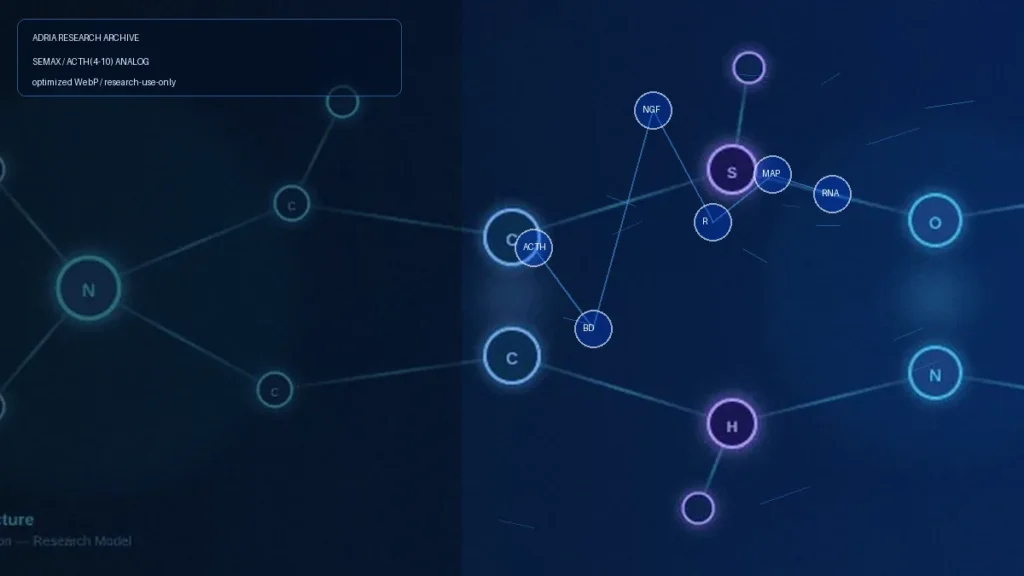
This article frames ACTH(4-10) analog research as a research-use literature topic, focusing on model systems, measured endpoints, documentation context, and evidence limits.
Research context
This article frames Semax Research Notes: ACTH(4-10), Neurotrophins, and Evidence Boundaries as a research-use literature topic, focusing on model systems, measured endpoints, documentation context, and evidence limits.
The useful angle is neurotrophin expression, peptide sequence context, ischemia or stress models, RNA/transcription endpoints, and source accessibility.
Adria research-use note
This article is a literature overview for lawful research settings only and should not be read as practical, consumer, translational, or veterinary guidance.
How to read this research
Semax papers should be read by ACTH(4-10) analog context, BDNF or NGF marker, ischemia-model design, and transcriptomic endpoint. These elements make the literature more precise.
When a source uses neuroimmune language, the better question is what was directly measured: gene expression, protein level, receptor marker, or model-level outcome.
Evidence checkpoints for this topic
Semax Research Notes should be read in light of each source’s methods, measured endpoints, and study-design limits.
In this article, sources such as Semax and neurotrophin gene-expression research, Semax and BDNF/TrkB expression in rat hippocampus, Semax, Pro-Gly-Pro, and neurotrophin transcription after ischemia should be read for their specific methods, endpoints, and limits.
- Model: identify the study design, material or dataset, and comparison used in the source.
- Endpoint: record the outcomes actually reported and how they were measured.
- Comparator: identify the controls, comparator conditions, and timing reported in the source.
- Documentation: keep sequence identity, batch traceability, COA context, storage condition, and source link together.
- Limit: distinguish measured results from conclusions beyond the study design.
What a careful reader can take from it
The practical value of this post is the structure it gives to the literature. Instead of treating every source as equal, the reader can separate the question being asked, the method used to ask it, and the claim that can reasonably follow. That is especially important in peptide topics, where online summaries often compress receptor data, model endpoints, supplier documentation, and broad interpretation into one sentence.