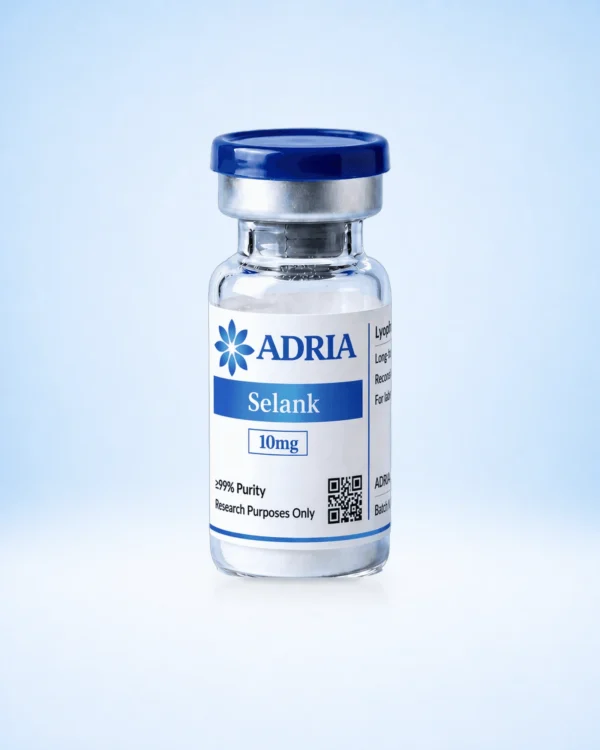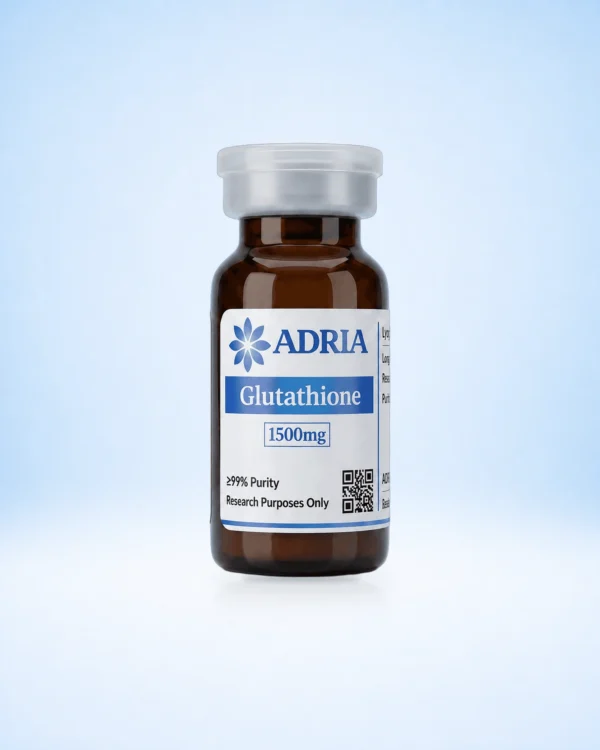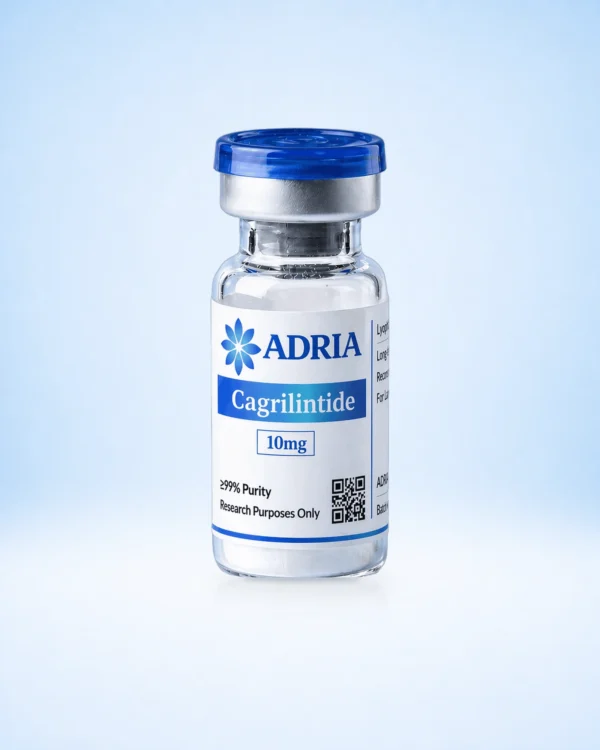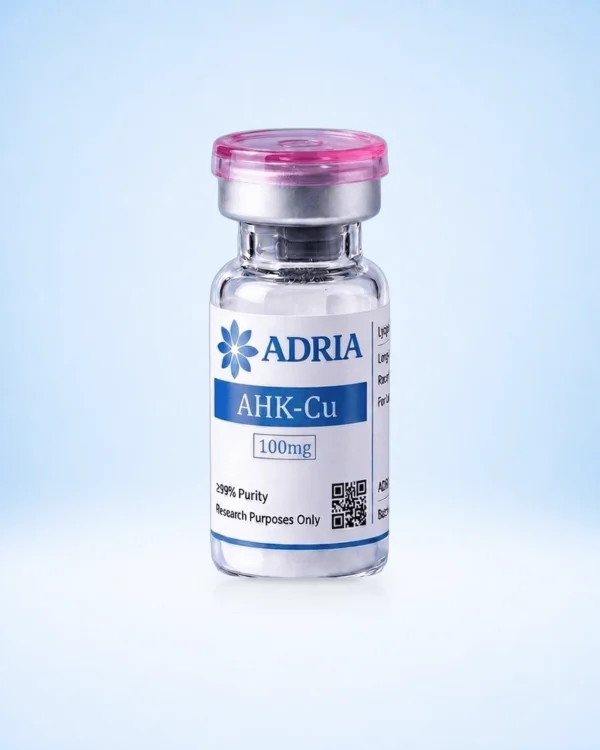
Peptide appearance
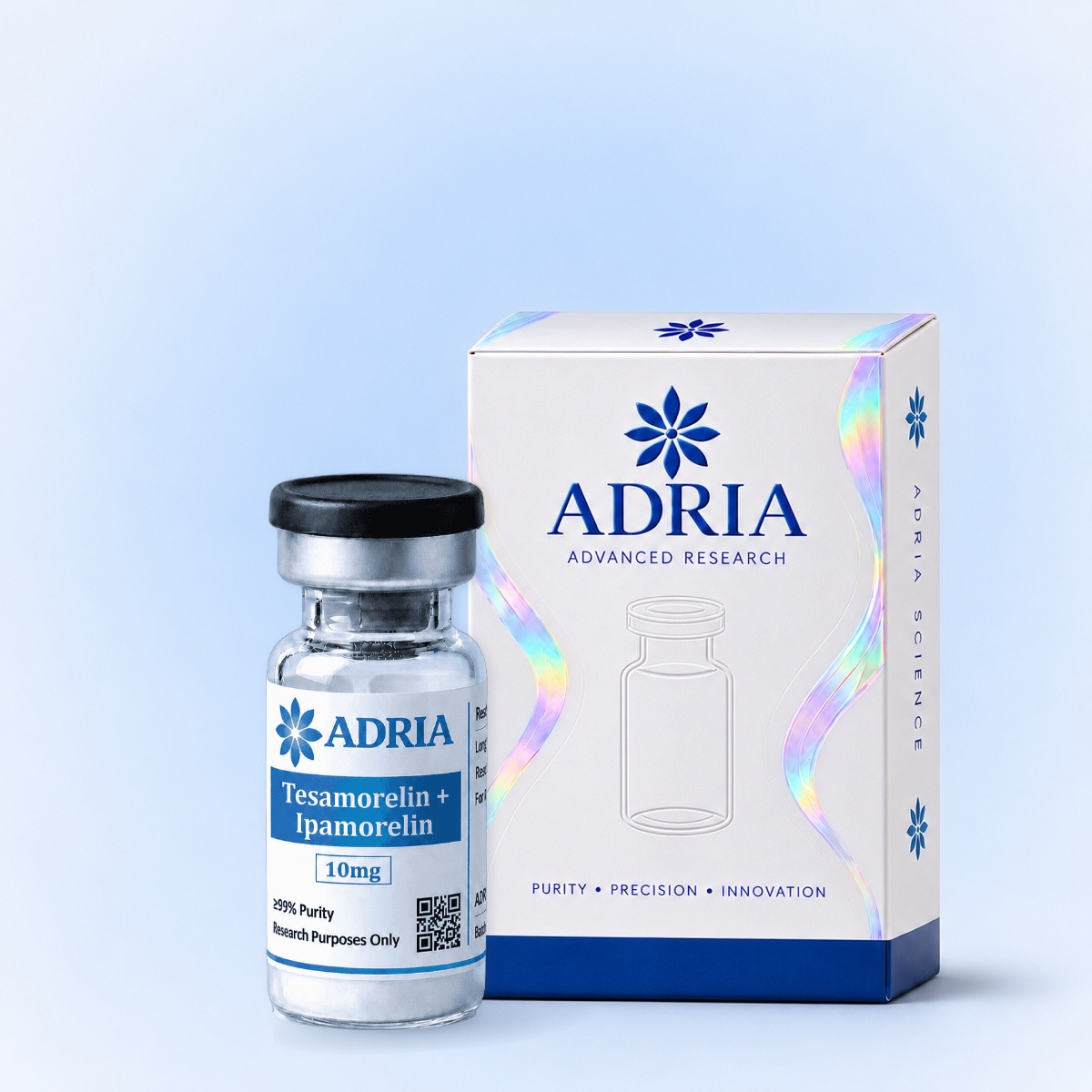
Lyophilized form helps protect peptide quality. Peptides are supplied as a dry powder, which may look like a compact "puck" or a lighter powder inside the vial.
Because the peptide is dry, it does not require refrigerated shipping during normal transit, including warm seasonal conditions. For longer storage, follow the storage guidance in the product description.
Appearance can vary. The stated peptide content is checked through third-party analysis.
Read more in the product description.
Solution not bundled
Peptides are delivered as lyophilized powder. This dry form helps preserve peptide quality during storage and transport and does not require refrigerated shipping during normal transit.
To prepare a solution, use a solvent such as Bacteriostatic water. It is sold separately, so add it only when you need it for peptide preparation.
Read more in the product description.
Weight Loss
Tesamorelin + Ipamorelin
In stock
Order within — to ship today
Arrives 26 – 30 November to Europe


 Shown at checkout
Tesamorelin + Ipamorelin
99,00 €
Tesamorelin and Ipamorelin blend for paired GHRH and GHSR pathway studies.
Compound information
Specifications
Molecular profile
- Sequence
- Tesamorelin: trans-3-hexenoyl-Tyr-Ala-Asp-Ala-Ile-Phe-Thr-Asn-Ser-Tyr-Arg-Lys-Val-Leu-Gly-Gln-Leu-Ser-Ala-Arg-Lys-Leu-Leu-Gln-Asp-Ile-Met-Ser-Arg-Gln-Gln-Gly-Glu-Ser-Asn-Gln-Glu-Arg-Gly-Ala-Arg-Ala-Arg-Leu-NH2; Ipamorelin: Aib-His-D-2-Nal-D-Phe-Lys-NH2
- Molecular mass
- Tesamorelin: 5135.9 g/mol; Ipamorelin: 711.9 g/mol.
- CAS number
- Tesamorelin: 218949-48-5; Ipamorelin: 170851-70-4.
- Molecular formula
- Tesamorelin: C221H366N72O67S; Ipamorelin: C38H49N9O5.
Material record
- Physical appearance
- White to off-white lyophilized powder
- Solubility
- Soluble in bacteriostatic water and suitable aqueous laboratory solvents.
- Product note
- Two-component research blend supplied strictly for research use only.
Research overview
Tesamorelin + Ipamorelin
What Is the Tesamorelin + Ipamorelin Blend?
This blend combines two complementary growth hormone secretagogues in one vial. Tesamorelin is a stabilized analogue of growth hormone-releasing hormone, GHRH(1-44), that signals the pituitary through the GHRH receptor. Ipamorelin is a selective pentapeptide that acts on a separate receptor, GHS-R1a, the same target as endogenous ghrelin.
Because the two compounds engage different receptors, laboratories that buy tesamorelin ipamorelin blend vials often run both pathways together rather than separately. Researchers who buy tesamorelin ipamorelin blend material in a pre-combined vial avoid the reconstitution variance that comes with measuring and mixing two independent peptides. For background on the secretagogue class, see our CJC-1295 and ipamorelin growth hormone guide.
Key Research Applications
- Pulsatile GH release models: Dual-receptor stimulation is studied for its effect on secretion amplitude versus single-pathway protocols.
- Body composition research: Tesamorelin is the most thoroughly documented GHRH analogue in visceral adipose tissue studies.
- Recovery and connective tissue work: GH and IGF-1 signaling is a standing subject in muscle growth and recovery research.
- Sleep architecture investigation: Nocturnal GH pulses are a common endpoint in sleep and recovery peptide research.
Detailed Mechanism of Action
Growth hormone secretion from the anterior pituitary is governed by two opposing hypothalamic signals. GHRH drives release from somatotroph cells, while somatostatin suppresses it. Tesamorelin occupies the GHRH receptor side of that system. It is a synthetic GHRH(1-44) analogue carrying a trans-3-hexenoyl group at the N-terminus, a modification that extends half-life relative to native GHRH by slowing enzymatic degradation.
Ipamorelin works through an entirely separate channel. It is a pentapeptide with the sequence Aib-His-D-2-Nal-D-Phe-Lys-NH2 that binds the growth hormone secretagogue receptor subtype 1a. GHS-R1a is a G-protein-coupled receptor expressed on somatotrophs and in the hypothalamus, and it is the receptor through which ghrelin exerts its own GH-releasing effect.
The combination is studied because GHRH-receptor and GHS-R1a signaling are additive rather than redundant. Activating the GHRH receptor increases the amplitude of a GH pulse; activating GHS-R1a both amplifies release and attenuates somatostatin tone. Laboratories that buy tesamorelin ipamorelin blend vials are typically modeling that two-input condition rather than either pathway on its own.
Ipamorelin’s defining characteristic in the literature is selectivity. Earlier growth hormone releasing peptides such as GHRP-2 and GHRP-6 raise GH but also produce dose-dependent increases in ACTH, cortisol, and prolactin. Ipamorelin does not, which is why it is frequently chosen as the secretagogue component when a protocol must avoid confounding stress-hormone variables. Both peptides retain the pituitary feedback loop, so IGF-1 continues to exert inhibitory control, unlike exogenous recombinant GH administration.
Published Research
Tesamorelin carries the larger clinical dataset of the two. Falutz and colleagues reported in the New England Journal of Medicine in 2007 on a multicenter randomized trial of 412 participants receiving 2mg daily subcutaneously or placebo for 26 weeks. Visceral adipose tissue fell by 15.2% in the treatment arm while rising 5.0% under placebo, triglycerides dropped by 50 mg/dL against a 9 mg/dL increase, and IGF-1 rose 81.0% versus a 5.0% decline. Glycemic measures showed no significant difference between groups. The full abstract is available on PubMed (Falutz et al., 2007).
Stanley and colleagues extended that work in JAMA in 2014, randomizing 50 participants to tesamorelin 2mg or placebo for six months and measuring ectopic fat directly. Visceral adipose tissue changed by -34 cm² against +8 cm² for placebo, a treatment effect of -42 cm², and hepatic lipid-to-water percentage fell by a median 2.0% versus a 0.9% rise. Fasting glucose rose transiently at two weeks but the difference was not significant at six months. See PubMed (Stanley et al., 2014).
Ipamorelin’s foundational characterization came from Raun and colleagues at Novo Nordisk, published in the European Journal of Endocrinology in 1998 under the title describing it as the first selective growth hormone secretagogue. The group demonstrated GH-releasing potency comparable to GHRP-6 while showing no significant elevation in ACTH, cortisol, or prolactin even at doses far above the GH-release ED50, and confirmed through antagonist profiling that the effect runs through a GHRP-like receptor rather than the GHRH receptor. The record is on PubMed (Raun et al., 1998). Note that the published combination literature pairs ipamorelin most often with CJC-1295; tesamorelin pairings are less represented in peer-reviewed work, which is part of what makes this blend a subject of ongoing investigation.
Why Researchers Buy Tesamorelin Ipamorelin Blend Vials Pre-Combined
- The case to buy tesamorelin ipamorelin blend material pre-combined comes down to error control. Mixing two peptides at the bench introduces two sources of error: measurement variance at each transfer, and differential loss during handling. A pre-combined lyophilized vial eliminates both, because the 6:4 ratio is fixed at the point of manufacture and verified in a single assay.
- The trade-off is ratio flexibility. A protocol that needs to vary the GHRH-to-secretagogue proportion across arms will want separate vials. Laboratories that buy tesamorelin ipamorelin blend material are generally holding that ratio constant and varying something else, such as timing, vehicle, or total exposure. Our peptide stacking guide covers how combination decisions are typically structured.
For laboratory purposes and personal observation only. Not for human consumption.
Laboratory care
Handling
Peptides in transport
Peptides in lyophilized form are supplied in glass vials by standard shipping methods and do not require refrigeration. Short-term temperature fluctuations during transport will not reduce their quality and efficacy. Even at high summer temperatures, the peptides in lyophilized form are stable for several weeks.
Storage of lyophilized peptides
Lyophilized peptides should be stored in a dry place, protected from light and moisture. The following storage conditions are generally recommended:
- Room temperature (15–25 °C): Up to 3 months
- Refrigerated (2–8 °C): Up to 6 months
- Frozen (-20 °C or below): 3–5 years (recommended for long-term storage)
Allow the vial to reach room temperature after taking it out of the refrigerator or freezer.
Storage of reconstituted peptides
Once reconstituted, peptide solutions are generally less stable than their lyophilized form and should be stored under refrigerated conditions whenever possible.
The following storage conditions are generally recommended:
- Room temperature (15–25 °C): Avoid prolonged storage
- Refrigerated (2–8 °C): Typically 4–8 weeks
- Frozen (-20 °C or below): Up to 3–4 months
To preserve peptide integrity, avoid repeated freeze–thaw cycles, as these may accelerate peptide degradation.
Important: Most manufacturers recommend discarding reconstituted peptides within 4 weeks when stored at 2–8 °C. This recommendation is intentionally conservative and may not reflect the actual chemical stability of every peptide. In our own stability studies, many peptides reconstituted in bacteriostatic water showed no detectable degradation after 12 weeks of refrigerated storage. As peptide stability is highly sequence- and formulation-dependent, this result should not be extrapolated to all peptides without supporting stability data.
Analytical documentation
Tests
Documentation is available on request
Contact us for the current record for this strength. We never substitute a generic or mismatched certificate.
Your batch is confirmed when your order is allocated.Source record
References
National Center for Biotechnology Information
PubChem Compound Summary: Tesamorelin
Identity record for the Tesamorelin component.
PubChem View source ↗National Center for Biotechnology Information
PubChem Compound Summary: Ipamorelin
Identity record for the Ipamorelin component.
PubChem View source ↗Russo SC, Ockene MW, Arpante AK, et al. · 2024
Efficacy and safety of tesamorelin in people with HIV on integrase inhibitors
Primary clinical research report for the Tesamorelin component.
AIDS · 10.1097/qad.0000000000003965 View source ↗Falutz J, Mamputu JC, Potvin D, Moyle G, Soulban G, Loughrey H, Marsolais C, Turner R, Grinspoon S · 2010
Effects of tesamorelin (TH9507), a growth hormone-releasing factor analog, in human immunodeficiency virus-infected patients with excess abdominal fat: a pooled analysis of two multicenter, double-blind placebo-controlled phase 3 trials with safety extension data
The Journal of clinical endocrinology and metabolism View source ↗Stanley TL, Fourman LT, Feldpausch MN, Purdy J, Zheng I, Pan CS, Aepfelbacher J, Buckless C, Tsao A, Kellogg A, Branch K, Lee H, Liu CY, Corey KE, Chung RT, Torriani M, Kleiner DE, Hadigan CM, Grinspoon SK · 2019
Effects of tesamorelin on non-alcoholic fatty liver disease in HIV: a randomised, double-blind, multicentre trial
The lancet. HIV View source ↗Baker LD, Barsness SM, Borson S, Merriam GR, Friedman SD, Craft S, Vitiello MV · 2012
Effects of growth hormone–releasing hormone on cognitive function in adults with mild cognitive impairment and healthy older adults: results of a controlled trial
Archives of neurology View source ↗Lauritzen L, Amundsen ID, Damsgaard CT, Lind MV, Schnurr TM, Hansen T, Michaelsen KF, Vogel U · 2019
FADS and PPARG2 Single Nucleotide Polymorphisms are Associated with Plasma Lipids in 9-Mo-Old Infants
The Journal of nutrition View source ↗Sharma G, Ojha R, Noguera-Ortega E, Rebecca VW, Attanasio J, Liu S, Piao S, Lee JJ, Nicastri MC, Harper SL, Ronghe A, Jain V, Winkler JD, Speicher DW, Mastio J, Gimotty PA, Xu X, Wherry EJ, Gabrilovich DI, Amaravadi RK · 2020
PPT1 inhibition enhances the antitumor activity of anti-PD-1 antibody in melanoma
JCI insight View source ↗Customer reviews

Quality products,fast shipping,great refferal plan,only downside is that products in 4 mounths since my first order got more and more expensive ,but overall verry good experience.
Read full review →More than 2 weeks for package dispatch. They promised one free peptide next time. Sent me new tracking number but package still wasn't delivered to fedex. Last package (much much cheaper) was delivered in less than week. I will update if they will send my package. ok,package sent.
Read full review →Extremely satisfied with the product quality and overall experience. The customer service is polite and quick. All recommendations!
Read full review →Great service!
Read full review →Always on time and customer care is super great
Read full review →Fast good, and quality is perfect
Read full review →ordered 3 times now and everything ok every time.
Read full review →Trustworthy site with a huge catalog of products. Been purchasing from them for some time now never got disappointed. I could only recommend them.
Read full review →Great quality product
Read full review →Everything was great, super customer support, honest, reliable
Read full review →Everything ok. With little problem with package, but after contact with Customer Service everything went right. Good quality of products
Read full review →Excellent. Buying peptides online can be nerve wracking! But Adria are very transparent about all the checks and certifications. My experience with them was excellent. Great products at good prices and efficient P&P
Read full review →Continue exploring