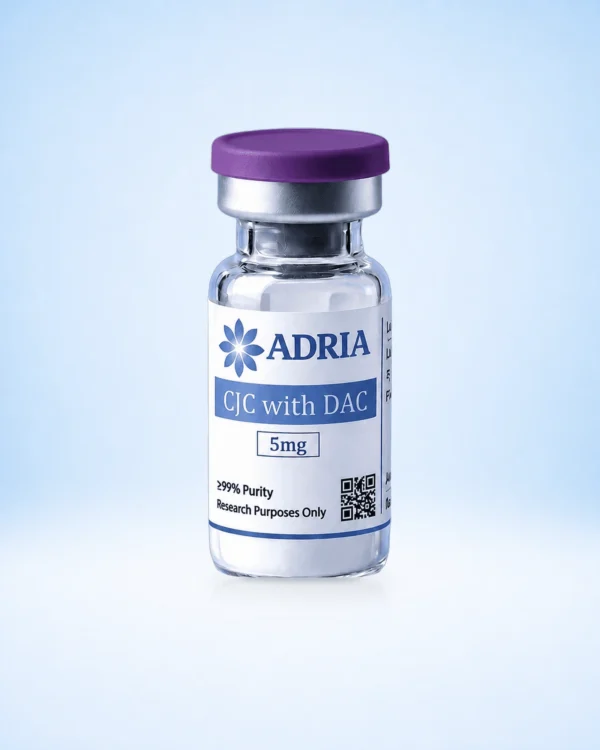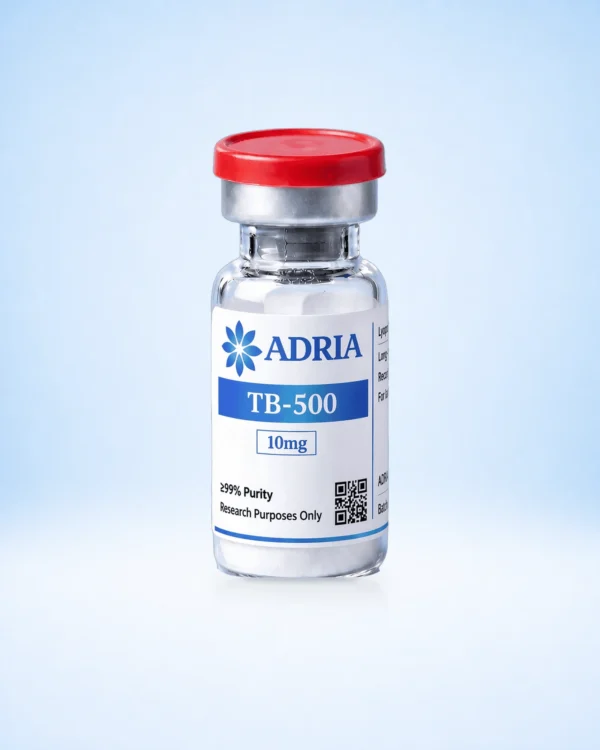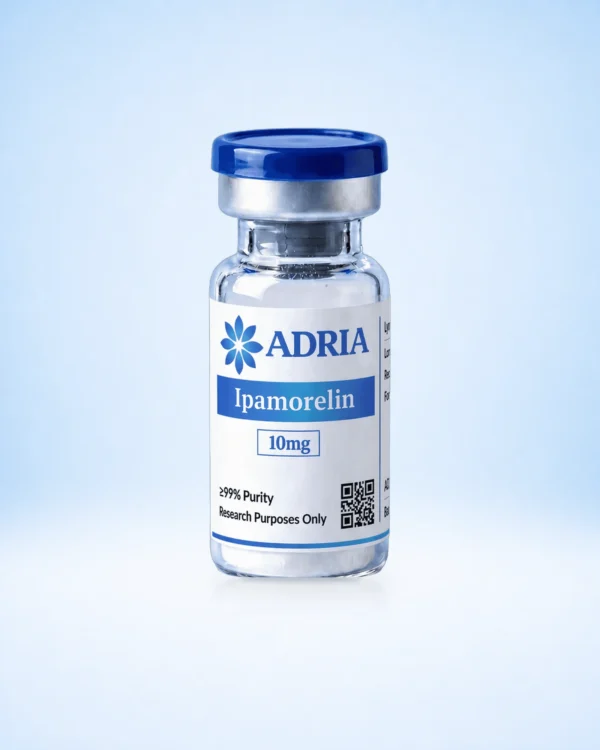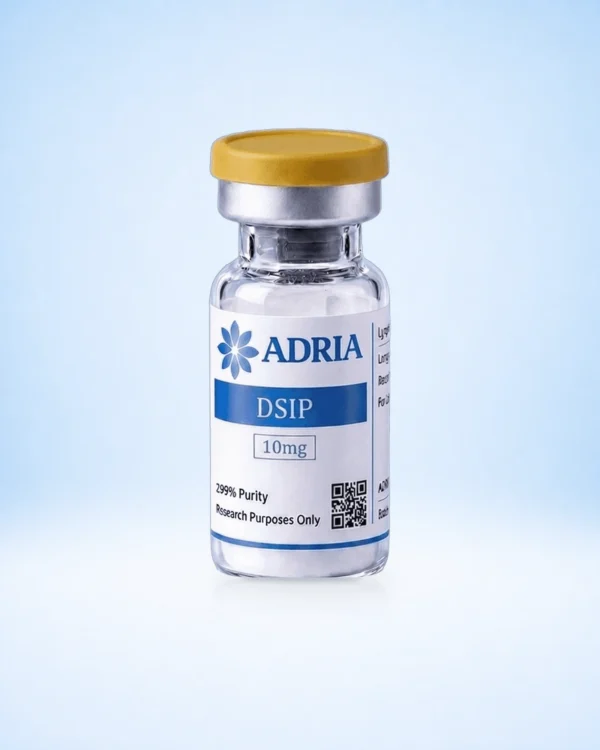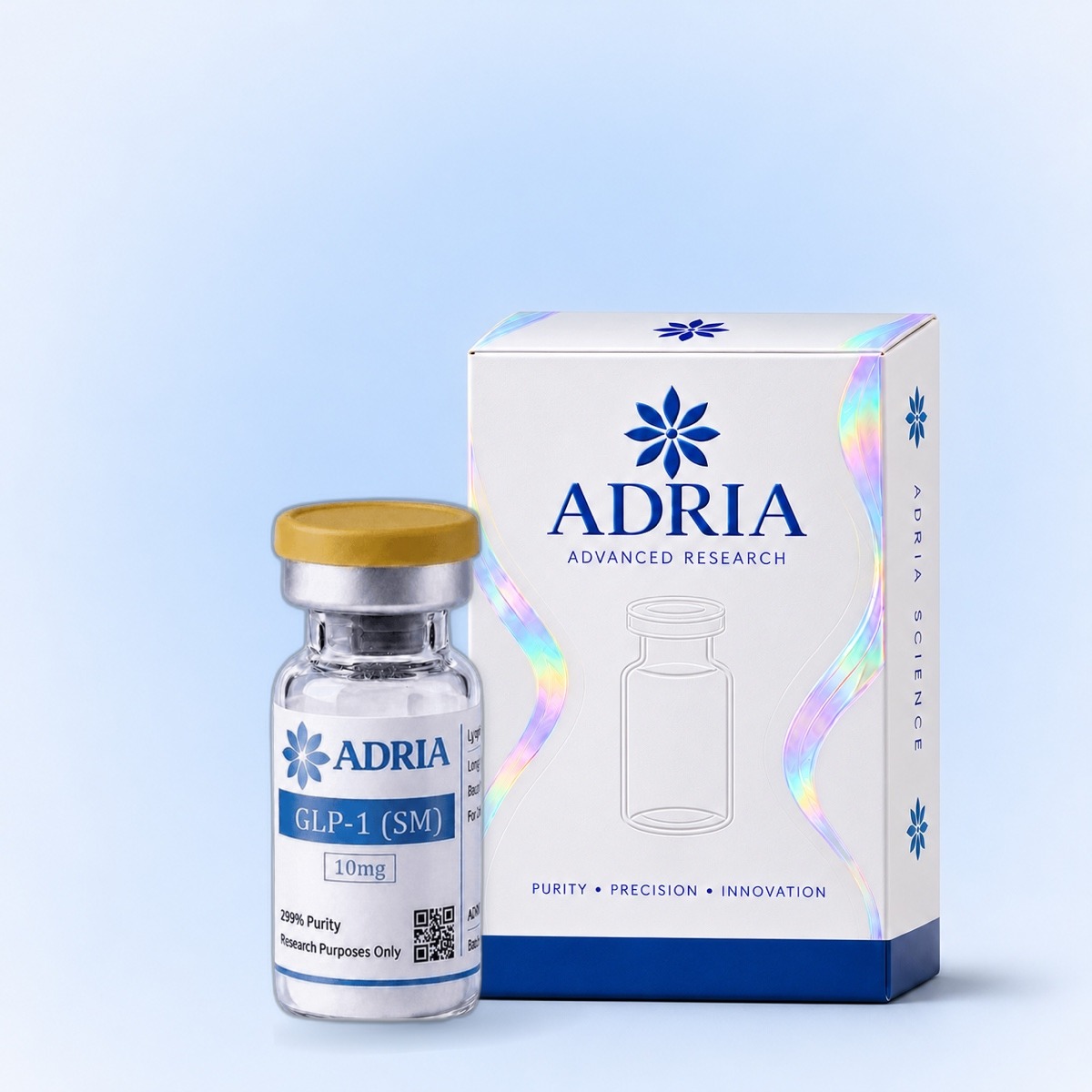
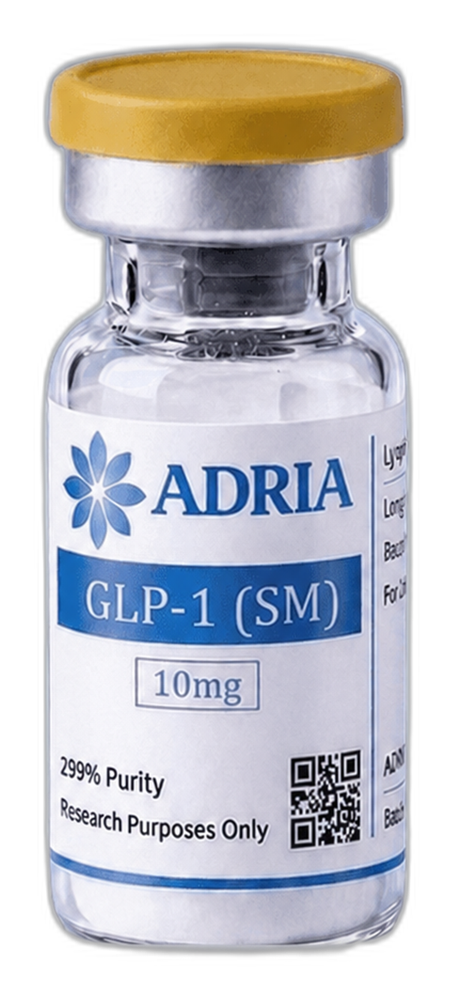
Peptide appearance
Lyophilized form helps protect peptide quality. Peptides are supplied as a dry powder, which may look like a compact "puck" or a lighter powder inside the vial.
Because the peptide is dry, it does not require refrigerated shipping during normal transit, including warm seasonal conditions. For longer storage, follow the storage guidance in the product description.
Appearance can vary. The stated peptide content is checked through third-party analysis.
Read more in the product description.
Solution not bundled
Peptides are delivered as lyophilized powder. This dry form helps preserve peptide quality during storage and transport and does not require refrigerated shipping during normal transit.
To prepare a solution, use a solvent such as Bacteriostatic water. It is sold separately, so add it only when you need it for peptide preparation.
Read more in the product description.
Weight Loss
GLP-1 (Semaglutide)
In stock
Order within — to ship today
Arrives 26 – 30 November to Europe


 Shown at checkout
GLP-1 (Semaglutide)
Price range: 77,00 € through 99,00 €
Long-acting GLP-1 analogue for incretin receptor and metabolic pathway studies.
Compound information
Specifications
Molecular profile
- Sequence
- His-Aib-Glu-Gly-Thr-Phe-Thr-Ser-Asp-Val-Ser-Ser-Tyr-Leu-Glu-Gly-Gln-Ala-Ala-Lys(AEEA-AEEA-gamma-Glu-C18 diacid)-Glu-Phe-Ile-Ala-Trp-Leu-Val-Arg-Gly-Arg-Gly
- Molecular mass
- 4113.58 g/mol
- CAS number
- 910463-68-2
- Molecular formula
- C187H291N45O59
Material record
- Physical appearance
- White to off-white lyophilized powder
- Solubility
- Soluble in bacteriostatic water and suitable aqueous laboratory solvents.
- Product note
- GLP-1 receptor pathway research compound; supplied strictly for research use only.
Research overview
GLP-1 (Semaglutide)
What is Semaglutide or GLP-1 (Semaglutide)?
Semaglutide is a long-acting GLP-1 (Glucagon-Like Peptide-1) receptor agonist that mimics the action of the natural incretin hormone GLP-1.
It works by enhancing insulin secretion, reducing glucagon release, slowing gastric emptying, and promoting satiety, making it one of the leading compounds in metabolic and obesity research.
In preclinical and clinical studies, Semaglutide has demonstrated strong potential for improving glucose metabolism, reducing body weight, and optimizing cardiometabolic health.
Ideal for energy balance, appetite regulation, and glucose control.
Key Research Findings
- Appetite Control: Activates GLP-1 receptors in the brain to reduce hunger and promote early satiety.
- Weight Management: Shown in studies to significantly reduce body fat and improve body composition.
- Blood Sugar Regulation: Enhances insulin sensitivity and stabilizes glucose levels.
- Cardiometabolic Health: May improve lipid profiles and fat metabolism while reducing oxidative stress.
- Long-Acting Effect: Due to its extended half-life, once-weekly dosing is possible in research settings.
Detailed Mechanism of Action
Semaglutide binds the GLP-1 receptor, a class B G-protein-coupled receptor expressed on pancreatic beta cells, hypothalamic and hindbrain neurons, gastric smooth muscle, cardiomyocytes, and vascular endothelium. Receptor activation couples to the stimulatory G protein Gαs, raising intracellular cyclic AMP and activating protein kinase A and Epac2.
In beta cells this cascade amplifies glucose-dependent insulin exocytosis while leaving basal insulin release largely unchanged at low glucose. That glucose dependence is a defining feature of GLP-1 receptor agonists and one reason the class is so widely studied in metabolic research.
In the central nervous system, semaglutide reaches circumventricular regions such as the area postrema and the arcuate nucleus, where it activates POMC/CART neurons and indirectly inhibits NPY/AgRP neurons. Gabery and colleagues (JCI Insight, 2020) showed in rodents that the peptide engages a distributed network across the hypothalamus, brainstem, and septal nuclei rather than a single satiety center. Laboratories applying it to neuroscience work frequently map exactly these circuits.
Peripheral effects include slowed gastric emptying, reduced glucagon secretion from pancreatic alpha cells, and modulation of inflammatory signaling in adipose tissue and the vascular wall. The albumin-bound fatty diacid keeps plasma concentrations stable across a full week, which is why once-weekly protocols dominate the published literature.
Molecular identity matters for reproducibility. When you buy semaglutide from PSPeptides, mass spectrometry confirms the expected mass of approximately 4,113.6 Da, and HPLC confirms that at least 99% of the material is the intact 31-residue peptide rather than truncated or oxidized fragments.
Pharmacokinetics and Half-Life
The C18 diacid side chain gives semaglutide high affinity for serum albumin, so most circulating peptide travels bound rather than free. Albumin binding shields the molecule from renal clearance and enzymatic breakdown, producing a human half-life of approximately 165 hours, or about one week. Steady-state concentrations are reached after four to five weeks of weekly exposure.
This has practical consequences in the lab. Researchers running serum-containing cell assays should expect albumin in the medium to lower the free peptide fraction, shifting apparent potency. In rodent studies, the half-life is far shorter than in humans, which is why daily dosing schedules are common in preclinical designs. Our peptide half-life chart lists comparative values across the GLP-1 class.
Semaglutide is metabolized primarily through proteolytic cleavage of the peptide backbone and sequential beta-oxidation of the fatty acid side chain. The main excretion routes are urine and feces, with only about 3% of a dose excreted unchanged in urine. Clearance was not meaningfully affected by renal or hepatic impairment in clinical studies, which simplifies interpretation of exposure data for labs that buy semaglutide for pharmacokinetic modeling.
Published Research
Semaglutide is among the most extensively studied peptides in metabolic science. In the STEP 1 trial, Wilding et al. (NEJM, 2021) randomized 1,961 adults with overweight or obesity to 2.4 mg weekly or placebo for 68 weeks and reported a mean body-weight change of -14.9% versus -2.4%. Roughly one-third of treated participants lost 20% or more of baseline weight.
Cardiovascular data are equally robust. The SUSTAIN-6 trial by Marso et al. (NEJM, 2016) found a 26% relative reduction in major adverse cardiovascular events among 3,297 participants with type 2 diabetes. The later SELECT trial (Lincoff et al., NEJM, 2023) extended that finding to 17,604 people with obesity but no diabetes, reporting a 20% reduction in major cardiovascular events.
The STEP program added further detail. STEP 2 (Davies et al., Lancet, 2021) reported a -9.6% weight change in participants with type 2 diabetes, and STEP 4 (Rubino et al., JAMA, 2021) showed that withdrawing the peptide after 20 weeks led to substantial weight regain, underscoring that receptor engagement must be maintained for the effect to persist.
The molecule’s design history is documented by Lau and colleagues (Journal of Medicinal Chemistry, 2015), who described how the C18 diacid and linker were selected to maximize albumin affinity while preserving receptor potency. Researchers who buy semaglutide for pharmacokinetic or receptor-binding work will find that paper the best starting reference.
More recent head-to-head studies, including the SURMOUNT-5 comparison with tirzepatide, position semaglutide as the established single-agonist reference point against which dual and triple agonists are measured. That reference status is one reason so many labs buy semaglutide as a control arm.
Why Choose Semaglutide?
- Semaglutide is among the most extensively studied GLP-1 analogues worldwide, known for its dual function in weight and blood sugar regulation.
- Its long-lasting action, favorable metabolic profile, and broad range of research applications make it a cornerstone compound in metabolic and endocrine science.
Order Semaglutide and explore its potential in advanced metabolic and weight management research.
For laboratory purposes and personal observation only. Not for human consumption.
Laboratory care
Handling
Peptides in transport
Peptides in lyophilized form are supplied in glass vials by standard shipping methods and do not require refrigeration. Short-term temperature fluctuations during transport will not reduce their quality and efficacy. Even at high summer temperatures, the peptides in lyophilized form are stable for several weeks.
Storage of lyophilized peptides
Lyophilized peptides should be stored in a dry place, protected from light and moisture. The following storage conditions are generally recommended:
- Room temperature (15–25 °C): Up to 3 months
- Refrigerated (2–8 °C): Up to 6 months
- Frozen (-20 °C or below): 3–5 years (recommended for long-term storage)
Allow the vial to reach room temperature after taking it out of the refrigerator or freezer.
Storage of reconstituted peptides
Once reconstituted, peptide solutions are generally less stable than their lyophilized form and should be stored under refrigerated conditions whenever possible.
The following storage conditions are generally recommended:
- Room temperature (15–25 °C): Avoid prolonged storage
- Refrigerated (2–8 °C): Typically 4–8 weeks
- Frozen (-20 °C or below): Up to 3–4 months
To preserve peptide integrity, avoid repeated freeze–thaw cycles, as these may accelerate peptide degradation.
Important: Most manufacturers recommend discarding reconstituted peptides within 4 weeks when stored at 2–8 °C. This recommendation is intentionally conservative and may not reflect the actual chemical stability of every peptide. In our own stability studies, many peptides reconstituted in bacteriostatic water showed no detectable degradation after 12 weeks of refrigerated storage. As peptide stability is highly sequence- and formulation-dependent, this result should not be extrapolated to all peptides without supporting stability data.
Analytical documentation
Tests
Documentation is available on request
Contact us for the current record for this strength. We never substitute a generic or mismatched certificate.
Your batch is confirmed when your order is allocated.Documentation is available on request
Contact us for the current record for this strength. We never substitute a generic or mismatched certificate.
Your batch is confirmed when your order is allocated.Source record
References
Lau J, Bloch P, Schäffer L, et al. · 2015
Discovery of the Once-Weekly Glucagon-Like Peptide-1 (GLP-1) Analogue Semaglutide
Molecular design and discovery history of semaglutide.
Journal of Medicinal Chemistry · 10.1021/acs.jmedchem.5b00726 View source ↗National Center for Biotechnology Information
PubChem Compound Summary: Semaglutide
Authoritative identity record for semaglutide.
PubChem View source ↗Wilding JPH, Batterham RL, Calanna S, et al. · 2021
Once-Weekly Semaglutide in Adults with Overweight or Obesity
Primary clinical research report for the compound described as semaglutide.
The New England Journal of Medicine · 10.1056/nejmoa2032183 View source ↗National Center for Biotechnology Information
PubChem compound record
PubChem View source ↗Customer reviews

Quality products,fast shipping,great refferal plan,only downside is that products in 4 mounths since my first order got more and more expensive ,but overall verry good experience.
Read full review →More than 2 weeks for package dispatch. They promised one free peptide next time. Sent me new tracking number but package still wasn't delivered to fedex. Last package (much much cheaper) was delivered in less than week. I will update if they will send my package. ok,package sent.
Read full review →Extremely satisfied with the product quality and overall experience. The customer service is polite and quick. All recommendations!
Read full review →Great service!
Read full review →Always on time and customer care is super great
Read full review →Fast good, and quality is perfect
Read full review →ordered 3 times now and everything ok every time.
Read full review →Trustworthy site with a huge catalog of products. Been purchasing from them for some time now never got disappointed. I could only recommend them.
Read full review →Great quality product
Read full review →Everything was great, super customer support, honest, reliable
Read full review →Everything ok. With little problem with package, but after contact with Customer Service everything went right. Good quality of products
Read full review →Excellent. Buying peptides online can be nerve wracking! But Adria are very transparent about all the checks and certifications. My experience with them was excellent. Great products at good prices and efficient P&P
Read full review →Continue exploring