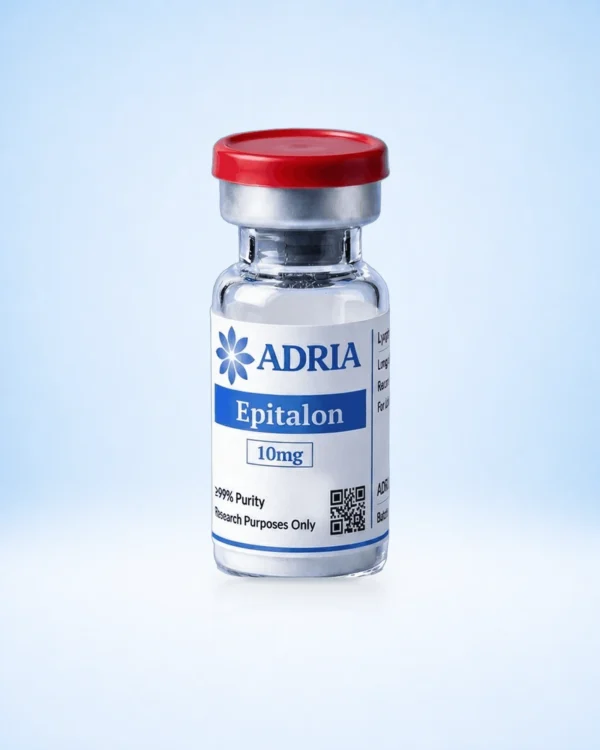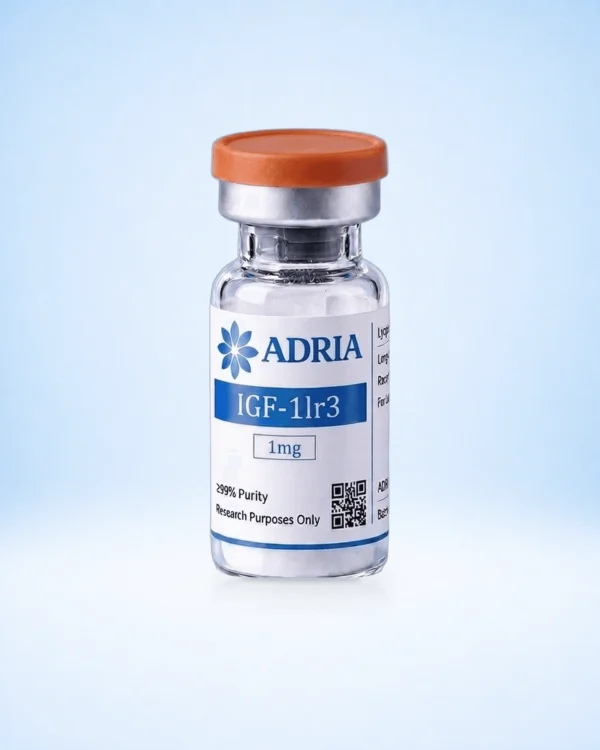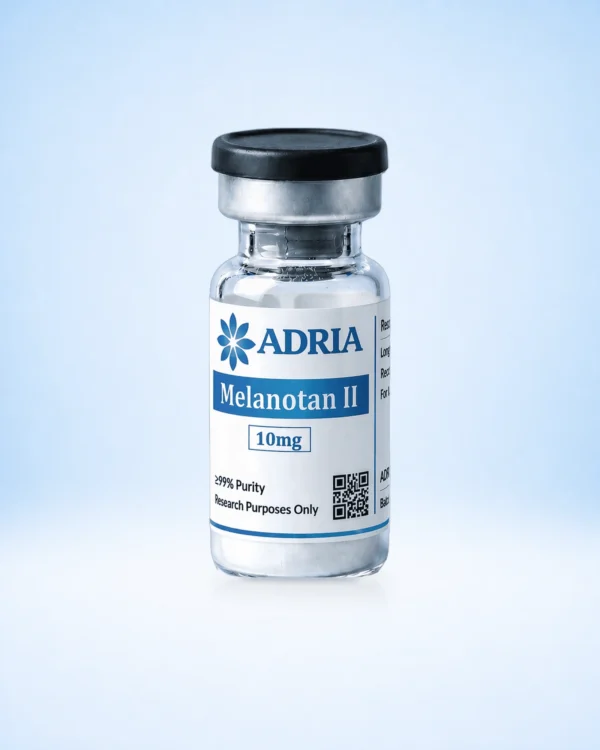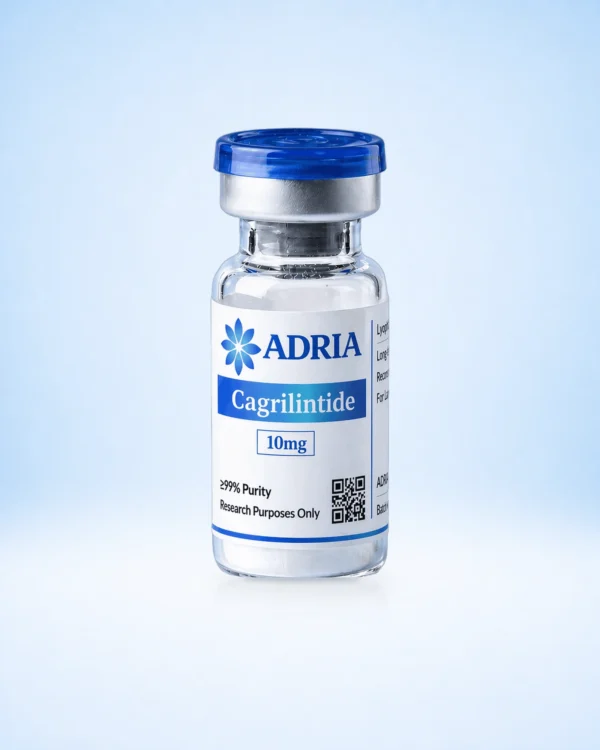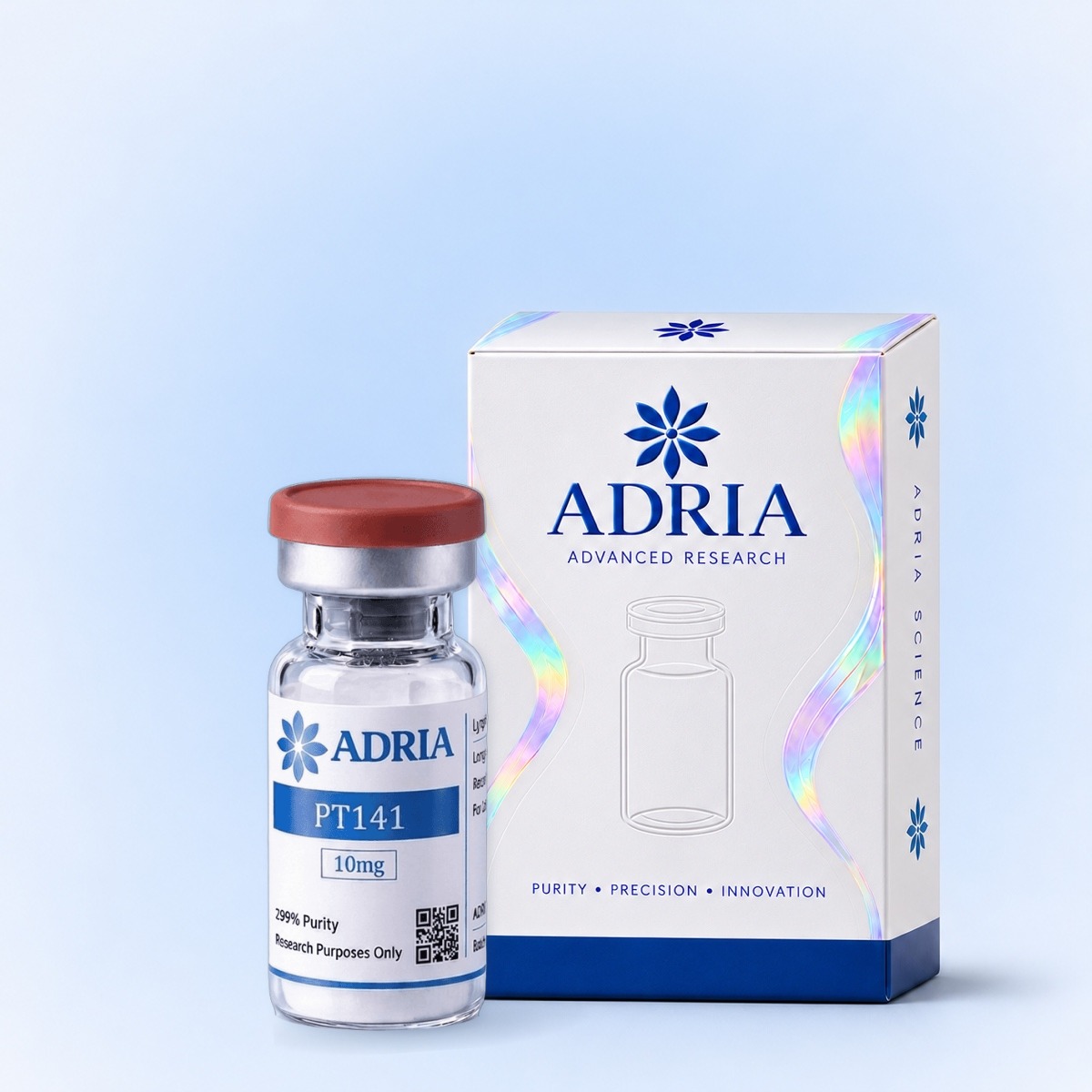
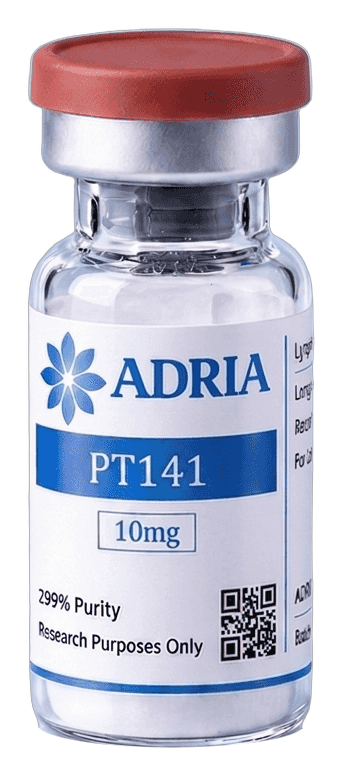
Peptide appearance
Lyophilized form helps protect peptide quality. Peptides are supplied as a dry powder, which may look like a compact "puck" or a lighter powder inside the vial.
Because the peptide is dry, it does not require refrigerated shipping during normal transit, including warm seasonal conditions. For longer storage, follow the storage guidance in the product description.
Appearance can vary. The stated peptide content is checked through third-party analysis.
Read more in the product description.
Solution not bundled
Peptides are delivered as lyophilized powder. This dry form helps preserve peptide quality during storage and transport and does not require refrigerated shipping during normal transit.
To prepare a solution, use a solvent such as Bacteriostatic water. It is sold separately, so add it only when you need it for peptide preparation.
Read more in the product description.
Reproductive Health
PT-141
Low stock
Order within — to ship today
Arrives 26 – 30 November to Europe


 Shown at checkout
PT-141
38,50 €
Cyclic melanocortin analogue for MC3R, MC4R, and receptor-selectivity studies.
Compound information
Specifications
Molecular profile
- Sequence
- Ac-Nle-cyclo[Asp-His-D-Phe-Arg-Trp-Lys]-OH
- Molecular mass
- 1025.2 g/mol
- CAS number
- 189691-06-3
- Molecular formula
- C50H68N14O10
Material record
- Physical appearance
- White to off-white lyophilized powder
- Solubility
- Soluble in bacteriostatic water and suitable aqueous laboratory solvents.
- Product note
- Synthetic cyclic melanocortin analogue; studied for central melanocortin receptor signalling and neuroendocrine pathway research; supplied strictly for research use only.
Research overview
PT-141
Description of PT-141
Synthetically modified peptide PT-141 is connected with alpha-melanocyte-stimulating hormone (α-MSH), which was invented in 1960s. PT-141, as a derivate of Melatonan 2 peptide, binds melanocortin receptors found mostly in the skin and central nervous system (MC-1R and MC-4R receptors). Especially, receptor MC-4R plays a crucial role in modulating sexual desire, which was found in numerous animal and human studies. Nowadays this compound is also known as women Viagra for hypoactive female sexual desire disorder (HSDD) treatment. Let us discuss further information gained from several researches of the peptide PT-141.
Research Confirmed Effects
PT-141 stimulates MC-4R receptor, which is responsible for sexual stimulation and behavior. Research has shown that male mice with melanocortin-4-receptor (MC-4R) deficiency tend to develop erectile dysfunction, suggesting a link between this receptor and sexual function. However, female mice carrying a mutation in the MC-4R gene exhibit fertility issues. Another study with male rats demonstrated that Melanotan 2, a melanocortin receptor agonist, induces penile erections via central and spinal melanocortin receptors, confirming its proerectile activity.
Erectile dysfunction (ED) is commonly linked to vascular issues, but recent research suggests a central role for melanocortin receptor agonists like PT-141 in treating ED. PT-141 was evaluated in both healthy male subjects and patients with inadequate responses to Viagra. In a study involving a double-blind, placebo-controlled crossover design, PT-141 was administered subcutaneously in doses ranging from 0.3 to 10 mg to assess its effectiveness. The results showed a statistically significant erectile response at doses over 1.0 mg in healthy males and 4 mg or 6 mg in ED patients. Furthermore, these effects were consistent even in patients with inadequate responses to PDE5 inhibitors like Viagra, because PT-141 works in different mechanism than Viagra.
PT-141 is derived from Melatonan 2, which in combination with progesterone, could potentially be used to treat hypoactive sexual desire in women. PT-141 has shown promise in treating sexual dysfunction in both men and women. In a randomized, double-blind, placebo-controlled study, 342 men with erectile dysfunction who did not respond to sildenafil (Viagra) were administered PT-141 intranasally or a placebo before sexual stimulation. Results showed that 33.5% of patients in the PT-141 group experienced a positive clinical response compared to 8.5% in the placebo group. The study also found that patients in the PT-141 group reported higher satisfaction during intercourse. Another trial evaluated the efficacy of PT-141 in treating female sexual dysfunction in premenopausal women. The study found that patients treated with this peptide experienced an increase in satisfying sexual events, improvements in the female sexual function index, and a reduction in sexual distress compared to the placebo group. Despite some side effects like nausea and flushing, it showed potential as an alternative treatment for sexual dysfunction.
Female Sexual Dysfunction (FSD) is a condition that is often underdiagnosed and undertreated. PT-141, or called also Bremelanotide, marketed as Rekynda, is a melanocortin receptor agonist designed for on-demand treatment of hypoactive sexual desire disorder (HSDD) in pre-menopausal women. This investigational drug has completed two successful Phase 3 trials, meeting co-primary endpoints. AMAG Pharmaceuticals acquired exclusive North American rights to develop and commercialize Rekynda, with anticipated approval and launch by early 2019. HSDD affects approximately 15 million women in the United States, with a significant portion being pre-menopausal. Despite one existing HSDD therapy for pre-menopausal women, awareness and understanding of the condition are low. Rekynda, with its fast onset of action and potential safety, could offer an alternative for women with HSDD.
BPC-157 je známy aj ako peptid proti vredovej chorobe, ktorý dokáže liečiť a chrániť rôzne poškodenia telesných orgánov a zároveň zachováva prirodzenú integritu slizničnej bariéry v tráviacom trakte. Tento peptid pôsobí vo veľkom rozsahu a má dokonca oveľa priaznivejšie účinky ako štandardné cytoprotektíva. BPC 157, ako prototyp cytoprotektívnej látky, by tak mal kontrolovať funkciu ciev v závislosti od poranenia, perforovaného defektu alebo cievnej obštrukcie.
In a study examining the synthetic melanocortin peptide, researchers discovered significant anti-fungal and anti-inflammatory effects against Candida albicans vaginitis. The study involved both in vitro and in vivo experiments, demonstrating that peptide dose-dependently inhibited Candida albicans colony formation. In a rat model of Candida albicans vaginitis, administration of agonist (CKPV)2 resulted in decreased survival of the fungal pathogen in the vaginal environment and reduced infiltration of macrophages into the sub-epithelial mucosa.
Further analysis revealed that the anti-fungal and anti-inflammatory effects of (CKPV)2 were associated with activation of melanocortin receptor-1 (MC-1R). This finding indicates that MC-1R activation is critical for the observed anti-fungal and anti-inflammatory effects of this receptor agonists.
Cutaneous phototype, traditionally associated with skin pigmentation and the ratio of eumelanin to pheomelanin, is mainly determined by polymorphisms in the melanocortin 1 receptor (MC-1R). However, recent studies suggest that MC1R signaling has broader implications, beyond just melanin production. MC-1R not only stimulates eumelanin synthesis but also activates antioxidant pathways, DNA repair, and cell survival mechanisms. Emerging research indicates that MC-1R is linked to the activation of nuclear receptors, opening new avenues for understanding photoprotection and skin phototypes. These discoveries suggest that skin phototype is a 'biochemical fingerprint' influenced by multiple factors, including but not limited to melanin content, impacting individual responses to sun exposure and related risks.
Ultraviolet (UV) light exposure is a significant risk factor for basal cell carcinoma, squamous cell carcinoma, and melanoma, particularly in people with fair skin and blue eyes who tend to sunburn rather than tan. However, the patterns of UV exposure that lead skin cancer differ, as do the intracellular molecular pathways involved. Specific variants of the MC-1R gene have been identified to play a direct role in the development of different types of skin cancers, independent of their role in influencing a pigmentary phenotype. These variants are also linked to interactions with genes that regulate immune-inflammatory responses, DNA repair, or apoptosis. The impact of UV exposure and MC-1R gene variants highlights the complex relationship between environmental and genetic factors in the etiology of skin cancers. Understanding these connections could lead to targeted prevention strategies and treatments for those at higher risk and PT-141 could play a role in this field.
For laboratory purposes and personal observation only. Not for human consumption.
Laboratory care
Handling
Peptides in transport
Peptides in lyophilized form are supplied in glass vials by standard shipping methods and do not require refrigeration. Short-term temperature fluctuations during transport will not reduce their quality and efficacy. Even at high summer temperatures, the peptides in lyophilized form are stable for several weeks.
Storage of lyophilized peptides
Lyophilized peptides should be stored in a dry place, protected from light and moisture. The following storage conditions are generally recommended:
- Room temperature (15–25 °C): Up to 3 months
- Refrigerated (2–8 °C): Up to 6 months
- Frozen (-20 °C or below): 3–5 years (recommended for long-term storage)
Allow the vial to reach room temperature after taking it out of the refrigerator or freezer.
Storage of reconstituted peptides
Once reconstituted, peptide solutions are generally less stable than their lyophilized form and should be stored under refrigerated conditions whenever possible.
The following storage conditions are generally recommended:
- Room temperature (15–25 °C): Avoid prolonged storage
- Refrigerated (2–8 °C): Typically 4–8 weeks
- Frozen (-20 °C or below): Up to 3–4 months
To preserve peptide integrity, avoid repeated freeze–thaw cycles, as these may accelerate peptide degradation.
Important: Most manufacturers recommend discarding reconstituted peptides within 4 weeks when stored at 2–8 °C. This recommendation is intentionally conservative and may not reflect the actual chemical stability of every peptide. In our own stability studies, many peptides reconstituted in bacteriostatic water showed no detectable degradation after 12 weeks of refrigerated storage. As peptide stability is highly sequence- and formulation-dependent, this result should not be extrapolated to all peptides without supporting stability data.
Analytical documentation
Tests
Latest published result
Liquilabs s.r.o.Signed Certificate of Analysis · 10mg
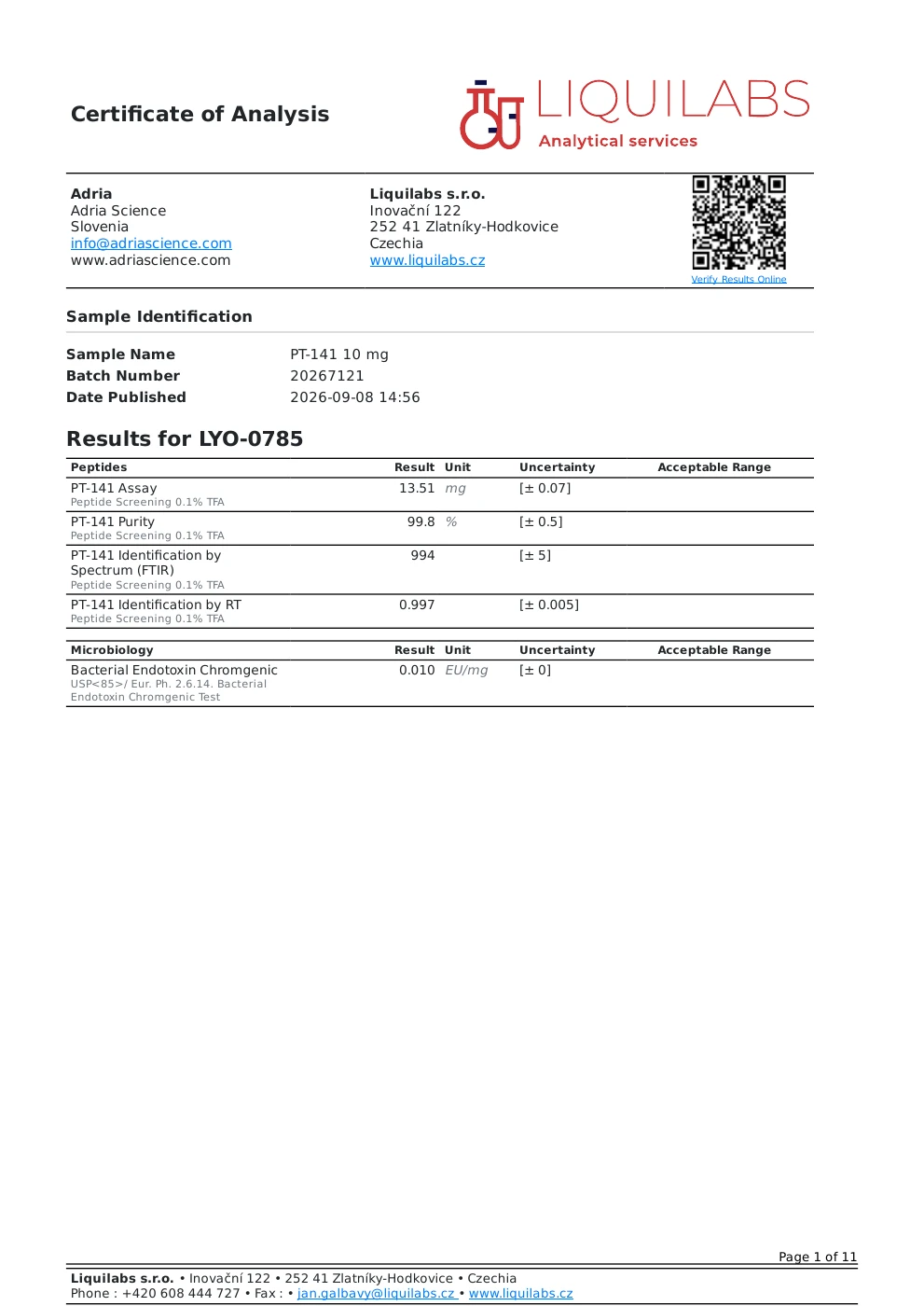
99.8%Purity by HPLC
Recorded QC panel
- AssayPeptide Screening 0.1% TFA
- 13.51 mg (± 0.07 mg)
- PurityPeptide Screening 0.1% TFA
- 99.8%
- Identity (FTIR)Peptide Screening 0.1% TFA
- 994 (± 5)
- Identity (RT)Retention time
- 0.997 (± 0.005)
- Bacterial endotoxinUSP 85 / Eur. Ph. 2.6.14
- 0.010 EU/mg
These are the latest published results for this strength. The batch number is printed on each vial. Your supplied batch is confirmed against the matching published record when your order is allocated.
Source record
References
androck, A. Schulz, C. Merkwitz, T. Schöneberg, K. Spanel-Borowski, and A. Ricken, “Reduction in corpora lutea number in obese melanocortin-4-receptor-deficient mice,” Reprod. Biol. Endocrinol. RBE, vol. 7, p. 24, Mar. 2009.
R. C. Rosen, L. E. Diamond, D. C. Earle, A. M. Shadiack, and P. B. Molinoff, “Evaluation of the safety, pharmacokinetics and pharmacodynamic effects of subcutaneously administered PT-141, a melanocortin receptor agonist, in healthy male subjects and in patients with an inadequate response to Viagra,” Int. J. Impot. Res., vol. 16, no. 2, pp. 135–142, Apr. 2004. [PubMed]
H. Wessells, V. J. Hruby, J. Hackett, G. Han, P. Balse-Srinivasan, and T. W. Vanderah, “Ac-Nle-c[Asp-His-DPhe-Arg-Trp-Lys]-NH2 induces penile erection via brain and spinal melanocortin receptors,” Neuroscience, vol. 118, no. 3, pp. 755–762, 2003. [PubMed]
A.-S. Rössler, J. G. Pfaus, H. K. Kia, J. Bernabé, L. Alexandre, and F. Giuliano, “The melanocortin agonist, melanotan II, enhances proceptive sexual behaviors in the female rat,” Pharmacol. Biochem. Behav., vol. 85, no. 3, pp. 514–521, Nov. 2006. [PubMed]
M. R. Safarinejad and S. Y. Hosseini, “Salvage of sildenafil failures with bremelanotide: a randomized, double-blind, placebo controlled study,” J. Urol., vol. 179, no. 3, pp. 1066–1071, Mar. 2008. [PubMed]
A. H. Clayton et al., “Bremelanotide for female sexual dysfunctions in premenopausal women: a randomized, placebo-controlled dose-finding trial,” Womens Health Lond. Engl., vol. 12, no. 3, pp. 325–337, 2016. [PubMed]
M. K. Miller, J. R. Smith, J. J. Norman, and A. H. Clayton, “Expert opinion on existing and developing drugs to treat female sexual dysfunction,” Expert Opin. Emerg. Drugs, vol. 23, no. 3, pp. 223–230, 2018. [PubMed]
“AMAG Pharmaceuticals and Palatin Technologies Enter Into Exclusive Licensing Agreement for North American Rights to RekyndaTM (bremelanotide), a Potential Treatment for a Common Female Sexual Disorder – AMAG Pharmaceuticals.” . [MarketWatch]
H. Ji et al., “The Synthetic Melanocortin (CKPV)2 Exerts Anti-Fungal and Anti-Inflammatory Effects against Candida albicans Vaginitis via Inducing Macrophage M2 Polarization,” PLoS ONE, vol. 8, no. 2, Feb. 2013. [PLOS ONE]
V. Maresca, E. Flori, and M. Picardo, “Skin phototype: a new perspective,” Pigment Cell Melanoma Res., vol. 28, no. 4, pp. 378–389, Jul. 2015. [PubMed]
L. Feller, R. a. G. Khammissa, B. Kramer, M. Altini, and J. Lemmer, “Basal cell carcinoma, squamous cell carcinoma and melanoma of the head and face,” Head Face Med., vol. 12, p. 11, Feb. 2016. [PubMed]
Clayton AH, Althof SE, Kingsberg S, et al. Bremelanotide for female sexual dysfunctions in premenopausal women: a randomized, placebo-controlled dose-finding trial. Womens Health (Lond). 2016;12(3):325–337. doi:10.2217/whe-2016-0018
T. R. McMillan, M. A. M. Forster, L. I. Short, A. P. Rudecki, D. L. Cline, and S. L. Gray, “Melanotan II, a melanocortin agonist, partially rescues the impaired thermogenic capacity of pituitary adenylate cyclase-activating polypeptide deficient mice,Exp. Physiol. , vol. 106, no. 2, pp. 427–437, Feb. 2021, doi: 10.1113/EP088838.”
C. Spana, R. Jordan, and S. Fischkoff, “Effect of bremelanotide on body weight of obese women: Data from two phase 1 randomized controlled trials,Diabetes Obes. Metab., vol. 24, no. 6, pp. 1084–1093, Jun. 2022, doi: 10.1111/dom.14672. ”
National Center for Biotechnology Information
PubChem Compound Summary: Bremelanotide
Authoritative identity record for the compound sold under the PT-141 catalogue name.
PubChem View source ↗Chemical Abstracts Service
CAS Common Chemistry: 189691-06-3
Authoritative CAS Registry Number record for bremelanotide/PT-141.
CAS Common Chemistry View source ↗Clayton AH, Kingsberg SA, Portman D, et al. · 2022
Safety Profile of Bremelanotide Across the Clinical Development Program
Primary clinical-development report for bremelanotide.
Journal of Women's Health · 10.1089/jwh.2021.0191 View source ↗National Center for Biotechnology Information
PubChem compound record
PubChem View source ↗Kingsberg SA, Clayton AH, Portman D, Williams LA, Krop J, Jordan R, Lucas J, Simon JA · 2019
Bremelanotide for the Treatment of Hypoactive Sexual Desire Disorder: Two Randomized Phase 3 Trials
Obstetrics and gynecology View source ↗Molinoff PB, Shadiack AM, Earle D, Diamond LE, Quon CY · 2003
PT-141: a melanocortin agonist for the treatment of sexual dysfunction
Annals of the New York Academy of Sciences View source ↗Diamond LE, Earle DC, Heiman JR, Rosen RC, Perelman MA, Harning R · 2006
An effect on the subjective sexual response in premenopausal women with sexual arousal disorder by bremelanotide (PT-141), a melanocortin receptor agonist
The journal of sexual medicine View source ↗Edinoff AN, Sanders NM, Lewis KB, Apgar TL, Cornett EM, Kaye AM, Kaye AD · 2022
Bremelanotide for Treatment of Female Hypoactive Sexual Desire
Neurology international View source ↗Customer reviews

Quality products,fast shipping,great refferal plan,only downside is that products in 4 mounths since my first order got more and more expensive ,but overall verry good experience.
Read full review →More than 2 weeks for package dispatch. They promised one free peptide next time. Sent me new tracking number but package still wasn't delivered to fedex. Last package (much much cheaper) was delivered in less than week. I will update if they will send my package. ok,package sent.
Read full review →Extremely satisfied with the product quality and overall experience. The customer service is polite and quick. All recommendations!
Read full review →Great service!
Read full review →Always on time and customer care is super great
Read full review →Fast good, and quality is perfect
Read full review →ordered 3 times now and everything ok every time.
Read full review →Trustworthy site with a huge catalog of products. Been purchasing from them for some time now never got disappointed. I could only recommend them.
Read full review →Great quality product
Read full review →Everything was great, super customer support, honest, reliable
Read full review →Everything ok. With little problem with package, but after contact with Customer Service everything went right. Good quality of products
Read full review →Excellent. Buying peptides online can be nerve wracking! But Adria are very transparent about all the checks and certifications. My experience with them was excellent. Great products at good prices and efficient P&P
Read full review →Continue exploring