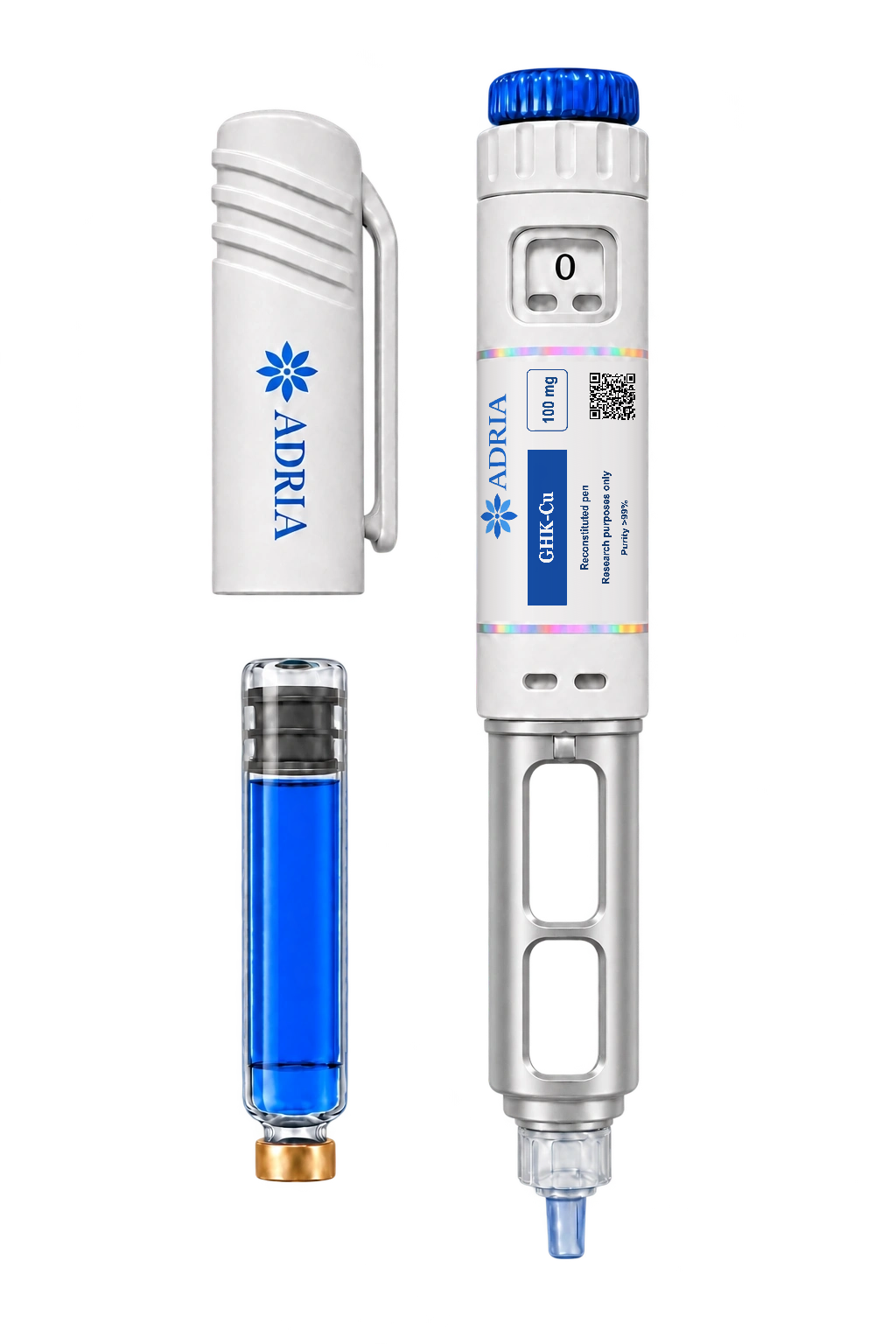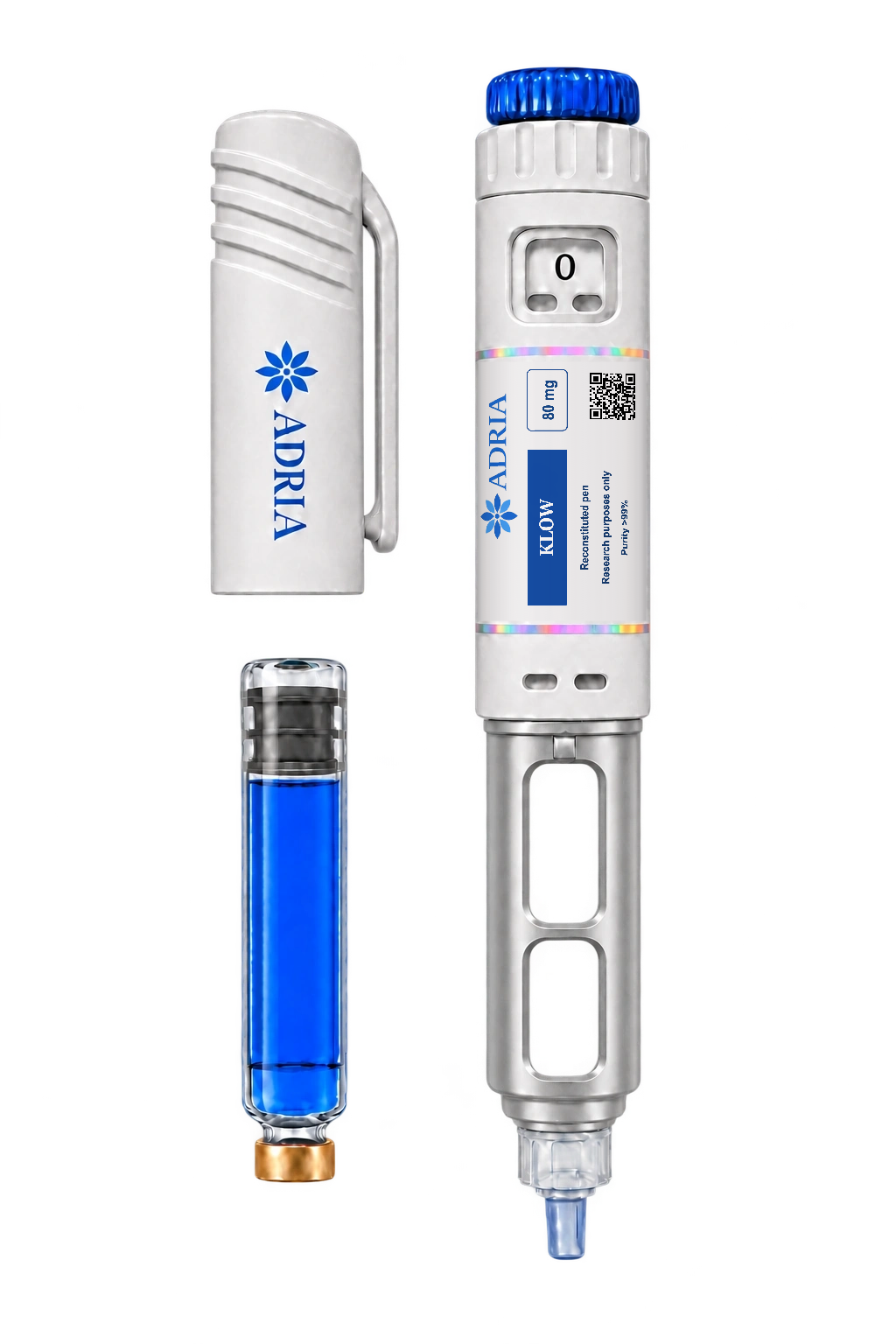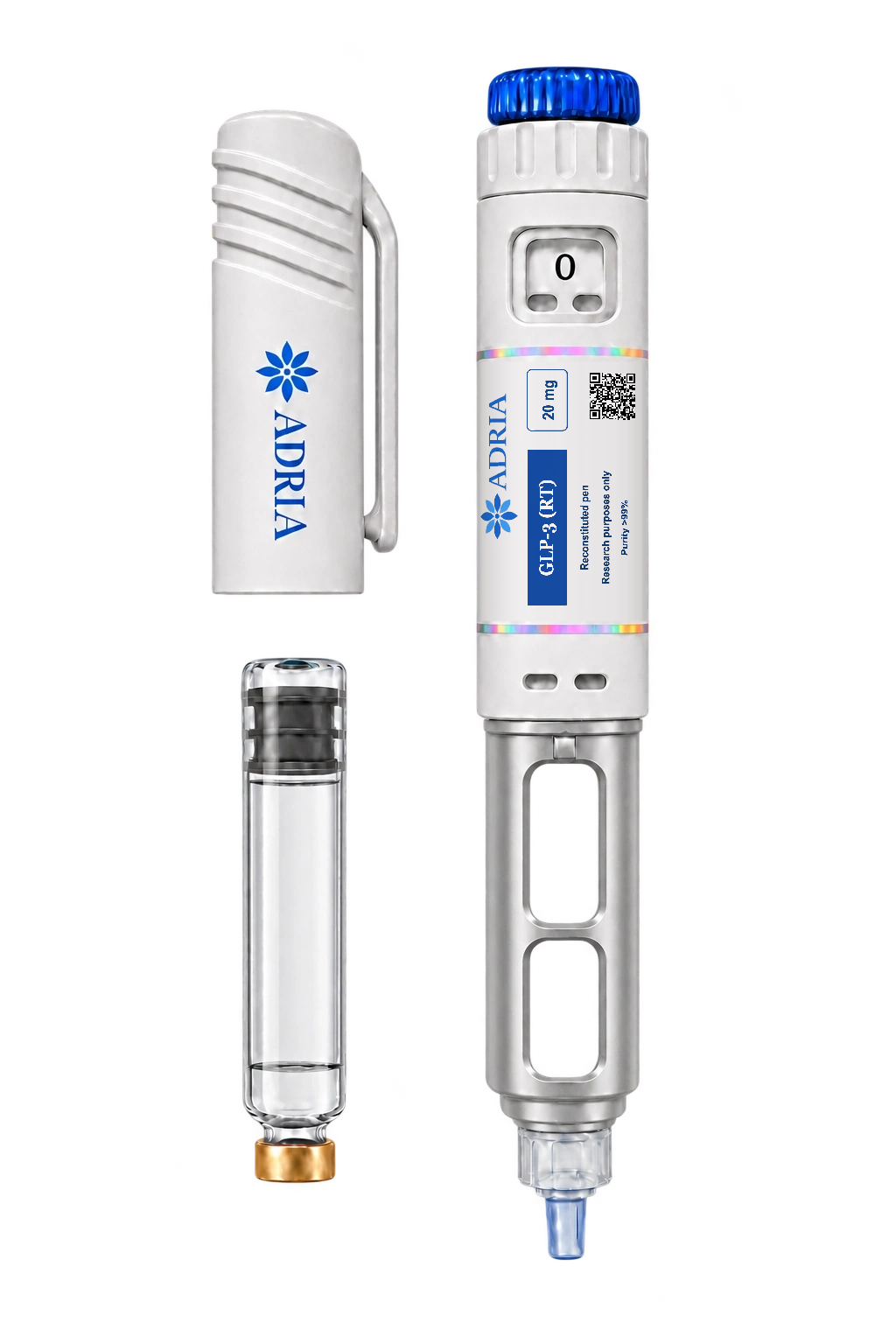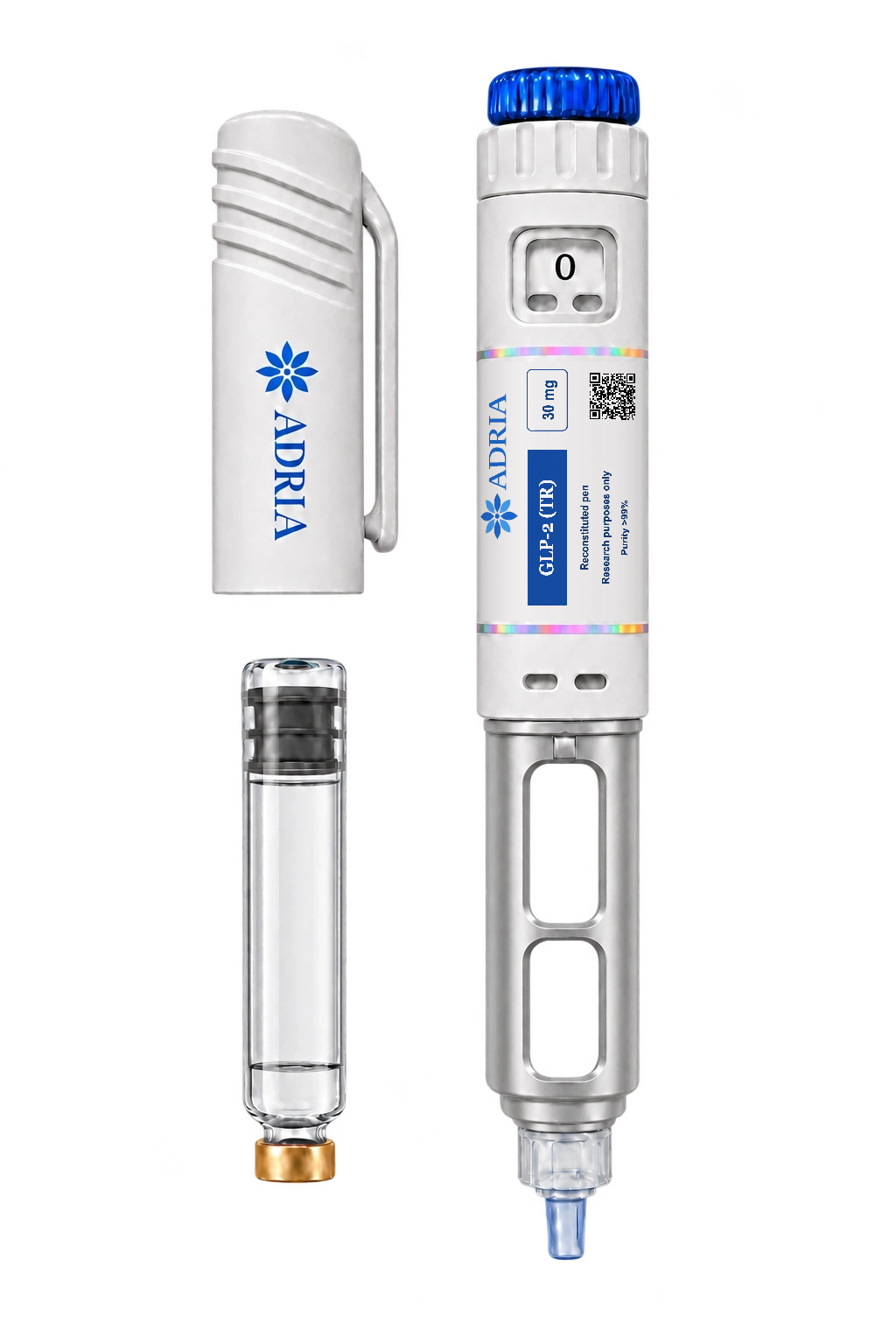
Temperature control
All peptide pen orders are securely packed in thermally insulated packaging to help reduce temperature fluctuations during transport. Our MSSPT formulation approach is designed to support peptide stability during transport and storage. After delivery, follow the storage conditions stated for your pen.
MSSPT technology
MSSPT is ADRIA’s formulation approach for liquid peptide research materials. It brings together buffer and stabilizer selection with attention to light, oxidation, transport and storage conditions.
Performance depends on the specific compound, formulation and cartridge. Product-specific stability duration is not established by general ingredient studies.
Longevity and Anti-aging Research
Epitalon Pen
Low stock
Order within — to ship today
Arrives 26 – 30 Nov. to Europe


 Shown at checkout
Epitalon Pen
Original price was: 280,00 €.238,00 €Current price is: 238,00 €.
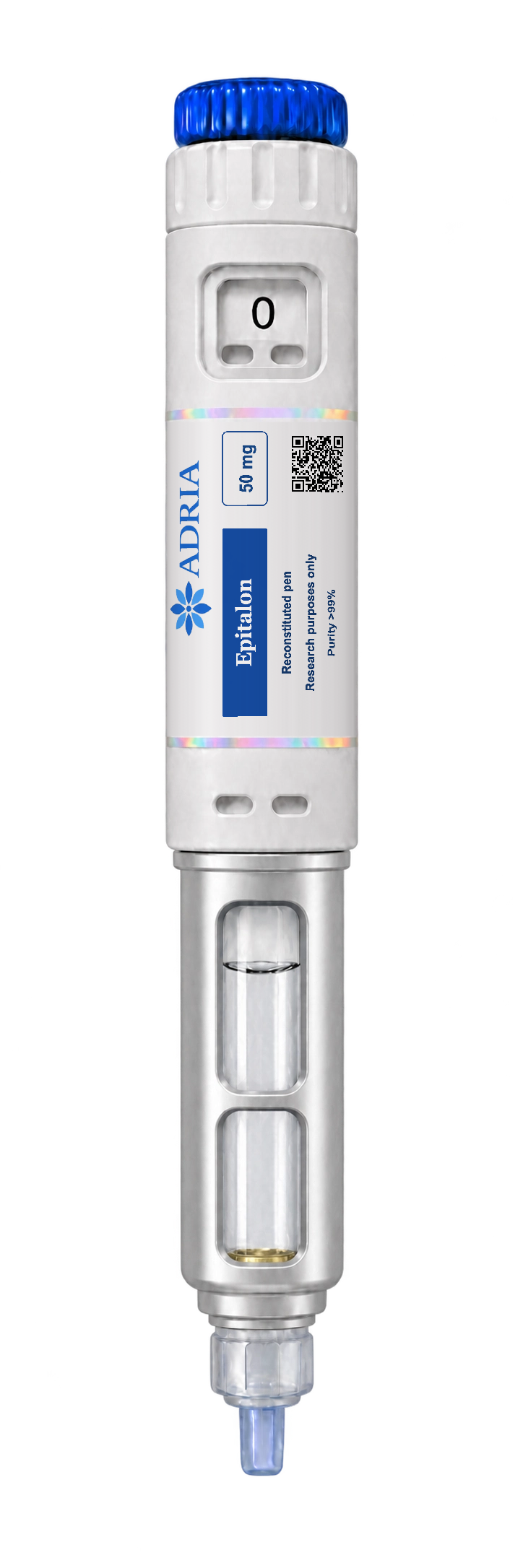
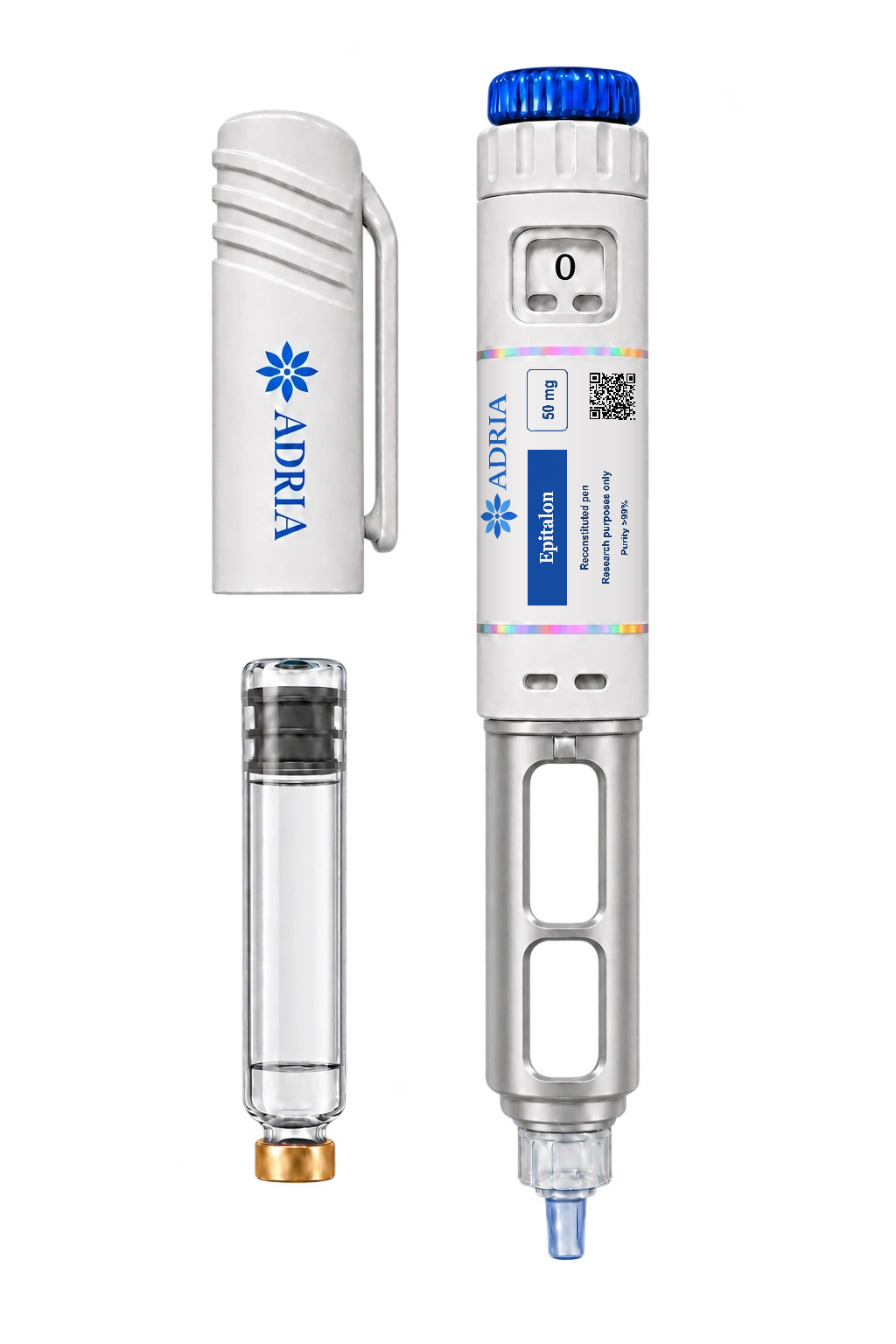
The ADRIA Epitalon Pen presents Epitalon in a pre-reconstituted cartridge format for laboratory research. Epithalon – a synthetic tetrapeptide, a derivative of epithalamine – bovine pineal gland extract, is considered a potential activator of the enzyme telomerase, which protects and maintains telomere caps at the end of DNA chromosomes. Research is primarily devoted to its ability to fight against the effects of aging, as well as life extension, especially through the process of lengthening telomeres – the end parts of eukaryotic chromosomes. Except of anti-aging effects of this short regulatory peptide, there are also possible anti-tumor, DNA activating or skin cell regenerative properties.
Compound information
Specifications
Molecular profile
- Sequence
- Ala-Glu-Asp-Gly
- Molecular mass
- 390.35 g/mol
- CAS number
- 307297-39-8
- Molecular formula
- C14H22N4O9
Material record
- Physical appearance
- Pre-mixed solution in a cartridge (planned pen format).
- Solubility
- Pre-reconstituted format; no reconstitution required.
- Product note
- Synthetic pineal tetrapeptide analogue; discussed in cellular ageing, circadian, oxidative-stress, and telomere-associated controlled research; supplied strictly for research use only.
Research overview
Epitalon Pen
Why this pen is perfect for research
- No preparation required
- Fully pre-formulated and ready. No mixing, no vials, no risk of mistakes.
- Extremely easy to handle
- Simply turn the dial to set your amount. Ideal for researchers with no prior experience using traditional peptides.
- Clean and safe workflow
- The closed pen system keeps everything hygienic and sterile and eliminates spills or contamination.
- Precise and consistent dosing
- The built-in scale ensures accurate measurements
- Reliable, stable quality
- Every application delivers the same concentration, supporting reproducible research results.
Description of Epithalon
Epithalon is a short synthetic tetrapeptide (Ala-Glu-Asp-Gly) with a chemical structure that is being investigated as a potential activator of the telomerase enzyme and stimulant of melatonin release. Telomerase, also known as terminal transferase, is a ribonucleoprotein adding a species-dependent telomere repeat sequence to the 3´end of telomeres. Epithalon was first discovered in late 1980s by Prof. Vladimir Khavinson from the Sankt Petersburg University, Russia. In particular studies it extended the life of mice and rats and delayed age-related degenerative changes in both the immune and reproductive systems. In addition, the peptide has shown significant effects in DNA regulation, infectious diseases, and even some types of cancer and tumorigenesis. It is suggested that antioxidative properties of epithalamin lead to increased lifespan of different researched animal species.
Overview of Published Research
Part of the anti-aging effect of Epithalon is hidden behind the ability of pineal extract epithalamin to eliminate free radicals that damage tissues. Research in fruit flies, mice and rats has yielded interesting results regarding increased lifespan. By 52% reduction in mortality rate of fruit flies and rats after epithalamin administration, and by 27% reduction in mortality rate of mice, compared to controls, was followed. The study showed that epithalamin stimulates synthesis and secretion of melatonin in rats and inhibits free radical production in rats and fruit flies. These antioxidative properties seem to enhance lifespan of the three kinds of animals mentioned above.
In addition, experiments on human somatic non-reproductive cells in vitro suggested that Epithalon peptide induces telomerase activity – expression of the catalytical subunit, enzymatic activity and telomere elongation. Prolonging lifespan of the cells could have been due to reactivation of telomerase gene in somatic cells.
In addition, experiments on human somatic non-reproductive cells in vitro suggested that Epithalon peptide induces telomerase activity – expression of the catalytical subunit, enzymatic activity and telomere elongation. Prolonging lifespan of the cells could have been due to reactivation of telomerase gene in somatic cells.
Telomeres are regions of repetitive DNA sequences at the ends of chromosomes that protect DNA health from damages. Research suggests that Epithalon may play a role in protecting DNA from damages. This process of accumulating DNA errors eventually leads to cell aging and dysfunction, or sometimes even to cancer. Furthermore, the peptide lowers the level of chromosomal instability in patients with hypertrophic cardiomyopathy (HCM), a hereditary disease that affects the heart muscle, and their relatives. On the basis of identified protective action of Epithalon in research, it could be investigated as a preventive approach for patients with risk of morbidity HCM.
Studies also showed that treatment of mice with Epithalon slowed down the age-related switching-off of estrous function and decreased the frequency of chromosome aberrations in bone marrow cells.
However, understanding the profound effects of the Epithalon peptide on longevity and prolonging lifespan requires further scientific investigation. Except of its antioxidant effects or the effects on telomeres, it seems that the peptide also changes the expression of certain genes. As cell research has shown, Epithalon interacts directly with DNA with the promoter regions of CD5, IL-2, MMP2 and Tram1 genes and increases their expression. Whereas CD5 and IL-2 influence immune system functions and MMP2 is important in maintaining the extracellular matrix in skin, tendons and other connective tissue, and Tram1 increases protein production. Based on this, it can be concluded that the peptide affects immune response, but also the body's regenerative processes at a cellular level.
The decrease of lymphocyte interferon gamma expression during aging is one of the main mechanisms leading to the immunodeficiency. The effect on the immune system proven by research on rats showed that Epithalon increases the expression of interferon gamma, a critical signaling molecule in the immune system, in aging lymphocytes. Through this immune activation in T cells, interferon gamma is essential in the fight against infections. The geroprotective peptide has the capability to activate the proliferation of lymphocytes in thymus during aging.
The actual goal of gerontocosmetology is to find new effective and harmless low-molecular substances as the short tetrapeptide Epithalon could also be like. Interaction with Epithalon leads to the activation of several genes, including the gene MMP2 found also in the skin that regulates this protein, as well as the activation of fibroblasts producing and maintaining MMP2. Even other components such as collagen and elastin are activated. However, the influence of Epithalon on organotypic skin cell cultures proliferation in young and old animals were also investigated.
Young and old rats exposed to Epithalon had stimulated skin fibroblast proliferation by 29-45%. Research findings suggest that the peptide, by activating fibroblasts, may increase the speed of skin healing and compensate for processes in the structure and integrity of the skin that occur during aging.
Another effect of Epithalon on the skin fibroblasts during aging is the reduction of the enzyme caspase-3 activity, which is in the pathway of apoptosis or programmed cell death. Epithalon inhibits MMP-9 synthesis increased during aging of skin cells and enhances the expression of proteins Ki-67 and CD98hc that, on the other hand, need stimulation during aging.
Daily administration of Ephitalon to rats with cancer was investigated due to tumor growth and effect on lifespan in different illumination regimes. One group was constantly illuminated and the other was exposed just to natural light conditions. In conclusion of this experiment the peptide exhibited virtually no effect on the development of spontaneous tumors in rats exposed to standard and constant illumination, but significantly inhibited their development in rats exposed to natural light.
The peptide reduces not only tumor growth, but also delivery and spread to distant tissues. This means it has antimetastatic effect as was showed in the research of spontaneous tumorigenesis in female mice mostly with tumors of the reproductive organs as mammary glands and ovaries. With Epithalon injections 5 times a week the number of tumors was decreased and also prevented the development of metastases. Actually, no metastases were found in the experimental mice, and long-term administration of Epithalon in small doses did not show any toxic effect.
Epithalon is currently being researched as a potential drug for Her-2/neu positive breast cancer and in preventing the development of certain types of leukemia and testicular cancer. Epithalon not only decelerates aging, it also suppresses development of breast adenocarcinomas in transgenic Her-2/neu mice. Experimental mice got injections of the peptide 5 times a week, and the results showed that it suppressed the formation of neoplasms, decreased lungs metastases by 1,6 times, multiple tumors by 2 times, 3,7-fold increase of mice without breast tumors and decrease of mice with 6 or more tumors by 3 times. Epithalon injected to rats exposed to any photoregimen also significantly inhibited the development of spontaneous tumors, primarily testicular leydigomas and leukemias.
The circadian gene PER1 is a protein that helps regulate the circadian rhythm and is usually overexpressed in cancer patients. However, there is already evidence that Epithalon activates gene for this protein. PER1 affects cancer growth and causes an increased rate of ionizing radiation-induced cell death, but it is unclear whether its lack of expression precedes and contributes to cancer development, or is the only source of cancer. Controlling PER1 expression could be one area of investigation into naturally slowing tumor growth. Research shows that overexpression of PER1 sensitizes human cancer cells to the effects of DNA damage-induced apoptosis. These findings suggest it could be of interest in research aimed at reducing the necessary doses of radiation in the treatment of certain types of cancer, reducing side effects and the occurrence of secondary tumors appearing during treatment.
Finally, PER1 levels were reduced in human cancer patients. Results therefore highlight the importance of circadian regulation to fundamental cellular functions and support the hypothesis that disruption of core clock genes may lead to cancer development.
The hormone melatonin, produced in the pineal gland, is associated also with sleep and aging. As found in research in rats, regulatory peptides such as Epithalon affect gene transcription, its synthesis and release. This is done by stimulating the expression of two vitally important proteins, arylalkylamine-N-acetyltransferase (AANAT) and the transcriptional protein pCREB. Both play an essential role not only in the production of melatonin, but also in the circadian control of its release during the day and night. Epithalon binds promoter regions of retinal genes F379, telomerase, and RNA polymerase II. As indicated by research in monkeys, Epithalon restores melatonin production to normal rates. Due to disorders in pineal gland in elderly age in monkeys and humans, too, melatonin release decreases. Epithalon recovers night release of endogenous melatonin and leads to the normalization of the hormone circadian rhythm in the blood plasma.
Epithalon appears to help maintain and improve the normal structure of the eye retina condition while increasing the bioelectric and functional activity of the retina due to the preservation of its morphological structure. A research study in rats suffering from retinitis pigmentosa demonstrated that the peptide improved results in 90% of cases. The analysis of Epithalon effects suggests that the tetrapeptide participates in the mechanisms of transcription common for the epiphysis and retina and may be associated with positive effects observed in clinical research.
For laboratory purposes and personal observation only. Not for human consumption.
Research material handling
Transport and storage
Pre-mixed pen format
Peptide pens are supplied as a pre-mixed solution in a cartridge. No reconstitution is required.
Temperature-controlled transport
The supplied handling specification calls for insulated, temperature-controlled packaging. The approved transit range and permitted temperature excursions must be confirmed for the finished formulation.
Storage of reconstituted peptides
Peptide pens come pre-reconstituted and should be stored under refrigerated conditions whenever possible.
The following storage conditions are generally recommended:
- Room temperature (15–25 °C): Avoid prolonged storage
- Refrigerated (2–8 °C): Typically 4–8 weeks
Important: Most manufacturers recommend discarding reconstituted peptides within 4 weeks when stored at 2–8 °C. This recommendation is intentionally conservative and may not reflect the actual chemical stability of every peptide. In our own stability studies, many peptides reconstituted in bacteriostatic water showed no detectable degradation after 12 weeks of refrigerated storage. As peptide stability is highly sequence- and formulation-dependent, this result should not be extrapolated to all peptides without supporting stability data.
Analytical documentation
Tests
Documentation is available on request
Contact us for the current record for this strength. We never substitute a generic or mismatched certificate.
Your batch is confirmed when your order is allocated.Source record
References
V. N. Anisimov, S. V. Mylnikov, and V. K. Khavinson, "Pineal peptide preparation epithalamin increases the lifespan of fruit flies, mice and rats," Mech. Ageing Dev., vol. 103, no. 2, pp. 123–132, Jun. 1998. [PubMed]
V. K. Khavinson, I. E. Bondarev, and A. A. Butyugov, "Epithalon peptide induces telomerase activity and telomere elongation in human somatic cells," Bull. Exp. Biol. Med., vol. 135, no. 6, pp. 590–592, Jun. 2003. [PubMed]
T. A. Dzhokhadze, T. Z. Buadze, M. N. Gaiozishvili, M. A. Rogava, and T. A. Lazhava, "[Functional regulation of genome with peptide bioregulators by hypertrophic cardiomyopathy (by patients and relatives)]," Georgian Med. News, no. 225, pp. 94–97, Dec. 2013. [PubMed]
V. N. Anisimov et al., "Effect of Epitalon on biomarkers of aging, life span and spontaneous tumor incidence in female Swiss-derived SHR mice," Biogerontology, vol. 4, no. 4, pp. 193–202, 2003. [PubMed]
V. K. Khavinson, S. I. Tarnovskaya, N. S. Linkova, V. E. Pronyaeva, L. K. Shataeva, and P. P. Yakutseni, "Short cell-penetrating peptides: a model of interactions with gene promoter sites," Bull. Exp. Biol. Med., vol. 154, no. 3, pp. 403–410, Jan. 2013. [PubMed]
N. S. Lin'kova, B. I. Kuznik, and V. K. Khavinson, "[Peptide Ala-Glu-Asp-Gly and interferon gamma: their role in immune response during aging]," Adv. Gerontol. Uspekhi Gerontol., vol. 25, no. 3, pp. 478–482, 2012. [PubMed]
N. I. Chalisova, N. S. Lin'kova, A. N. Zhekalov, A. O. Orlova, G. A. Ryzhak, and V. K. Khavinson, "[Short peptides stimulate skin cell regeneration during ageing]," Adv. Gerontol. Uspekhi Gerontol., vol. 27, no. 4, pp. 699–703, 2014. [PubMed]
N. S. Lin'kova et al., "Peptide Regulation of Skin Fibroblast Functions during Their Aging In Vitro," Bull. Exp. Biol. Med., vol. 161, no. 1, pp. 175–178, May 2016. [PubMed]
I. A. Vinogradova, A. V. Bukalev, M. A. Zabezhinski, A. V. Semenchenko, V. K. Khavinson, and V. N. Anisimov, "Effect of Ala-Glu-Asp-Gly peptide on life span and development of spontaneous tumors in female rats exposed to different illumination regimes," Bull. Exp. Biol. Med., vol. 144, no. 6, pp. 825–830, Dec. 2007. [PubMed]
G. Kossoy, V. N. Anisimov, H. Ben-Hur, N. Kossoy, and I. Zusman, "Effect of the synthetic pineal peptide epitalon on spontaneous carcinogenesis in female C3H/He mice," Vivo Athens Greece, vol. 20, no. 2, pp. 253–257, Apr. 2006. [PubMed]
V. N. Anisimov et al., "Inhibitory effect of the peptide epitalon on the development of spontaneous mammary tumors in HER-2/neu transgenic mice," Int. J. Cancer, vol. 101, no. 1, pp. 7–10, 2002. [PubMed]
V. N. Anisimov, V. K. Khavinson, I. N. Alimova, A. V. Semchenko, and A. I. Yashin, "Epithalon decelerates aging and suppresses development of breast adenocarcinomas in transgenic her-2/neu mice," Bull. Exp. Biol. Med., vol. 134, no. 2, pp. 187–190, Aug. 2002. [PubMed]
I. A. Vinogradova, A. V. Bukalev, M. A. Zabezhinski, A. V. Semenchenko, V. K. Khavinson, and V. N. Anisimov, "Geroprotective effect of ala-glu-asp-gly peptide in male rats exposed to different illumination regimens," Bull. Exp. Biol. Med., vol. 145, no. 4, pp. 472–477, Apr. 2008. [PubMed]
S. Gery, N. Komatsu, L. Baldjyan, A. Yu, D. Koo, and H. P. Koeffler, "The circadian gene per1 plays an important role in cell growth and DNA damage control in human cancer cells," Mol. Cell, vol. 22, no. 3, pp. 375–382, May 2006. [PubMed]
V. K. Khavinson, L. K. Shataeva, and A. A. Chernova, "Effect of regulatory peptides on gene transcription," Bull. Exp. Biol. Med., vol. 136, no. 3, pp. 288–290, Sep. 2003. [PubMed]
O. V. Korkushko et al., "[Normalizing effect of the pineal gland peptides on the daily melatonin rhythm in old monkeys and elderly people]," Adv. Gerontol. Uspekhi Gerontol., vol. 20, no. 1, pp. 74–85, 2007. [PubMed]
V. Khavinson, M. Razumovsky, S. Trofimova, R. Grigorian, and A. Razumovskaya, "Pineal-regulating tetrapeptide epitalon improves eye retina condition in retinitis pigmentosa," Neuro Endocrinol. Lett., vol. 23, no. 4, pp. 365–368, Aug. 2002. [PubMed]
National Center for Biotechnology Information
PubChem Compound Summary: Epitalon
Authoritative identity record for the Epitalon tetrapeptide.
PubChem View source ↗Khavinson V, Izmaylov D, Obukhova L, et al. · 2000
Effect of epitalon on the lifespan increase in Drosophila melanogaster
Experimental work on the Epitalon tetrapeptide in a Drosophila model.
Mechanisms of Ageing and Development · 10.1016/s0047-6374(00)00217-7 View source ↗Chemical Abstracts Service
CAS Common Chemistry: 307297-39-8
Authoritative CAS Registry Number record for Epitalon.
CAS Common Chemistry View source ↗National Center for Biotechnology Information
PubChem compound record
PubChem View source ↗Araj SK, Brzezik J, Mądra-Gackowska K, Szeleszczuk Ł · 2025
Overview of Epitalon-Highly Bioactive Pineal Tetrapeptide with Promising Properties
International journal of molecular sciences View source ↗Khavinson VKh, Bondarev IE, Butyugov AA · 2003
Epithalon peptide induces telomerase activity and telomere elongation in human somatic cells
Bulletin of experimental biology and medicine View source ↗Khavinson VKh, Bondarev IE, Butyugov AA, Smirnova TD · 2004
Peptide promotes overcoming of the division limit in human somatic cell
Bulletin of experimental biology and medicine View source ↗V. Kh. Khavinson, A. A. Pendina, O. A. Efimova, A. V. Tikhonov, A. S. Koltsova, M. I. Krapivin, A. V. Petrovskaia-Kaminskaia, L. I. Petrova, N. S. Lin’kova, V. S. Baranov · 2019
Effect of Peptide AEDG on Telomere Length and Mitotic Index of PHA-Stimulated Human Blood Lymphocytes
Bulletin of Experimental Biology and Medicine · 10.1007/s10517-019-04664-0 View source ↗Khavinson V, Diomede F, Mironova E, Linkova N, Trofimova S, Trubiani O, Caputi S, Sinjari B · 2020
AEDG Peptide (Epitalon) Stimulates Gene Expression and Protein Synthesis during Neurogenesis: Possible Epigenetic Mechanism
Molecules (Basel, Switzerland) View source ↗Vladimir N. Anisimov, Vladimir Kh. Khavinson, Anatoli I. Mikhalski, Anatoli I. Yashin · 2001
Effect of synthetic thymic and pineal peptides on biomarkers of ageing, survival and spontaneous tumour incidence in female CBA mice
Mechanisms of Ageing and Development · 10.1016/s0047-6374(00)00184-6 View source ↗N. D. Goncharova, B. Kh. Khavinson, B. A. Lapin · 2001
Regulatory Effect of Epithalon on Production of Melatonin and Cortisol in Old Monkeys
Bulletin of Experimental Biology and Medicine · 10.1023/a:1017928925177 View source ↗Vladimir N. Anisimov, Vladimir KH. Khavinson, Mauro Provinciali, Irina N. Alimova, Dmitri A. Baturin, Irina G. Popovich, Mark A. Zabezhinski, Eugeni N. Imyanitov, Romina Mancini, Claudio Franceschi · 2002
Inhibitory effect of the peptide epitalon on the development of spontaneous mammary tumors in HER‐2/neu transgenic mice
International Journal of Cancer · 10.1002/ijc.10570 View source ↗V. Kh. Khavinson, N. S. Linkova, I. M. Kvetnoy, T. V. Kvetnaia, V. O. Polyakova, H.-W. Korf · 2012
Molecular Cellular Mechanisms of Peptide Regulation of Melatonin Synthesis in Pinealocyte Culture
Bulletin of Experimental Biology and Medicine · 10.1007/s10517-012-1689-5 View source ↗E. O. Gutop, N. S. Linkova, E. O. Kozhevnikova, N. V. Fridman, O. M. Ivko, V. Kh. Khavinson · 2022
AEDG Peptide Prevents Oxidative Stress in the Model of Induced Aging of Skin Fibroblasts
Advances in Gerontology · 10.1134/s2079057022020096 View source ↗V. N. Anisimov, S. V. Mylnikov, and V. K. Khavinson · 1998
Pineal peptide preparation epithalamin increases the lifespan of fruit flies, mice and rats
Mech. Ageing DevT. A. Dzhokhadze, T. Z. Buadze, M. N. Gaiozishvili, M. A. Rogava, and T. A. Lazhava · 2013
[Functional regulation of genome with peptide bioregulators by hypertrophic cardiomyopathy (by patients and relatives)]
Georgian Med. NewsV. N. Anisimov et al. · 2003
Effect of Epitalon on biomarkers of aging, life span and spontaneous tumor incidence in female Swiss-derived SHR mice
BiogerontologyV. K. Khavinson, S. I. Tarnovskaya, N. S. Linkova, V. E. Pronyaeva, L. K. Shataeva, and P. P. Yakutseni · 2013
Short cell-penetrating peptides: a model of interactions with gene promoter sites
Bull. Exp. Biol. MedN. S. Lin'kova, B. I. Kuznik, and V. K. Khavinson · 2012
[Peptide Ala-Glu-Asp-Gly and interferon gamma: their role in immune response during aging]
Adv. Gerontol. Uspekhi GerontolN. I. Chalisova, N. S. Lin'kova, A. N. Zhekalov, A. O. Orlova, G. A. Ryzhak, and V. K. Khavinson · 2014
[Short peptides stimulate skin cell regeneration during ageing]
Adv. Gerontol. Uspekhi GerontolN. S. Lin'kova et al. · 2016
Peptide Regulation of Skin Fibroblast Functions during Their Aging In Vitro
Bull. Exp. Biol. MedI. A. Vinogradova, A. V. Bukalev, M. A. Zabezhinski, A. V. Semenchenko, V. K. Khavinson, and V. N. Anisimov · 2007
Effect of Ala-Glu-Asp-Gly peptide on life span and development of spontaneous tumors in female rats exposed to different illumination regimes
Bull. Exp. Biol. MedG. Kossoy, V. N. Anisimov, H. Ben-Hur, N. Kossoy, and I. Zusman · 2006
Effect of the synthetic pineal peptide epitalon on spontaneous carcinogenesis in female C3H/He mice
Vivo Athens GreeceV. N. Anisimov et al. · 2002
Inhibitory effect of the peptide epitalon on the development of spontaneous mammary tumors in HER-2/neu transgenic mice
Int. J. CancerV. N. Anisimov, V. K. Khavinson, I. N. Alimova, A. V. Semchenko, and A. I. Yashin · 2002
Epithalon decelerates aging and suppresses development of breast adenocarcinomas in transgenic her-2/neu mice
Bull. Exp. Biol. MedI. A. Vinogradova, A. V. Bukalev, M. A. Zabezhinski, A. V. Semenchenko, V. K. Khavinson, and V. N. Anisimov · 2008
Geroprotective effect of ala-glu-asp-gly peptide in male rats exposed to different illumination regimens
Bull. Exp. Biol. MedS. Gery, N. Komatsu, L. Baldjyan, A. Yu, D. Koo, and H. P. Koeffler · 2006
The circadian gene per1 plays an important role in cell growth and DNA damage control in human cancer cells
Mol. CellV. K. Khavinson, L. K. Shataeva, and A. A. Chernova · 2003
Effect of regulatory peptides on gene transcription
Bull. Exp. Biol. MedO. V. Korkushko et al. · 2007
[Normalizing effect of the pineal gland peptides on the daily melatonin rhythm in old monkeys and elderly people]
Adv. Gerontol. Uspekhi GerontolV. Khavinson, M. Razumovsky, S. Trofimova, R. Grigorian, and A. Razumovskaya · 2002
Pineal-regulating tetrapeptide epitalon improves eye retina condition in retinitis pigmentosa
Neuro Endocrinol. LettCustomer reviews

Quality products,fast shipping,great refferal plan,only downside is that products in 4 mounths since my first order got more and more expensive ,but overall verry good experience.
Read full review →More than 2 weeks for package dispatch. They promised one free peptide next time. Sent me new tracking number but package still wasn't delivered to fedex. Last package (much much cheaper) was delivered in less than week. I will update if they will send my package. ok,package sent.
Read full review →Extremely satisfied with the product quality and overall experience. The customer service is polite and quick. All recommendations!
Read full review →Great service!
Read full review →Always on time and customer care is super great
Read full review →Fast good, and quality is perfect
Read full review →ordered 3 times now and everything ok every time.
Read full review →Trustworthy site with a huge catalog of products. Been purchasing from them for some time now never got disappointed. I could only recommend them.
Read full review →Great quality product
Read full review →Everything was great, super customer support, honest, reliable
Read full review →Everything ok. With little problem with package, but after contact with Customer Service everything went right. Good quality of products
Read full review →Excellent. Buying peptides online can be nerve wracking! But Adria are very transparent about all the checks and certifications. My experience with them was excellent. Great products at good prices and efficient P&P
Read full review →Continue exploring