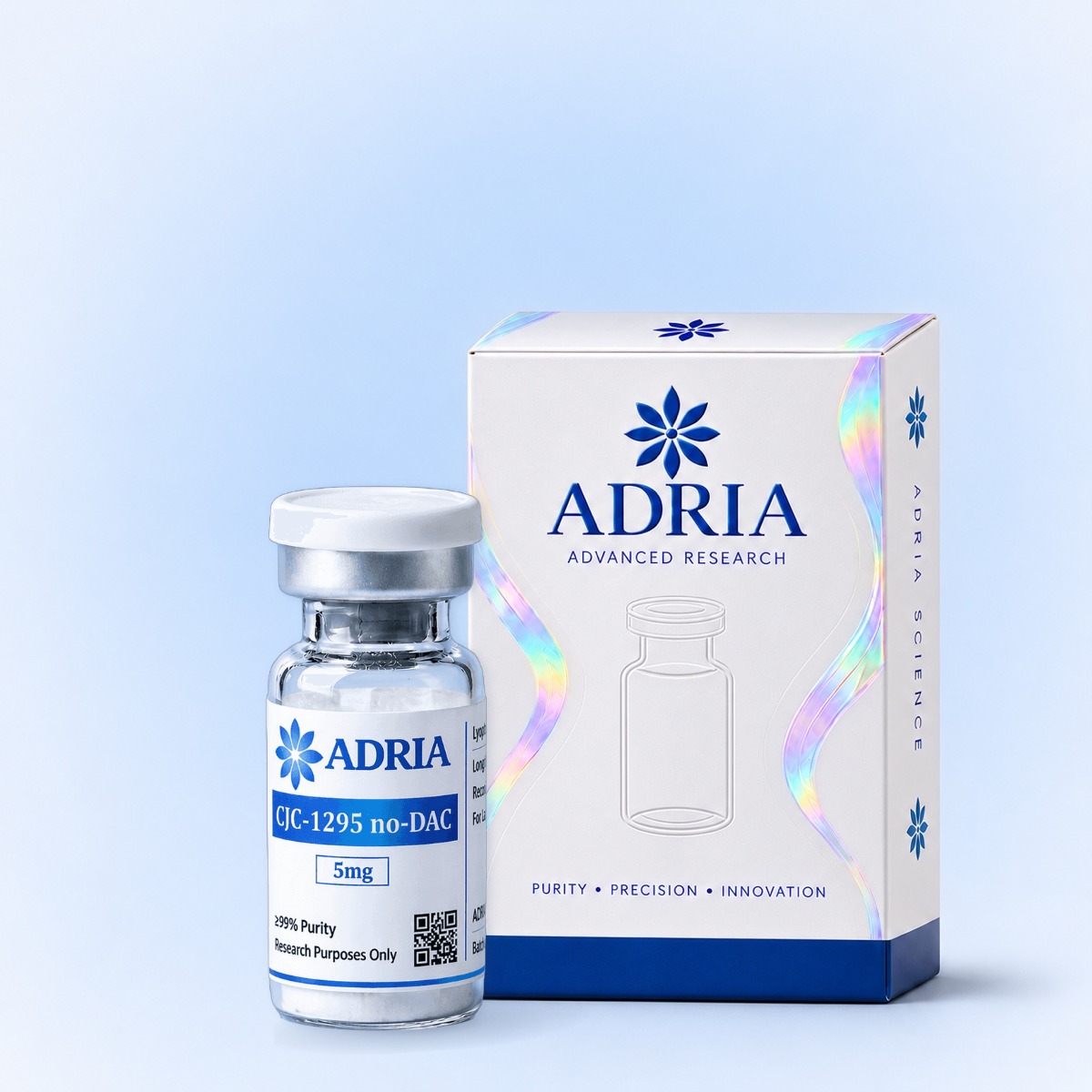
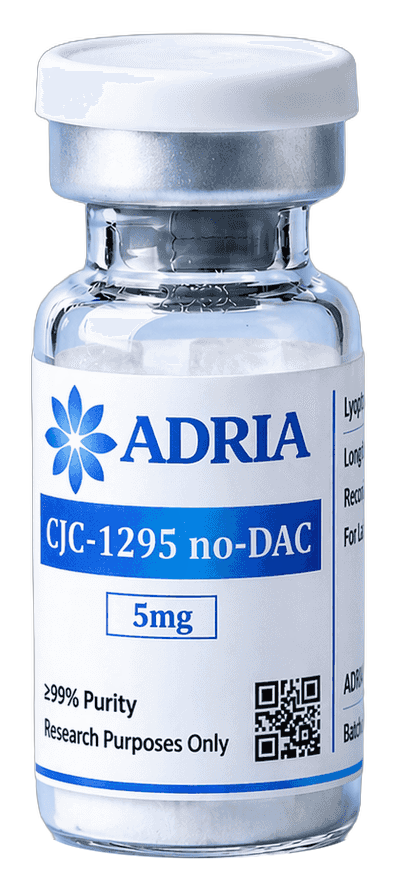
Peptide appearance
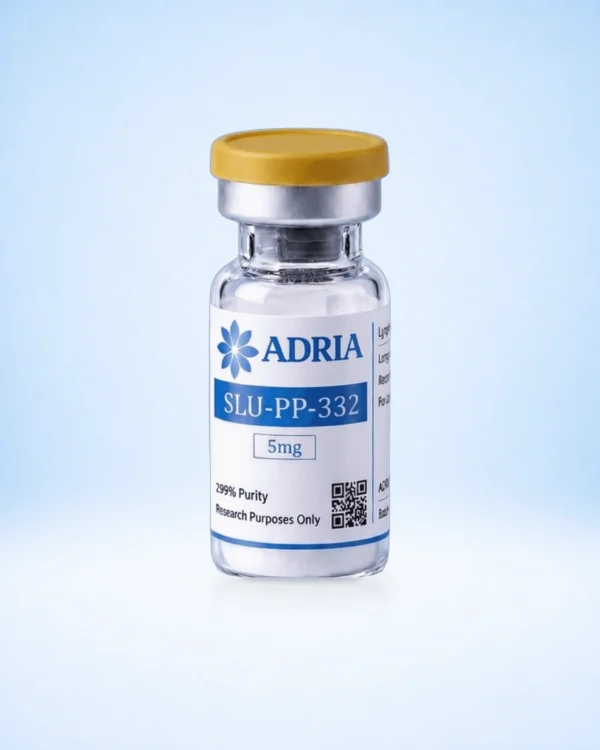
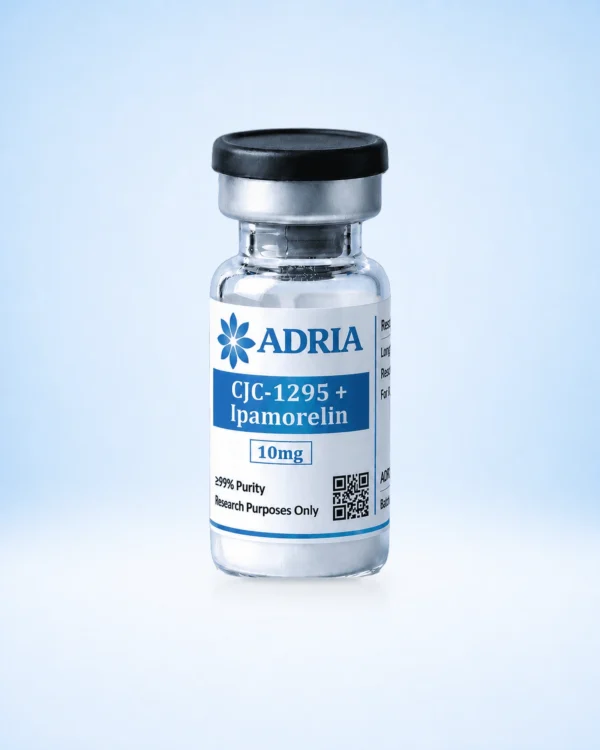
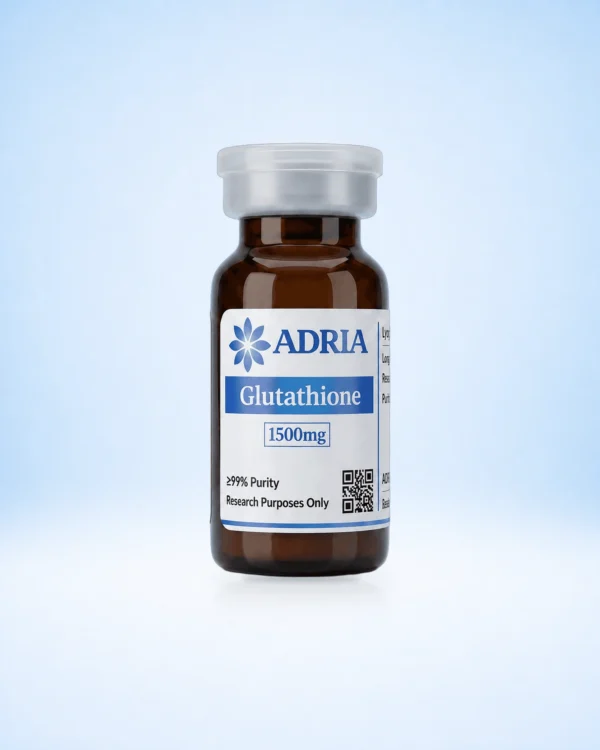
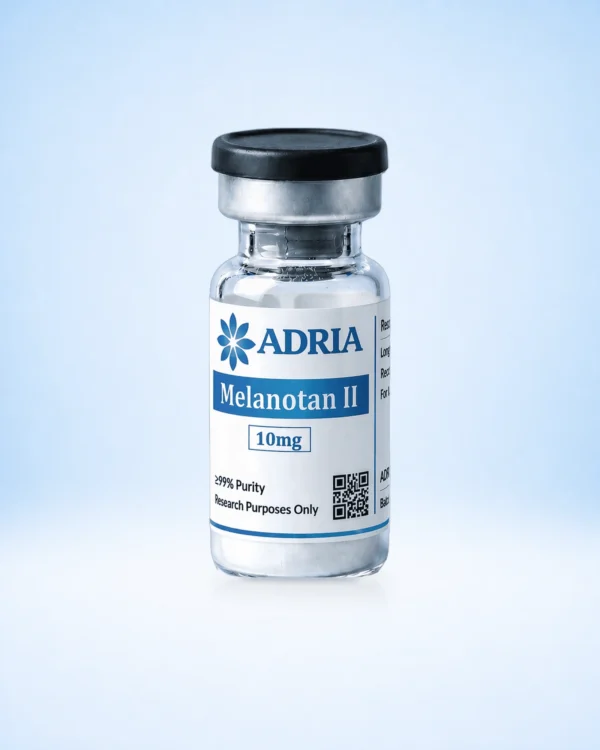
Lyophilized form helps protect peptide quality. Peptides are supplied as a dry powder, which may look like a compact "puck" or a lighter powder inside the vial.
Because the peptide is dry, it does not require refrigerated shipping during normal transit, including warm seasonal conditions. For longer storage, follow the storage guidance in the product description.
Appearance can vary. The stated peptide content is checked through third-party analysis.
Read more in the product description.
Solution not bundled
Peptides are delivered as lyophilized powder. This dry form helps preserve peptide quality during storage and transport and does not require refrigerated shipping during normal transit.
To prepare a solution, use a solvent such as Bacteriostatic water. It is sold separately, so add it only when you need it for peptide preparation.
Read more in the product description.
Muscle Growth
CJC - 1295 (no-DAC)
Low stock
Order within — to ship today
Arrives 26 – 30 November to Europe


 Shown at checkout
CJC - 1295 (no-DAC)
Price range: 55,50 € through 80,50 €
Modified GRF(1-29) no-DAC peptide for GHRH receptor pathway studies.
Compound information
Specifications
Molecular profile
- Sequence
- Tyr-D-Ala-Asp-Ala-Ile-Phe-Thr-Gln-Ser-Tyr-Arg-Lys-Val-Leu-Ala-Gln-Leu-Ser-Ala-Arg-Lys-Leu-Leu-Gln-Asp-Ile-Leu-Ser-Arg-NH2
- Molecular mass
- 3367.9 g/mol
- CAS number
- 446036-97-1
- Molecular formula
- C152H252N44O42
Material record
- Physical appearance
- White to off-white lyophilized powder
- Solubility
- Soluble in bacteriostatic water and suitable aqueous laboratory solvents.
- Product note
- Modified GRF(1-29) / CJC-1295 without DAC; supplied strictly for research use only.
Research overview
CJC - 1295 (no-DAC)
Description of CJC-1295 no DAC (Mod GRF 1-29)
CJC-1295 no DAC (Mod GRF 1-29) had its way of development. When it was discovered that the first 29 amino acids of growth hormone releasing hormone (GHRH) are of the equal potential as its full 44 amino acid structure, the shortest possible fragment called GRF 1-29 was developed. It was also called Sermorelin, but had a very short half-life, less than 10 minutes. To enhance biological activity and reduce rapid clearance, modified versions were synthesized. Analogues got substituted amino acids within the peptide structure with more resistant to enzymatic cleavage ones. So, the modified Mod GRF 1-29 with increased binding affinity to GHRH receptors and prolonged half-life was developed, too. Originally it was called tetrasubstituted GRF 1-29, but in 2008 a researcher in his work created term modified GRF 1-29 (Mod GRF 1-29). Let us discuss now, how the Mod GRF 1-29 went throughout different research studies.
Overview of Published Research
Researchers investigating growth hormone-releasing factor (GRF) analogues for potential research applications, such as in the context of Crohn's disease and short bowel syndrome, found unexpected gastrointestinal (GI) side effects in monkeys. One potent analogue caused severe diarrhea in monkeys during prolonged infusion, although it had no noticeable side effects in rats. Further analysis revealed that GRF-6 interacts with the vasoactive intestinal peptide receptor (VPAC1-R), suggesting this receptor is responsible for the diarrheal effects. Since VPAC1-R is found in the GI tract and affects smooth muscle activity, the interaction with this receptor could explain the observed changes in bowel motility in monkeys.
Another research exploring GRF and 14 GRF analogues' interactions with vasoactive intestinal peptide (VIP) receptors in rat pancreatic membranes found that some GRF analogues could inhibit VIP binding and activate adenylate cyclase. This interaction could suggest potential for side effects similar to those seen in monkeys, with GRF-6 causing severe diarrhea due to VPAC1-R interaction. The findings highlighted that alterations in specific positions within the peptide structure could markedly reduce receptor affinity and intrinsic activity, indicating how structural changes in GRF analogues could impact their receptor interactions and consequent side effects. The research underlines the complexity of receptor interactions with research peptides and the importance of carefully analyzing receptor activities in different species to avoid unwanted GI side effects.
Growth hormone-releasing hormone (GHRH) agonists have been shown to have research potential beyond inducing pituitary growth hormone (GH) release. These agonists can promote cell proliferation and stimulate various tissues that express GHRH receptors (GHRH-Rs). Notably, GHRH agonists have demonstrated effects in pancreatic β-cell proliferation and metabolic function, suggesting their relevance to research into diabetes. Studies indicate that GHRH agonists can also influence the engraftment of islets after transplantation, presenting a novel area of investigation in diabetes research. Additionally, they have shown promise in research into cardiac tissue, as evidenced by improved ejection fraction, reduction of infarct size, and attenuation of cardiac hypertrophy in rodent models. This points to potential research applications in the context of cardiac function, especially in models of heart attack recovery and heart failure.
Beyond their relevance to diabetes and heart research, GHRH agonists have demonstrated effects in other areas. For instance, the presence of GHRH-Rs in ocular tissues and the neuroprotective effects of GHRH agonists in experimental diabetic retinopathy suggest possible research applications for eye diseases. GHRH agonists have also been found to influence wound healing, activate immune cells, and impact the central nervous system.
A common issue among individuals with hypothyroidism is the impaired release of growth hormone (GH). To better understand this, researchers conducted a study to evaluate the GH responses to growth hormone-releasing factor (GRF) in patients with primary hypothyroidism, both before and during thyroxine (T4) replacement therapy. The study involved fourteen patients, aged 26 to 60, who underwent GRF stimulation tests before and after T4 therapy (150 micrograms/day). The findings showed that thyroid hormone replacement therapy (T4) significantly enhanced GH responses to GRF in nine patients and in the group as a whole. Additionally, the area under the curve (AUC) measurements confirmed a general increase in GH response due to T4 therapy. These results suggest that T4 therapy enhances the responsiveness of somatotroph cells to GRF in patients with primary hypothyroidism.
The study provides valuable insights into the interaction between thyroid hormone and GH, indicating that thyroid hormone replacement therapy can influence GH responsiveness. This finding could inform further research into approaches for patients with hypothyroidism. However, when using modified GRF, some considerations need to be made regarding potential side effects, bioavailability, and dosage scaling. Although GRF exhibits moderate side effects, its bioavailability for subcutaneous administration is high, while its oral bioavailability is relatively low.
For laboratory purposes and personal observation only. Not for human consumption.
Laboratory care
Handling
Peptides in transport
Peptides in lyophilized form are supplied in glass vials by standard shipping methods and do not require refrigeration. Short-term temperature fluctuations during transport will not reduce their quality and efficacy. Even at high summer temperatures, the peptides in lyophilized form are stable for several weeks.
Storage of lyophilized peptides
Lyophilized peptides should be stored in a dry place, protected from light and moisture. The following storage conditions are generally recommended:
- Room temperature (15–25 °C): Up to 3 months
- Refrigerated (2–8 °C): Up to 6 months
- Frozen (-20 °C or below): 3–5 years (recommended for long-term storage)
Allow the vial to reach room temperature after taking it out of the refrigerator or freezer.
Storage of reconstituted peptides
Once reconstituted, peptide solutions are generally less stable than their lyophilized form and should be stored under refrigerated conditions whenever possible.
The following storage conditions are generally recommended:
- Room temperature (15–25 °C): Avoid prolonged storage
- Refrigerated (2–8 °C): Typically 4–8 weeks
- Frozen (-20 °C or below): Up to 3–4 months
To preserve peptide integrity, avoid repeated freeze–thaw cycles, as these may accelerate peptide degradation.
Important: Most manufacturers recommend discarding reconstituted peptides within 4 weeks when stored at 2–8 °C. This recommendation is intentionally conservative and may not reflect the actual chemical stability of every peptide. In our own stability studies, many peptides reconstituted in bacteriostatic water showed no detectable degradation after 12 weeks of refrigerated storage. As peptide stability is highly sequence- and formulation-dependent, this result should not be extrapolated to all peptides without supporting stability data.
Analytical documentation
Tests
Documentation is available on request
Contact us for the current record for this strength. We never substitute a generic or mismatched certificate.
Your batch is confirmed when your order is allocated.Latest published result
Liquilabs s.r.o.Signed Certificate of Analysis · 10mg
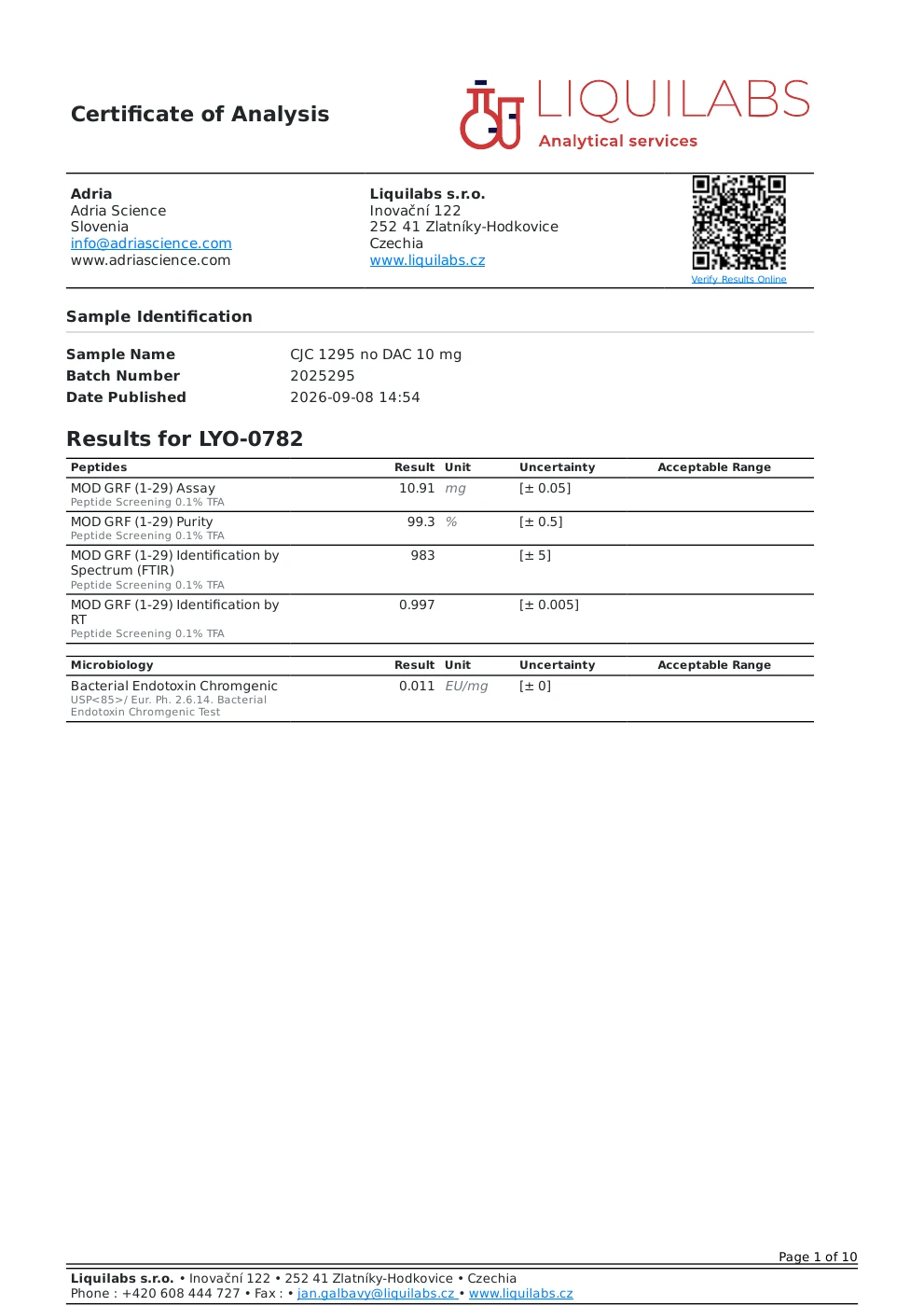
99.3%Purity by HPLC
Recorded QC panel
- AssayPeptide Screening 0.1% TFA
- 10.91 mg (± 0.05 mg)
- PurityPeptide Screening 0.1% TFA
- 99.3%
- Identity (FTIR)Peptide Screening 0.1% TFA
- 983 (± 5)
- Identity (RT)Retention time
- 0.997 (± 0.005)
- Bacterial endotoxinUSP 85 / Eur. Ph. 2.6.14
- 0.011 EU/mg
These are the latest published results for this strength. The batch number is printed on each vial. Your supplied batch is confirmed against the matching published record when your order is allocated.
Source record
References
T. Ito et al., "GI side-effects of a possible therapeutic GRF analogue in monkeys are likely due to VIP receptor agonist activity," Peptides, vol. 22, no. 7, pp. 1139–1151, Jul. 2001.
M. Waelbroeck, P. Robberecht, D. H. Coy, J.-C. Camus, P. D. Neef, and J. Christophe, "Interaction of Growth Hormone-Releasing Factor (GRF) and 14 GRF Analogs with Vasoactive Intestinal Peptide (VIP) Receptors of Rat Pancreas. Discovery of (N-Ac-Tyr1,D-Phe2)-GRF(l-29)-NH2 as a VIP Antagonist," Endocrinology, vol. 116, no. 6, pp. 2643–2649, Jun. 1985.
A. V. Schally, X. Zhang, R. Cai, J. M. Hare, R. Granata, and M. Bartoli, "Actions and potential therapeutic applications of growth hormone-releasing hormone agonists," Endocrinology.
R. Valcavi et al., "Growth Hormone Responses to Grf 1–29 in Patients with Primary Hypothyroidism Before and During Replacement Therapy with Thyroxine," Clin. Endocrinol. (Oxf.), vol. 24, no. 6, pp. 693–698, 1986.
National Center for Biotechnology Information
PubChem Compound Summary: CJC-1295
Authoritative identity record for the CJC-1295 peptide family.
PubChem View source ↗Teichman SL, Neale A, Lawrence B, et al. · 2006
Prolonged stimulation of growth hormone and insulin-like growth factor I secretion by CJC-1295, a long-acting analog of growth hormone-releasing hormone, in healthy adults
Context for long-acting DAC CJC-1295 only; this paper does not establish the identity of the sold no-DAC material.
Journal of Clinical Endocrinology and Metabolism · 10.1210/jc.2005-1536 View source ↗Chemical Abstracts Service
CAS Common Chemistry: 446036-97-1
Authoritative CAS Registry Number record for the no-DAC CJC-1295 free-peptide form.
CAS Common Chemistry View source ↗Sackmann-Sala L, Ding J, Frohman LA, et al. · 2009
Activation of the GH/IGF-1 axis by CJC-1295, a long-acting GHRH analog, results in serum protein profile changes in normal adult subjects
Context for long-acting DAC CJC-1295 only; this paper does not establish the identity of the sold no-DAC material.
Growth Hormone and IGF Research · 10.1016/j.ghir.2009.03.001 View source ↗Teichman SL, Neale A, Lawrence B, Gagnon C, Castaigne JP, Frohman LA · 2006
Prolonged stimulation of growth hormone (GH) and insulin-like growth factor I secretion by CJC-1295, a long-acting analog of GH-releasing hormone, in healthy adults
The Journal of clinical endocrinology and metabolism View source ↗Raun K, Hansen BS, Johansen NL, Thøgersen H, Madsen K, Ankersen M, Andersen PH · 1998
Ipamorelin, the first selective growth hormone secretagogue
European journal of endocrinology View source ↗Shrestha P, Sabharwal G, Ghaffari G · 2018
A Novel STAT3 Gene Mutation Related Hyper-IgE Syndrome Misdiagnosed as Hidradenitis Suppurativa
Case reports in immunology View source ↗Sander HJ, Kramer P, van Leeuwen EC, van Cappellen WA, Meijs-Roelofs HM, De Jong FH · 1991
Ovulation rate, follicle population and FSH levels in cyclic rats after administration of an inhibin-neutralizing antiserum
The Journal of endocrinology View source ↗Kallio P, Murphy ED · 1998
Soluble CD27 in thyroid disorders
The Journal of laboratory and clinical medicine View source ↗Abiven G, Coste J, Groussin L, Anract P, Tissier F, Legmann P, Dousset B, Bertagna X, Bertherat J · 2006
Clinical and biological features in the prognosis of adrenocortical cancer: poor outcome of cortisol-secreting tumors in a series of 202 consecutive patients
The Journal of clinical endocrinology and metabolism View source ↗T. Ito et al. · 2001
GI side-effects of a possible therapeutic GRF analogue in monkeys are likely due to VIP receptor agonist activity
PeptidesM. Waelbroeck, P. Robberecht, D. H. Coy, J.-C. Camus, P. D. Neef, and J. Christophe · 1985
Interaction of Growth Hormone-Releasing Factor (GRF) and 14 GRF Analogs with Vasoactive Intestinal Peptide (VIP) Receptors of Rat Pancreas. Discovery of (N-Ac-Tyr1,D-Phe2)-GRF(l-29)-NH2 as a VIP Antagonist
EndocrinologyA. V. Schally, X. Zhang, R. Cai, J. M. Hare, R. Granata, and M. Bartoli
Actions and potential therapeutic applications of growth hormone-releasing hormone agonists
EndocrinologyR. Valcavi et al. · 1986
Growth Hormone Responses to Grf 1–29 in Patients with Primary Hypothyroidism Before and During Replacement Therapy with Thyroxine
Clin. Endocrinol. (Oxf.)Customer reviews

Quality products,fast shipping,great refferal plan,only downside is that products in 4 mounths since my first order got more and more expensive ,but overall verry good experience.
Read full review →More than 2 weeks for package dispatch. They promised one free peptide next time. Sent me new tracking number but package still wasn't delivered to fedex. Last package (much much cheaper) was delivered in less than week. I will update if they will send my package. ok,package sent.
Read full review →Extremely satisfied with the product quality and overall experience. The customer service is polite and quick. All recommendations!
Read full review →Great service!
Read full review →Always on time and customer care is super great
Read full review →Fast good, and quality is perfect
Read full review →ordered 3 times now and everything ok every time.
Read full review →Trustworthy site with a huge catalog of products. Been purchasing from them for some time now never got disappointed. I could only recommend them.
Read full review →Great quality product
Read full review →Everything was great, super customer support, honest, reliable
Read full review →Everything ok. With little problem with package, but after contact with Customer Service everything went right. Good quality of products
Read full review →Excellent. Buying peptides online can be nerve wracking! But Adria are very transparent about all the checks and certifications. My experience with them was excellent. Great products at good prices and efficient P&P
Read full review →Continue exploring