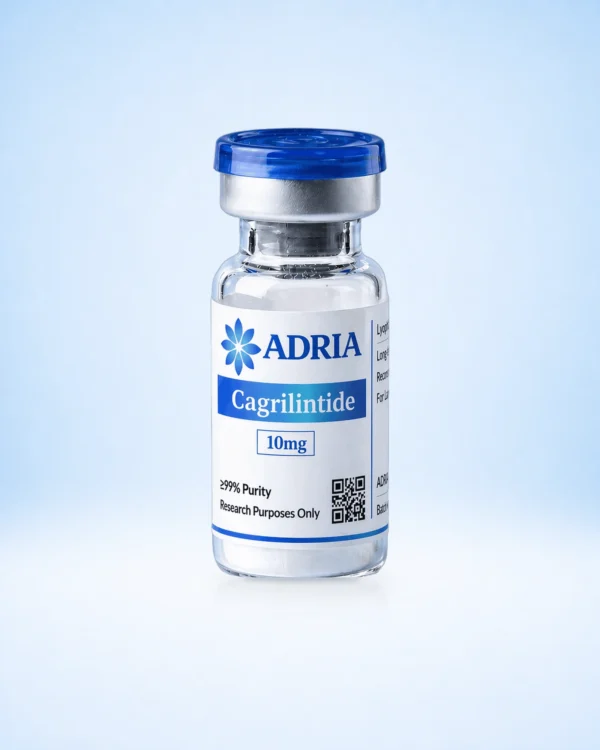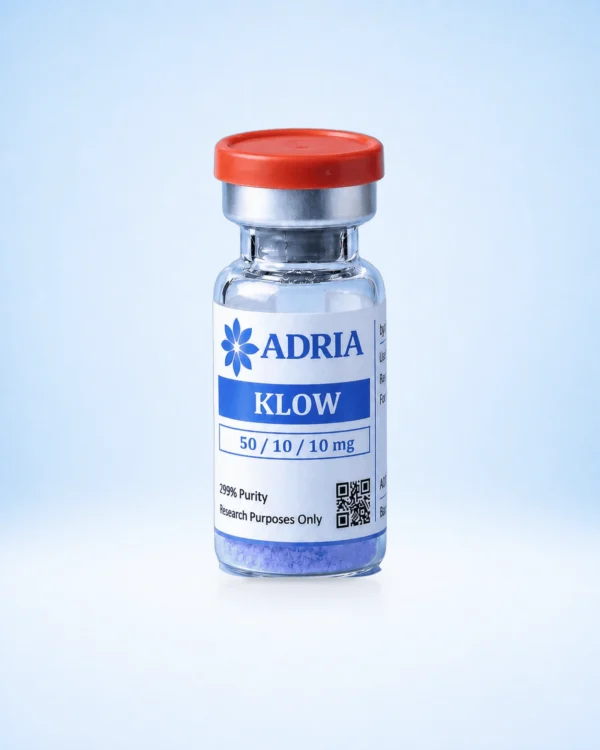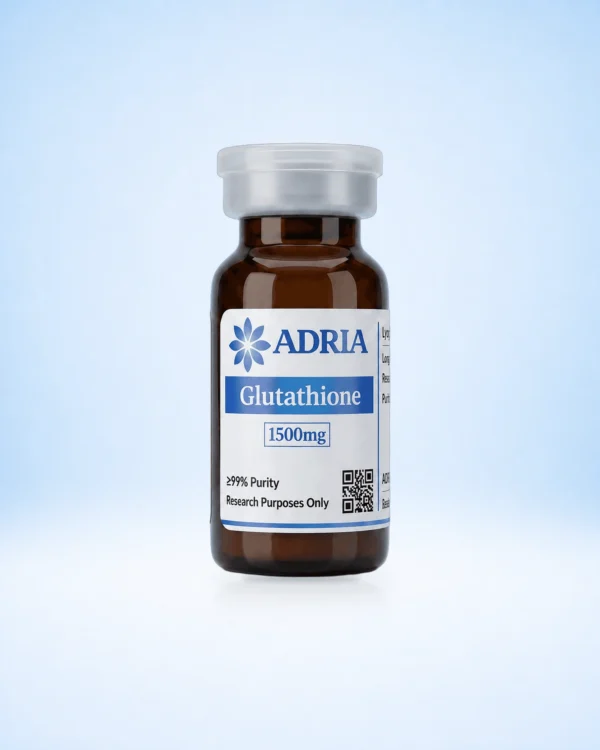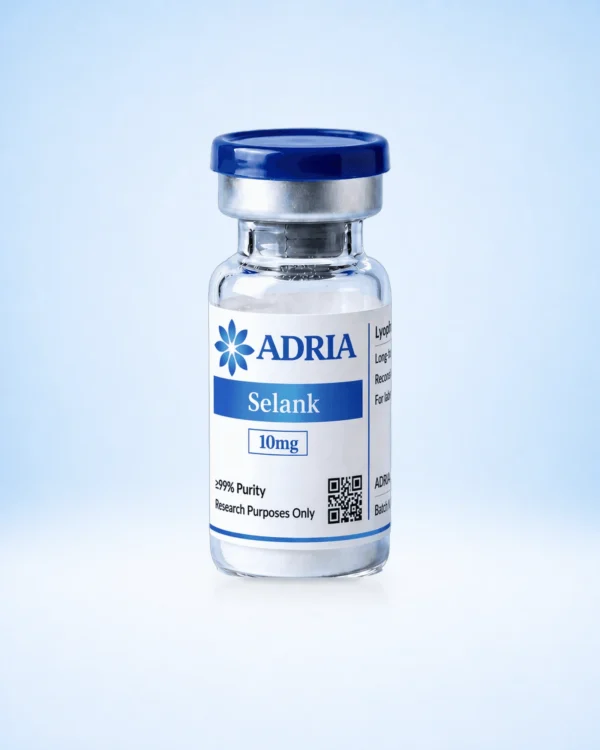
Peptide appearance
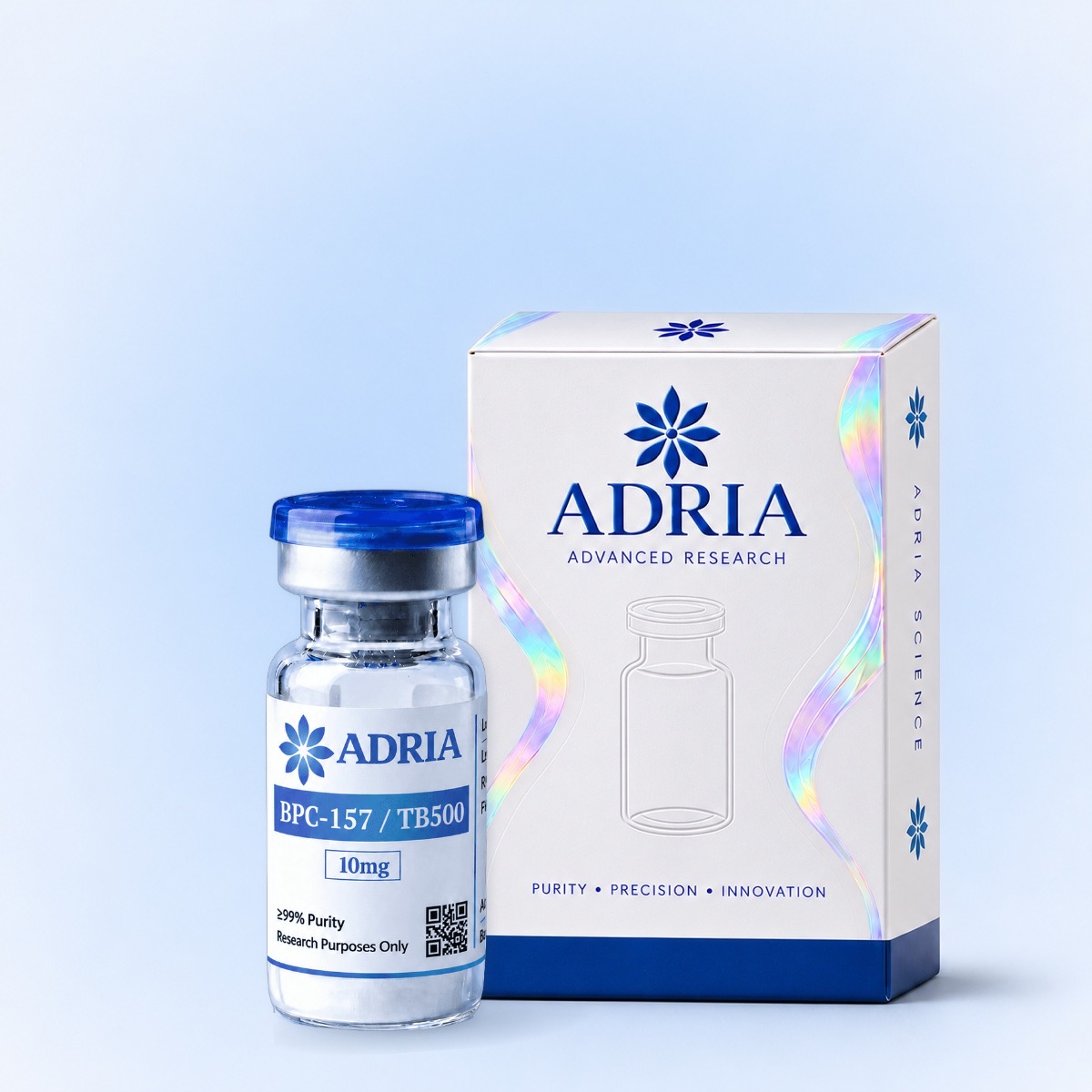
Lyophilized form helps protect peptide quality. Peptides are supplied as a dry powder, which may look like a compact "puck" or a lighter powder inside the vial.
Because the peptide is dry, it does not require refrigerated shipping during normal transit, including warm seasonal conditions. For longer storage, follow the storage guidance in the product description.
Appearance can vary. The stated peptide content is checked through third-party analysis.
Read more in the product description.
Solution not bundled
Peptides are delivered as lyophilized powder. This dry form helps preserve peptide quality during storage and transport and does not require refrigerated shipping during normal transit.
To prepare a solution, use a solvent such as Bacteriostatic water. It is sold separately, so add it only when you need it for peptide preparation.
Read more in the product description.
Healing and Regeneration
BPC-157 / TB500 (Thymosin Beta-4)
In stock
Order within — to ship today
Arrives 26 – 30 November to Europe


 Shown at checkout
BPC-157 / TB500 (Thymosin Beta-4)
Price range: 83,50 € through 129,90 €
BPC-157 and TB-500 blend for paired tissue-signalling and cell-migration studies.
Compound information
Specifications
Molecular profile
- Sequence
- BPC-157: Gly-Glu-Pro-Pro-Pro-Gly-Lys-Pro-Ala-Asp-Asp-Ala-Gly-Leu-Val; TB-500 (thymosin beta-4): Ac-Ser-Asp-Lys-Pro-Asp-Met-Ala-Glu-Ile-Glu-Lys-Phe-Asp-Lys-Ser-Lys-Leu-Lys-Lys-Thr-Glu-Thr-Gln-Glu-Lys-Asn-Pro-Leu-Pro-Ser-Lys-Glu-Thr-Ile-Glu-Gln-Glu-Lys-Gln-Ala-Gly-Glu-Ser-OH
- Molecular mass
- BPC-157: 1419.54 g/mol; TB-500 (thymosin beta-4): 4963.49 g/mol
- CAS number
- BPC-157: 137525-51-0; TB-500 (thymosin beta-4): 77591-33-4
- Molecular formula
- BPC-157: C62H98N16O22; TB-500 (thymosin beta-4): C212H350N56O78S
Material record
- Physical appearance
- White to off-white lyophilized powder
- Solubility
- Soluble in bacteriostatic water and suitable aqueous laboratory solvents.
- Product note
- Two-component blend containing BPC-157 and full-length thymosin beta-4; supplied strictly for research use only.
Research overview
BPC-157 / TB500 (Thymosin Beta-4)
The BPC-157 / TB500 known as Wolverine Blend — combines two of the most extensively studied tissue-repair peptides in preclinical science at a fixed 1:1 ratio. BPC-157 (Body Protection Compound-157, CAS 137525-51-8) is a stable 15-amino-acid pentadecapeptide derived from a protective protein found in human gastric juice.
TB-500 (CAS 77591-33-4) is a synthetic analog of the active region of Thymosin Beta-4, a 43-amino-acid protein abundant in platelets, wound fluid, and nearly every cell type. Where BPC-157 acts locally at the injury site, TB-500 circulates systemically — which is exactly why the two are paired.
Key Research Applications
- Tendon and ligament repair: BPC-157 drives localized fibroblast outgrowth while TB-500 recruits repair-competent cells systemically, making the blend a dual-pathway tool for connective tissue research.
- Musculoskeletal recovery: Preclinical models show accelerated recovery in muscle, ligament, and bone tissue, with each peptide acting on distinct cellular mechanisms.
- Angiogenesis and vascular support: BPC-157 upregulates VEGFR2 signaling while TB-500 promotes actin remodeling and endothelial migration, together supporting new vessel formation at injury sites.
- Inflammation and GI cytoprotection: Both peptides down-regulate pro-inflammatory signaling, and BPC-157 adds a gastric and intestinal mucosa-protection dimension absent from TB-500 alone.
Detailed Mechanism of Action
The Wolverine Blend operates through two complementary but mechanistically distinct repair cascades that target different stages and locations of the healing process. BPC-157 (Gly-Glu-Pro-Pro-Pro-Gly-Lys-Pro-Ala-Asp-Asp-Ala-Gly-Leu-Val) exerts its primary effects through the focal adhesion kinase (FAK)–paxillin pathway, which governs cell motility and fibroblast outgrowth from injured tendon explants. It also modulates the nitric oxide system and rapidly upregulates VEGFR2 expression in wound tissue.
TB-500 exerts its repair activity primarily through G-actin sequestration and actin polymerization. By binding monomeric G-actin, it promotes cytoskeletal reorganization in endothelial cells and keratinocytes, enabling systemic migration of repair-competent cells to injury sites. Unlike BPC-157’s localized action, TB-500 circulates broadly, and Thymosin Beta-4 also activates integrin-linked kinase (ILK), a regulator of cell-survival signaling first characterized in cardiac repair research.
Together, the two compounds create what researchers describe as a synergistic repair environment. BPC-157 anchors local cytoprotection — stabilizing cells under oxidative stress and regulating vascular tone — while TB-500 coordinates systemic recruitment of stem and progenitor cells. Both independently promote angiogenesis, BPC-157 via VEGFR2 activation and TB-500 via endothelial migration, so the blend provides broader vascular support than either compound alone.
Anti-inflammatory activity is a third shared mechanism: BPC-157 down-regulates NF-κB signaling while TB-500 suppresses TNF-α and IL-1β in independent preclinical models. This local-plus-systemic duality is the mechanistic reason researchers buy Wolverine Blend rather than a single peptide. For deeper context, see our BPC-157 research guide and TB-500 Thymosin Beta-4 guide.
For laboratory purposes and personal observation only. Not for human consumption.
Laboratory care
Handling
Peptides in transport
Peptides in lyophilized form are supplied in glass vials by standard shipping methods and do not require refrigeration. Short-term temperature fluctuations during transport will not reduce their quality and efficacy. Even at high summer temperatures, the peptides in lyophilized form are stable for several weeks.
Storage of lyophilized peptides
Lyophilized peptides should be stored in a dry place, protected from light and moisture. The following storage conditions are generally recommended:
- Room temperature (15–25 °C): Up to 3 months
- Refrigerated (2–8 °C): Up to 6 months
- Frozen (-20 °C or below): 3–5 years (recommended for long-term storage)
Allow the vial to reach room temperature after taking it out of the refrigerator or freezer.
Storage of reconstituted peptides
Once reconstituted, peptide solutions are generally less stable than their lyophilized form and should be stored under refrigerated conditions whenever possible.
The following storage conditions are generally recommended:
- Room temperature (15–25 °C): Avoid prolonged storage
- Refrigerated (2–8 °C): Typically 4–8 weeks
- Frozen (-20 °C or below): Up to 3–4 months
To preserve peptide integrity, avoid repeated freeze–thaw cycles, as these may accelerate peptide degradation.
Important: Most manufacturers recommend discarding reconstituted peptides within 4 weeks when stored at 2–8 °C. This recommendation is intentionally conservative and may not reflect the actual chemical stability of every peptide. In our own stability studies, many peptides reconstituted in bacteriostatic water showed no detectable degradation after 12 weeks of refrigerated storage. As peptide stability is highly sequence- and formulation-dependent, this result should not be extrapolated to all peptides without supporting stability data.
Analytical documentation
Tests
Documentation is available on request
Contact us for the current record for this strength. We never substitute a generic or mismatched certificate.
Your batch is confirmed when your order is allocated.Latest published result
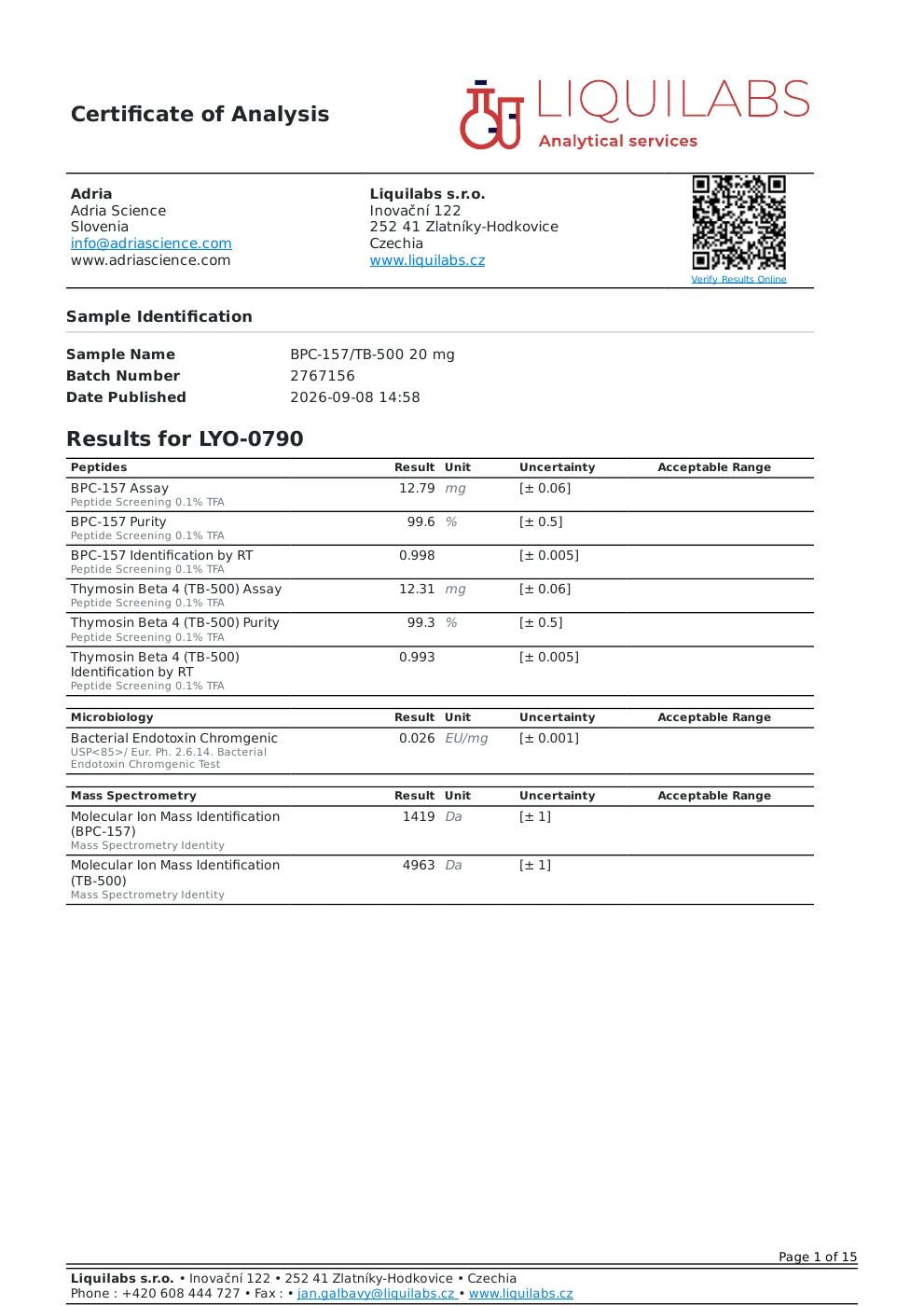
Liquilabs s.r.o.Signed Certificate of Analysis · 10mg + 10mg
See reportPurity by HPLC
Recorded QC panel
- BPC-157 assayPeptide Screening 0.1% TFA
- 12.79 mg (± 0.06 mg)
- TB-500 assayPeptide Screening 0.1% TFA
- 12.31 mg (± 0.06 mg)
- BPC-157 purityPeptide Screening 0.1% TFA
- 99.6%
- TB-500 purityPeptide Screening 0.1% TFA
- 99.3%
- BPC-157 identity (RT)Retention time
- 0.998 (± 0.005)
- TB-500 identity (RT)Retention time
- 0.993 (± 0.005)
- Bacterial endotoxinUSP 85 / Eur. Ph. 2.6.14
- 0.026 EU/mg
- BPC-157 molecular ion massMass Spectrometry Identity
- 1419 Da (± 1 Da)
- TB-500 molecular ion massMass Spectrometry Identity
- 4963 Da (± 1 Da)
These are the latest published results for this strength. The batch number is printed on each vial. Your supplied batch is confirmed against the matching published record when your order is allocated.
Source record
References
National Center for Biotechnology Information
PubChem Compound Summary: BPC-157
Identity record for the BPC-157 component.
PubChem View source ↗National Center for Biotechnology Information
PubChem Compound Summary: Thymosin beta 4
Identity record for the thymosin-beta-4-related TB-500 component.
PubChem View source ↗Chemical Abstracts Service
CAS Common Chemistry: 137525-51-0
Authoritative CAS Registry Number record for the BPC-157 component.
CAS Common Chemistry View source ↗National Center for Biotechnology Information
PubChem compound record
PubChem View source ↗Goldstein AL, Hannappel E, Sosne G, Kleinman HK · 2012
Thymosin β4: a multi-functional regenerative peptide. Basic properties and clinical applications
Expert opinion on biological therapy View source ↗Vasireddi N, Hahamyan H, Salata MJ, Karns M, Calcei JG, Voos JE, Apostolakos JM · 2025
Emerging Use of BPC-157 in Orthopaedic Sports Medicine: A Systematic Review
HSS journal : the musculoskeletal journal of Hospital for Special Surgery View source ↗Ruff D, Crockford D, Girardi G, Zhang Y · 2010
A randomized, placebo-controlled, single and multiple dose study of intravenous thymosin beta4 in healthy volunteers
Annals of the New York Academy of Sciences View source ↗Malinda KM, Sidhu GS, Mani H, Banaudha K, Maheshwari RK, Goldstein AL, Kleinman HK · 1999
Thymosin beta4 accelerates wound healing
The Journal of investigative dermatology View source ↗Xu C, Sun L, Ren F, Huang P, Tian Z, Cui J, Zhang W, Wang S, Zhang K, He L, Zhang W, Zhang C, Hao Q, Zhang Y, Li M, Li W · 2020
Preclinical safety evaluation of body protective compound-157, a potential drug for treating various wounds
Regulatory toxicology and pharmacology : RTP View source ↗Bock-Marquette I, Saxena A, White MD, Dimaio JM, Srivastava D · 2004
Thymosin beta4 activates integrin-linked kinase and promotes cardiac cell migration, survival and cardiac repair
Nature View source ↗· 2018
BPC-157 enhances growth hormone receptor expression in injured tendon tissueStaresinic M, Sebecic B, et al
Growth Hormone & IGF Research View source ↗Xing Y, Ye Y, Zuo H, Li Y · 2021
Progress on the Function and Application of Thymosin β4
Frontiers in endocrinology View source ↗Customer reviews

Quality products,fast shipping,great refferal plan,only downside is that products in 4 mounths since my first order got more and more expensive ,but overall verry good experience.
Read full review →More than 2 weeks for package dispatch. They promised one free peptide next time. Sent me new tracking number but package still wasn't delivered to fedex. Last package (much much cheaper) was delivered in less than week. I will update if they will send my package. ok,package sent.
Read full review →Extremely satisfied with the product quality and overall experience. The customer service is polite and quick. All recommendations!
Read full review →Great service!
Read full review →Always on time and customer care is super great
Read full review →Fast good, and quality is perfect
Read full review →ordered 3 times now and everything ok every time.
Read full review →Trustworthy site with a huge catalog of products. Been purchasing from them for some time now never got disappointed. I could only recommend them.
Read full review →Great quality product
Read full review →Everything was great, super customer support, honest, reliable
Read full review →Everything ok. With little problem with package, but after contact with Customer Service everything went right. Good quality of products
Read full review →Excellent. Buying peptides online can be nerve wracking! But Adria are very transparent about all the checks and certifications. My experience with them was excellent. Great products at good prices and efficient P&P
Read full review →Continue exploring