
Research Articles
Peptides Without Mannitol: Lyophilized Formulation Context and Documentation
A technical note on mannitol, lyophilized peptide formulation context, bulking agents, and why excipient documentation should be explicit.
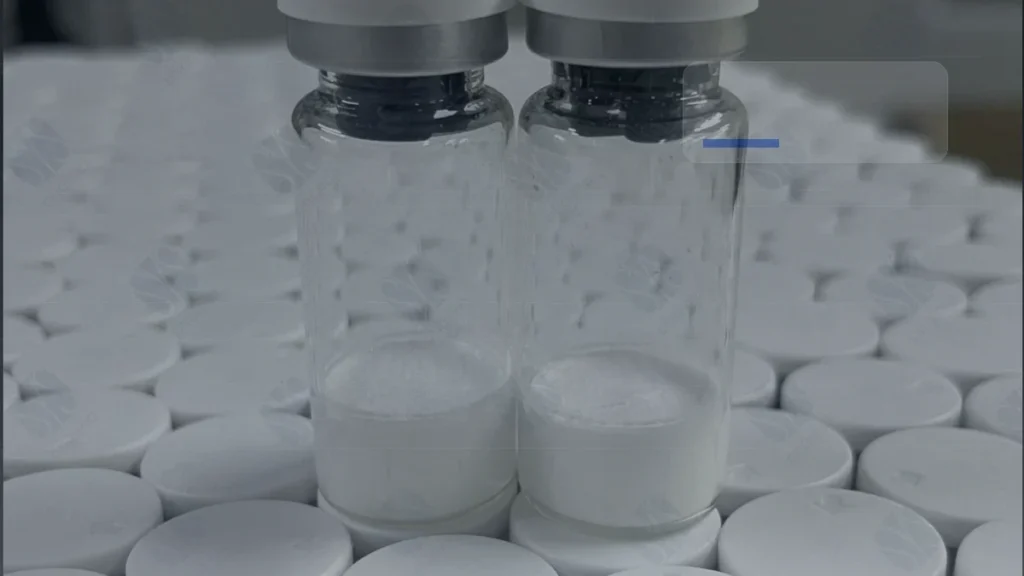
Mannitol is commonly discussed as a bulking agent in freeze-dried formulations. The useful Adria article is not a marketing claim that one formulation is always superior. It is a documentation note about excipients, lyophilization, and stability context.
Research context
Lyophilization literature shows that mannitol can influence cake structure, crystallization behavior, and processing conditions. Other excipients such as trehalose, sucrose, sorbitol, and amino-acid-based systems may be studied depending on the protein or peptide. Reviews of peptide and protein formulation emphasize that stability depends on compound identity, water content, processing, storage, and analytical confirmation.
The professional angle is excipient transparency, lyophilized cake behavior, formulation-specific stability, and clear COA or batch documentation. A “without mannitol” claim should be handled as material information, not as a universal quality guarantee.
Documentation context
This article frames Peptides Without Mannitol: Lyophilized Formulation Context and Documentation as a research-use literature topic, focusing on model systems, measured endpoints, documentation context, and evidence limits.
Adria research-use note
This article is about formulation documentation only. It does not provide reconstitution, practical-use, administration, applied-use, non-laboratory-use, or non-laboratory-use guidance.
Evidence checkpoints for this topic
Peptides Without Mannitol is most useful in the archive when it is read through GHS-R or GHRH-axis signaling, hormone-panel timing, receptor context, and marker interpretation.
In this article, sources such as Crystallizing amino acids as bulking agents in freeze-drying, Processing conditions and the physical state of mannitol during freeze-drying, Excipients and lyophilized recombinant human growth hormone stability should be read for their specific methods, endpoints, and limits.
- Model: check whether the source is receptor-level work, pituitary-cell work, PK/PD modeling, endocrine marker sampling, or review-level synthesis.
- Endpoint: record GH, IGF-1, ACTH, cortisol, prolactin, cAMP, receptor activation, and sampling-window endpoints when they are reported.
- Comparator: verify the comparator compound, baseline condition, and whether repeat-exposure or desensitization is part of the study design.
- Documentation: keep sequence identity, batch traceability, COA context, storage condition, and source link together.
- Limit: keep visible the difference between a measured endocrine marker and a broad conclusion about biological effect.
What a careful reader can take from it
The practical value of this post is the structure it gives to the literature. Instead of treating every source as equal, the reader can separate the question being asked, the method used to ask it, and the claim that can reasonably follow. That is especially important in peptide topics, where online summaries often compress receptor data, model endpoints, supplier documentation, and broad interpretation into one sentence.
Sources
- Crystallizing amino acids as bulking agents in freeze-drying
- Processing conditions and the physical state of mannitol during freeze-drying
- Excipients and lyophilized recombinant human growth hormone stability
- Review on parenteral delivery of peptides and proteins
- Formulation strategies for peptide stability in aqueous solutions